Watch It First
Space Echo is one of those names that carries real weight in gear circles. The original Roland RE-201 practically invented a whole category of dub, ambient, and psychedelic guitar tone, and pedal makers have been chasing it for decades.
Boss decided to stop chasing and just build the real thing into a pedal. The RE-2 uses the same modeling core as their pricier RE-202, just trimmed down to a single footswitch and a rotary mode dial.
I’ve had one bolted to my board for a few months now, mostly as a replacement for an aging analog delay. Here’s what changed, and whether it’s actually worth the upgrade.
How the RE-2 Actually Works
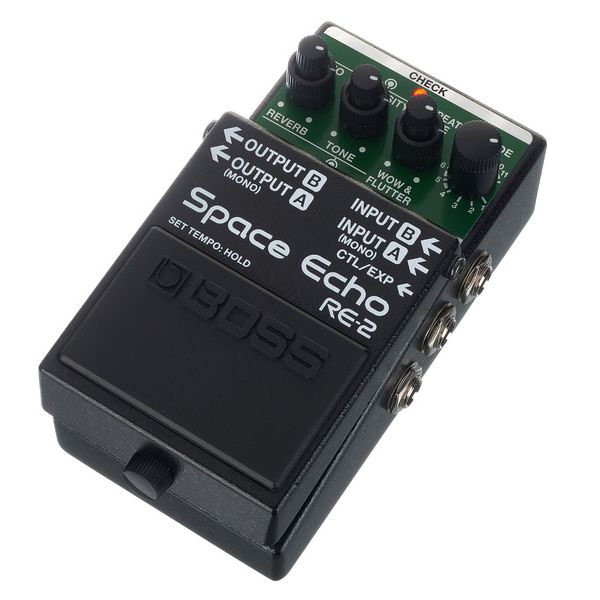
Under the hood you get three classic ingredients: tape echo, spring reverb, and the wow-and-flutter pitch wobble that made the original RE-201 sound alive instead of sterile. Boss models all three digitally, but the character carries over surprisingly well.
The rotary mode switch gives you 11 different combinations, mirroring the different tape head configurations of the original hardware. Some modes are pure echo, some are pure reverb, and several blend both together, just like flipping switches on a real tape unit.
Six Knobs, No Menus
Echo, reverb, intensity, tone, repeat rate, and wow and flutter. That’s the whole control set, and honestly, that’s plenty.
Repeat rate sets your delay time, and intensity is your feedback control, so you can dial in anything from a single slap-back repeat to a runaway wall of echoes. Tone shapes the top end of the repeats, letting you push them from bright and present to dark and buried in the mix, which is exactly what tape echo should do IMO. If you want something simpler with fewer decisions to make, the Walrus Audio ARP-87 is worth a look too.
Wow and flutter deserves its own mention. Crank it and the repeats start warbling like actual worn tape, which sounds gimmicky on paper but genuinely adds character live, especially on ambient or shoegaze-y parts, not unlike the swings from subtle to extreme I described in my Boss BF-3 flanger review.
Sound
Tape Warmth Without the Tape Maintenance
The big appeal of a real Space Echo was always the tape saturation, the way repeats degrade and darken the further back they go in the pattern. The RE-2 nails this convincingly. Repeats aren’t sterile digital copies, they blur and soften in a way that feels musical rather than lo-fi for the sake of it.
Compared to my old analog delay pedal, the RE-2 has noticeably more character in the repeats. It’s not cleaner, it’s more alive, if that makes any sense on paper.
The Spring Reverb Modes Are the Real Surprise
I didn’t expect to use the reverb-only modes much, but they’ve become a genuine go-to for clean tones. It’s a proper springy, slightly chaotic reverb, closer to a real spring tank than most compact digital reverbs manage, in the same ballpark as what I covered in the TC Electronic SkySurfer review.
Stack a reverb mode with a touch of echo and you get something genuinely dubby without reaching for a second pedal. I’m picky about reverb character, and this one holds its own against boxes that only do reverb.
Build Quality And Playability
Standard Boss compact pedal construction here: metal chassis, sturdy footswitch, the works. Dimensions and weight land right in line with other single-footswitch Boss pedals, so it slots onto a crowded board without forcing you to reshuffle everything else.
Power comes from a 9V battery or the usual Boss PSA-style adapter, sold separately, same story as basically every Boss pedal ever made, including the Boss OC-5 I covered a while back.
One nice touch: separate A and B outputs plus a CTL/EXP jack, so you can run this in stereo or hook up an expression pedal to control parameters on the fly. That’s more flexibility than a lot of delay pedals bother offering at this size.
Tap Tempo, Sort Of
There’s no dedicated tap tempo footswitch, but holding the main footswitch down lets you tap in a tempo. It works, but it takes practice to nail cleanly mid-song. Not a dealbreaker, just something to rehearse before a gig rather than improvising live.
Who This Pedal Is Actually For
Ambient players, dub and reggae guitarists, and anyone chasing that specific tape machine warmth will get the most mileage here. If you’ve ever watched a pedalboard video and wondered what gives certain rigs that hazy, degraded echo texture, this pedal is very often the answer.
Rhythm players who just want a clean slap-back delay will find it here too, it’s genuinely not a one-trick pedal. Pair it with something like the Ibanez TS9 for a simple, dependable rhythm rig and you’re covered for most gigs.
Bass players get real use out of this too, especially the reverb-heavy modes for ambient basslines, similar territory to the Fender Bassman Delay, which handles low end far better than most delay pedals designed purely with guitar in mind.
Honest Niggles
No tap tempo footswitch built in is a real omission at this price point, especially with rivals offering dedicated tap buttons as standard.
No power supply included, which is a running Boss theme across their whole compact lineup, not unique to this pedal, but still worth budgeting for before you get to a gig.
The 11-mode rotary switch takes some getting used to if you’ve never used a real Space Echo before. A couple of the modes sound quite similar to each other, so expect to spend an evening actually working through all of them rather than guessing live on stage.
Boss RE-2 Space Echo – Specs At A Glance
- Effect type: Delay and Reverb, tape echo plus spring reverb emulation
- Delay modes: 11, selectable via rotary switch
- Controls: Echo, Reverb, Intensity, Tone, Repeat Rate, Wow and Flutter
- Inputs: A (mono) and B, two 1/4″ jacks
- Outputs: A (mono) and B, 1/4″ jack
- CTL/EXP: stereo 1/4″ jack
- Power: 9V battery or DC adapter, sold separately
- Current draw: 75 mA
- Dimensions: 73 x 129 x 59 mm
- Weight: 450 g
- Available since: March 2022
Final Verdict
The RE-2 takes one of the most beloved pieces of vintage gear in guitar history and makes it genuinely affordable and pedalboard-friendly, without gutting what made the original special in the first place.
It’s not the cheapest delay on the market, and the lack of a dedicated tap tempo switch is a legitimate knock against it. But the tape warmth, the spring reverb modes, and the sheer flexibility of 11 different echo and reverb combos make it one of the smarter delay purchases you can make right now.
If you’ve been curious about Space Echo tone without wanting to hunt down a genuinely vintage unit, or pay boutique prices for a clone, this is the easiest way in. IMO it’s earned its spot on my board, and it’s staying there for a good while yet.