Watch It First
Fender’s Bassman pedal line flew under the radar when it launched. Fuzz, Compressor, Driver, Delay, all built around the classic Bassman amp heritage.
The Delay is the one that surprised me most. It’s marketed for bass, but honestly, it works beautifully on guitar too.
Don’t let the branding scare you off. This is a genuinely flexible, well-built delay that happens to have bass players in mind first.
Analog Or Digital, Your Call
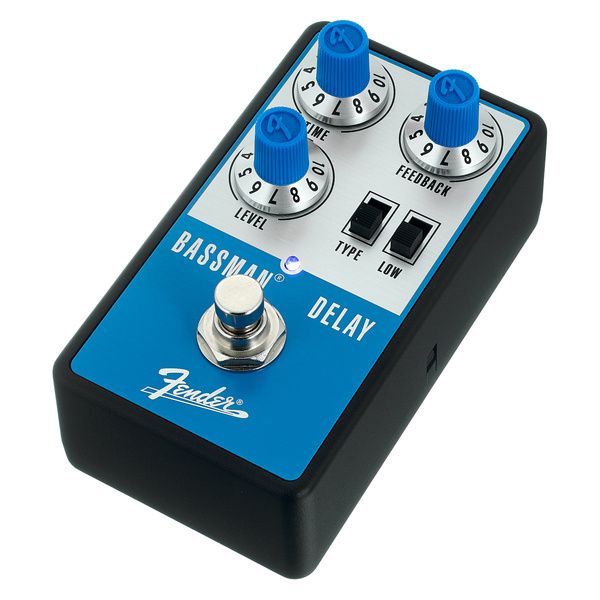
At its core, this pedal switches between analog and digital delay algorithms with a single flick of a switch.
Analog mode gives you that darker, warmer repeat trail, the kind that fades gracefully into the background. Digital mode is cleaner and more precise, better for rhythmic, tempo-locked repeats that need to stay crisp.
Having both in one box, rather than committing to one flavor, is the kind of feature that makes a budget-friendly pedal feel like it’s punching above its price.
No Tap Tempo, Worth Knowing
There’s no tap tempo here, which is worth flagging up front if that’s a dealbreaker for you.
You dial in delay time with a knob instead, the old-fashioned way. It’s not a huge deal for most players, but drummers and click-track gigging musicians who rely on tap tempo will want to look elsewhere.
Tone Shaping That Actually Matters
What you do get instead is genuinely useful tone-shaping. Two additional switchable low-cut stages let you carve out mud from your repeats, on top of internal high-cut and low-cut trimmers for even finer control.
That’s more frequency control than most pedals in this price range bother offering.
Bypass is a soft-touch switch, selectable between true bypass and buffered bypass with trails, so your repeats don’t get cut off abruptly when you switch the pedal off mid-decay.
There’s also a pad switch on the side specifically for active basses, a small detail that shows this pedal really was designed with bass players in mind, even if guitarists can get plenty out of it too.
Build Quality
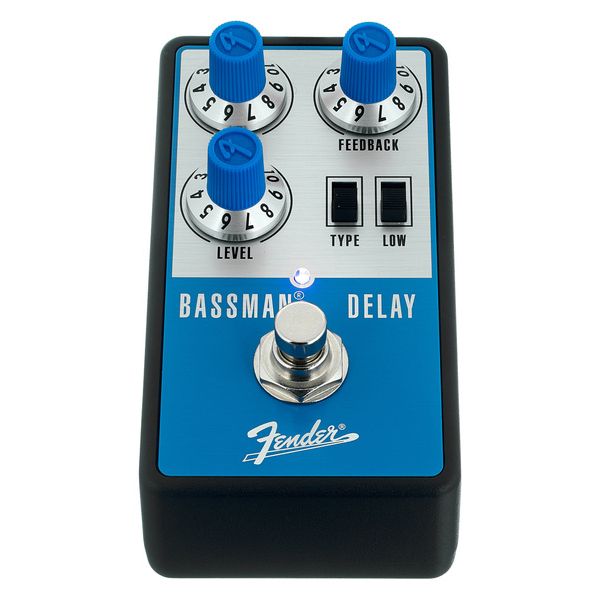
The housing is aluminium and genuinely road-ready, with front-mounted jacks that make it easy to fit on a crowded board without cables sticking out awkwardly to the side.
Quick spec rundown:
- Switchable analogue and digital delay algorithms
- Two switchable low-cut stages plus internal high-cut/low-cut trimmers
- Soft-touch true or buffered bypass switch with trails
- Pad switch for active basses
- Front-mounted jacks, aluminium housing
- No tap tempo, no battery operation, PSU not included
- 4.8 out of 5 from Thomann customers
Who This Pedal Is Actually For
If you play bass and want a no-nonsense delay that actually sounds musical instead of murky, this is one of the better budget options out there right now. Pairing it with something like the Fender Rumble 100 gives you a genuinely gig-ready bass rig without breaking the bank.
It also works nicely with smaller practice setups. I tested mine through a Hartke HD25 and the low-cut controls made a real difference keeping the repeats from turning to mush at bedroom volumes.
If you want a proper full-featured bass amp to go with it instead, the Ampeg BA-108 is a solid, classic-voiced option worth reading about.
On guitar, this pedal genuinely surprised me. Run into a clean amp, the analog mode gives you a soft, washy delay that works great for ambient textures. If that’s your thing, I’ve got a whole guide on gear for shoegaze and ambient playing worth checking out.
If you’d rather have delay bundled into a bigger multi-effects unit instead of a dedicated pedal, the Zoom MS-50G+ covers that ground too, with more delay types on tap but less hands-on tweakability than a dedicated stompbox like this one.
Value For Money
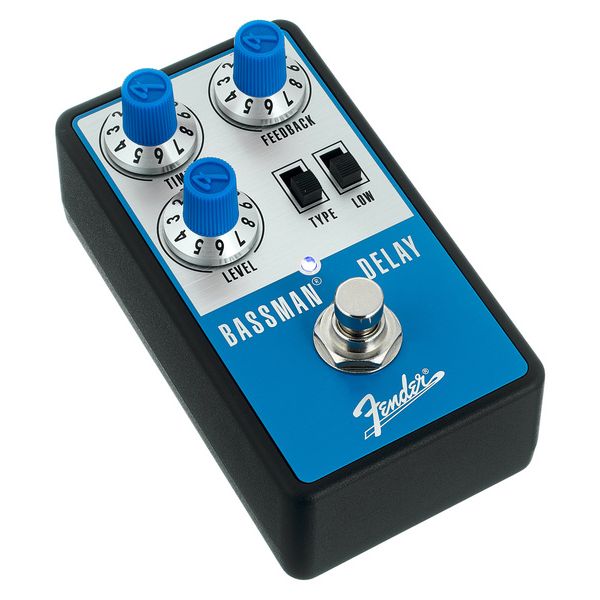
Compared to boutique analog delays costing two or three times as much, the Bassman Delay doesn’t try to compete on vintage mojo. What it does instead is nail the fundamentals: clean switching, useful tone controls, and repeats that sit well in a mix without needing a ton of tweaking.
The lack of tap tempo is a real limitation for some players, so if that’s non-negotiable for your live setup, this isn’t the pedal for you.
But if you just want a reliable, great-sounding delay that won’t dominate your pedalboard budget, and you don’t mind dialing in time by ear or by knob, this is honestly one of the smarter buys in Fender’s whole effects lineup right now.
A Few Honest Caveats
A few honest caveats worth mentioning before you buy.
First, no PSU is included in the box, so budget for a standard 9V power supply if you don’t already have a spare output on your board. It also doesn’t run on batteries, so it’s strictly a pedalboard-only pedal, not something you’d toss in a gig bag for emergencies.
Second, because this is aimed at bass players first, some of the internal trimmer controls require opening the pedal up rather than adjusting on the fly. That’s a small inconvenience if you like tweaking your tone mid-set, though most players will set it once and leave it.
Third, at this price point it’s not the cheapest delay on the market, but compared to boutique analog delays it’s genuinely good value, and compared to other Fender pedals in this series, it’s one of the more useful ones for a working musician.
Who shouldn’t buy this? If tap tempo is essential to your workflow, or you need a delay with dozens of algorithm types and presets, look at something more feature-packed like a Boss DD-8 or a Strymon instead. This pedal does two things extremely well rather than twenty things adequately.
The Verdict
For everyone else, especially bass players who’ve been overlooked by the pedal industry for years while guitarists get all the toys, the Bassman Delay is a genuinely welcome addition to Fender’s lineup.
One more thing worth calling out: build quality feels genuinely premium for the price. The aluminium housing has real heft to it, the footswitch has a satisfying click, and nothing about it feels like a rushed cash-grab off the back of the Fender name.
That matters more than people think. A lot of „amp brand does pedals now” products feel like an afterthought, slapped together to sell merchandise. This doesn’t feel like that at all. It feels like a pedal that Fender’s engineers actually cared about getting right, and that shows up in how it performs night after night on a gigging board.