Watch It First
Compressors are the pedal everyone tells you that you need and almost nobody can explain why.
The Pulp’n Peel has been JHS’s answer to that question since 2016, now on its fourth revision.
I’ve had one on my board for a while now. Here’s what it actually does.
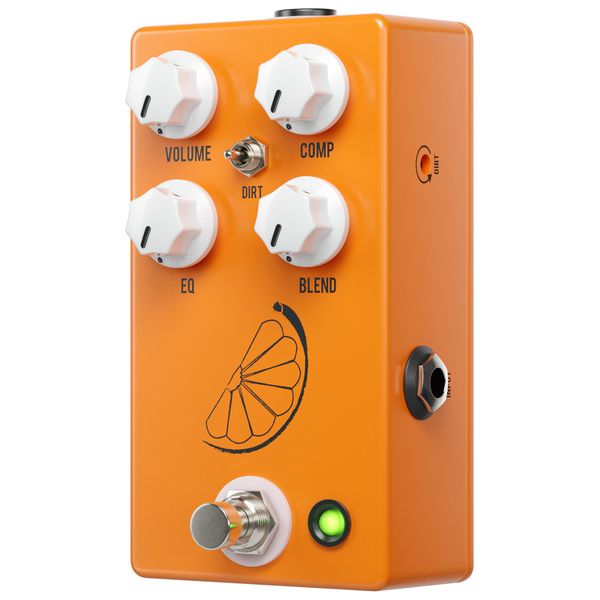
Compressor and Preamp in One Box
The naming is the first thing that trips people up. It’s called a compressor, but it’s really a compressor bolted to a clean preamp with an optional dirt circuit thrown in.
That preamp is the real secret weapon here. Even with the compression dialled to zero, running your signal through this thing adds body and low-end that just wasn’t there before.
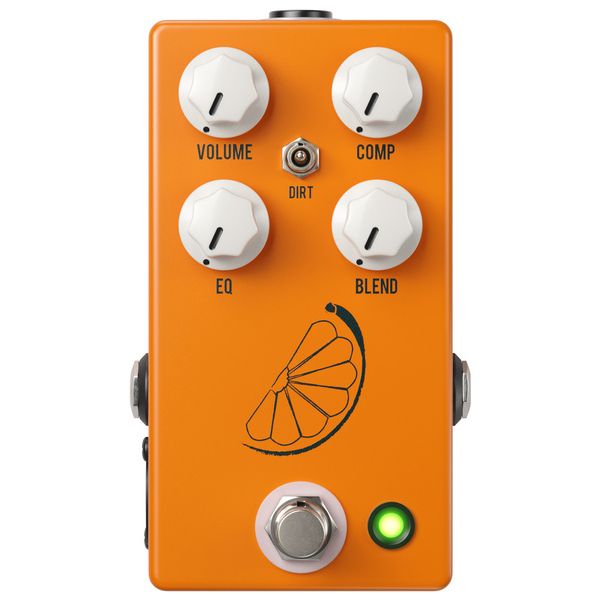
Controls are Volume, Comp, EQ, and Blend, plus a Dirt footswitch that kicks in a parallel overdrive circuit you can trim with an internal pot. It’s more knobs than your average compressor, but nothing that takes more than five minutes to figure out.
A bit of history, because it matters here: JHS built the original Pulp’n Peel back in 2011 as a compressor/preamp combo aimed squarely at session players who needed reliability more than flash. Four versions later, the core idea hasn’t changed – it’s still trying to be the pedal you forget is even on your board because it just works every single time.
How It Actually Sounds
Set conservatively, it just makes your playing feel more consistent. Picking dynamics even out, notes sustain a bit longer, and nothing gets squashed or weird.
Push the Comp knob further and you get that classic „quack” – the sound you hear on every Nashville session recording ever made. Chicken pickers and funk players, this is basically built for you.
The Blend knob is what saves it from feeling clinical. You can mix in your dry signal so the compression adds punch without swallowing your attack completely – similar philosophy to what you’ll find on the MXR Custom Shop Timmy, where blend control keeps things natural instead of processed.
Bass players, take note: this pedal is genuinely fantastic on bass. If you’re running something like a Warwick RockBass Star Bass, the Pulp’n Peel tightens everything up without killing the growl.
Build and Practicality
Metal housing, always-on buffer, silent switching. Basically everything you’d want from a pedal that’s meant to live on your board permanently and just work.
There’s also an XLR output round the back, which is a genuinely unusual feature for a compressor pedal. Run direct to a mixer or interface and you’ve got a usable DI chain without any extra boxes.
It’s compact too – about the size of a standard MXR-format pedal – so it won’t eat your whole board the way some multi-function units do.
One thing worth mentioning: the EQ knob is more useful than it looks. It’s not a full tone stack, just a single control, but it lets you compensate for whatever tonal shift the compression introduces. Roll it one way and you get a scooped, snappy attack. Roll it the other and things get warmer and rounder – handy if your amp already runs bright.
Who’s This For?
- Country and funk players chasing that classic compressed quack
- Bassists who want tighter low-end without losing character
- Acoustic-electric players needing a clean, transparent boost
- Anyone recording direct who wants a usable DI tone on tap
If you’re building a pedalboard around a practice setup, pairing this with something like a Roland Cube-10GX gives you studio-clean tone at home without much fuss.
The Honest Niggles
It’s not cheap for a compressor. There are simpler options out there for less money if all you want is basic sustain and squash.
The Dirt circuit, while a nice bonus, isn’t going to replace a dedicated overdrive. Think of it as seasoning, not a main course – if you want a proper drive tone, grab a real pedal for that job.
Some players find the compression a bit subtle on electric guitar compared to bass or acoustic. It’s there, it’s musical, but if you want that super obvious „hand of God” squash, this isn’t the most aggressive option on the market.
No battery option either. You need a standard 9V DC supply, so factor that into your power situation if your board’s already crowded – not a dealbreaker, just worth knowing before you buy.
How It Compares
Against simpler compressors, the Pulp’n Peel wins on versatility – you’re getting a preamp, an overdrive option, and a DI out bundled in. Against pricier boutique units it holds its own on tone but doesn’t try to be a Swiss army knife of tone-shaping the way something like the DigiTech Whammy 5 is for pitch effects.
If wah is more your speed for expressive control, that’s obviously a totally different tool – check out our Dunlop Cry Baby review for that side of the pedalboard.
Specs at a Glance
- Type: Compressor / preamp with parallel overdrive circuit
- Controls: Volume, Comp, EQ, Blend, Dirt trim (internal)
- Bypass: Buffered, soft-touch silent switching
- Outputs: 6.3mm jack + XLR line out
- Power: 9V DC, centre negative (not included), no battery option
- Housing: Metal
- Weight: 270g
- Made in USA
Final Verdict
The Pulp’n Peel V4 is one of those pedals that quietly makes everything else on your board sound better. It’s not flashy, it’s not trying to be the loudest thing in the signal chain.
What it does is add polish – tighter dynamics, a fuller low end, and a genuinely useful DI out if you ever need to record or run direct to front of house.
If you play bass, country, funk, or just want your rig to sound like it was mixed by someone who knew what they were doing, this earns its spot. FYI, once you hear what the always-on buffer and preamp do to your tone, it’s genuinely hard to go back.