Watch It First
Reverb pedals mostly do one thing: add space. The Walrus Audio Slö Multi Texture Reverb has bigger ambitions than that.
This thing doesn’t just wash your signal in reverb, it reshapes it. Modulated tails, pitch-shifted octaves, vibrato-drenched swells – it’s less „reverb pedal” and more „ambient sound design machine that happens to be reverb-shaped”.
I’ve had one bolted to my board for ages now, mostly because I still haven’t gotten bored of it. Let’s get into why.
Three Reverbs in One Box
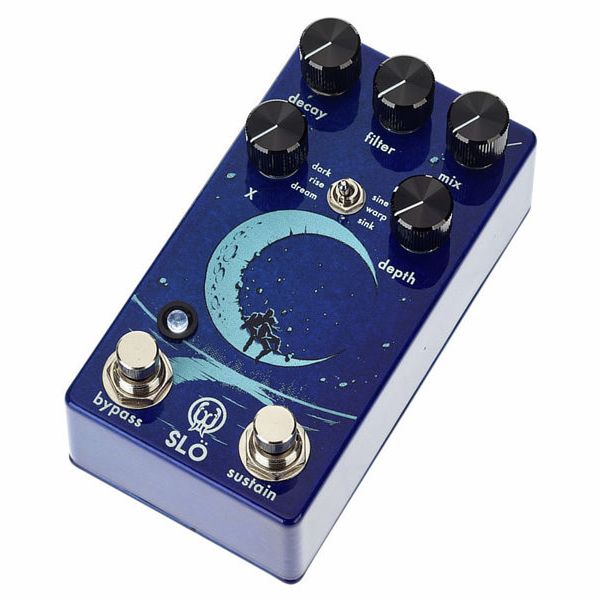
The Slö gives you three distinct reverb modes: Dark, Rise, and Dream. Each one is genuinely different rather than being the same algorithm with a different label slapped on.
Dark drops in a sub-octave under your reverb tail, giving you this huge, cavernous low end that works beautifully for doom-adjacent or post-rock textures. Rise builds your reverb in gradually, like a volume swell built into the effect itself.
Dream is the one most players buy this pedal for. It adds a long, spacious tail with built-in vibrato modulation, and it’s genuinely one of the best „shoegaze in a box” sounds I’ve heard from a compact pedal.
The X Knob Changes Everything
Here’s the clever part: the X knob does something different depending on which mode you’re in. In Dark it controls the sub-octave volume, in Rise it controls swell time, in Dream it controls vibrato depth.
That’s three pedals’ worth of control crammed into one knob, and it’s genuinely intuitive once you spend twenty minutes with it rather than confusing, which is a neat trick for a pedal this deep.
The Sustain Footswitch
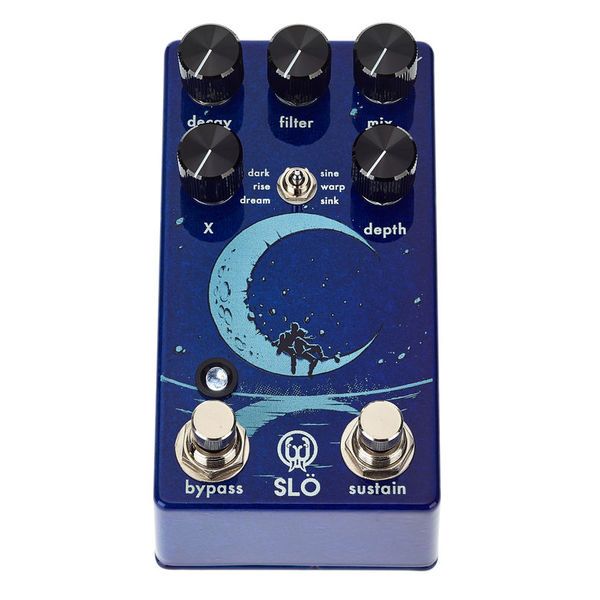
Alongside the standard bypass footswitch, there’s a Sustain switch that momentarily maxes out the decay for as long as you hold it. Let go and the tail decays naturally back to normal.
It’s a small feature that ends up getting used constantly once you own the pedal – perfect for those „hold the last chord and let it bloom” moments live, without having to reach down and crank the Decay knob mid-song.
How It Fits Into a Pedalboard
This lives happily at the end of the chain, after your drives and modulation. Stack it after something like an octave pedal such as the Electro-Harmonix Pitch Fork and you can build genuinely huge, orchestral-sounding textures from a single guitar.
It also pairs beautifully with a good delay. Something like the EHX Canyon before the Slö gives you repeating, decaying echoes that then wash out into the reverb tail rather than stopping abruptly – a classic ambient rig move.
If budget is tighter, our guide to delay pedals under $100 has some solid options to pair with this without blowing your whole pedal budget on one section of the board.
Where It Doesn’t Fit
If you just want a simple hall or spring reverb for a country or blues rig, this is overkill. All that texture and modulation is wasted if you just want a subtle, natural-sounding room ambience.
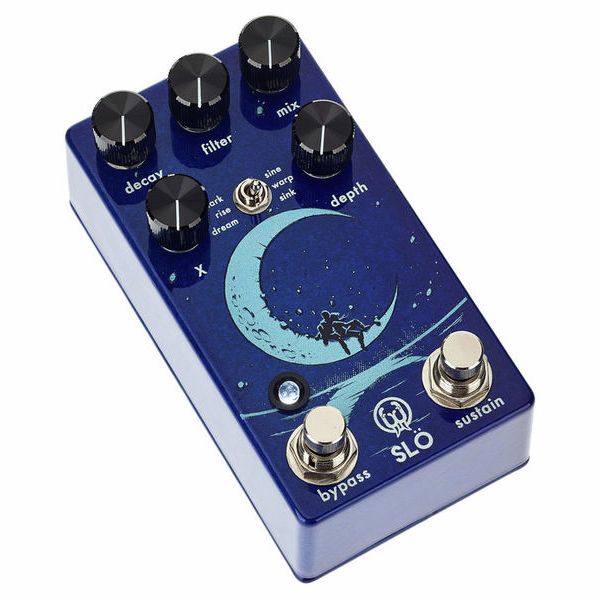
Mono in, mono out only – no stereo operation here. If you specifically want a wide stereo reverb field, Walrus does sell the bigger stereo-capable modulation options worth researching, or their own Slöer sibling pedal, which adds stereo width at a higher price.
It’s also not cheap for a single-function pedal. You’re paying a premium for the quality of the algorithms and the flexibility of that X knob – fair, but worth knowing going in.
Who Should Buy the Slö
Ambient, post-rock, shoegaze, and ethereal indie players will get the most mileage here. It’s also a fantastic creative tool for anyone recording atmospheric layers at home – hook it up alongside a practice amp setup and you can build entire soundscapes without touching a DAW plugin.
Jazz and semi-hollow players chasing lush, spacious tones – think the kind of clean, chimey tone you’d get from something like an Ibanez AS93FM – will also find a lot to love in the Dream mode specifically.
Skip it if you want a no-frills, always-on subtle reverb, or if mono operation is a dealbreaker for your rig.
The Three Waveshapes, Explained
Beyond the three reverb modes, the Slö also lets you pick between three modulation waveshapes: Sine, Warp, and Sink.
Sine is your classic, smooth, predictable modulation – gentle and musical, good for subtle movement that doesn’t distract from the notes you’re playing.
Warp introduces a more irregular, unpredictable wobble to the tail. It’s less „chorus pedal” and more „tape machine slowly dying in an interesting way” – genuinely useful for lo-fi or experimental textures.
Sink is the strangest of the three, adding a descending, almost pitch-bending quality to the modulation. It’s not something you’ll use on every song, but when a track calls for something genuinely unsettling or otherworldly, it delivers in a way most reverb pedals simply can’t.
Combine any of the three waveshapes with any of the three reverb modes and the Depth/Rate control, and you’ve got nine fundamentally different reverb characters before you’ve even touched the Decay or Mix knobs. That’s the real depth of this pedal – it rewards experimentation rather than punishing it.
Walrus Audio Slö Specs
- Type: Multi-texture ambient reverb
- 3 modes: Dark (sub-octave), Rise (swell), Dream (vibrato)
- Controls: Decay, Filter, Mix, X, Mode/Shape selector, Depth/Rate
- 3 modulation waveshapes: Sine, Warp, Sink
- Momentary Sustain footswitch for max decay on demand
- True bypass with switchable Trails mode
- Mono in / mono out configuration
- Requires 9V DC power supply (not included)
- Made in the USA
Final Verdict
The Walrus Audio Slö is one of the most creatively inspiring reverb pedals you can put on a board. It’s not trying to be a subtle, transparent reverb – it’s trying to be an instrument in its own right, and it succeeds.
It’s a premium price for a single-function pedal, and the mono-only design might put off some stereo rig owners. But the sheer creative range packed into those three modes and the X knob makes it feel worth the spend for the right player.
If ambient, spacious, textural tones are anywhere on your wishlist, put this near the top of it. It’s the kind of pedal that changes how you write parts, not just how they sound.