Watch It First
Cables are annoying. Not a huge deal, sure, but every practice amp with a cord tethering you to the desk is one small friction point between you and actually picking the guitar up.
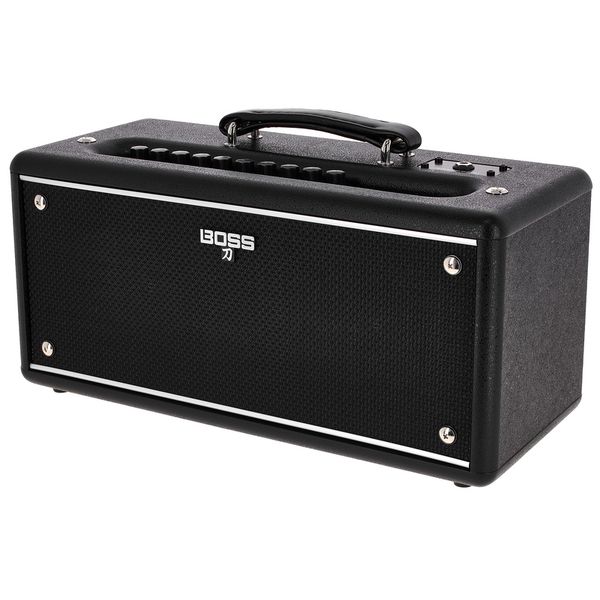
Boss’s answer is the Katana Air EX — a desktop combo with a wireless transmitter that plugs into your guitar and beams the signal over with basically zero latency.
It’s not cheap for what’s essentially a practice amp, so I went through the spec sheet and a stack of owner reviews to see if the wireless party trick actually earns its keep.
What Even Is a Wireless Desktop Amp?
The idea is simple: a little radio transmitter plugs into your guitar’s output jack (or clips to your strap), and it beams your signal to the amp with what Boss and reviewers both describe as essentially zero perceivable latency. No cable between you and the amp at all.
You can power the whole thing with 8 AA batteries, an optional rechargeable pack, or the included mains adapter, so it genuinely works as a grab-and-go unit as well as a permanent desk fixture.
Build and Features
Inside you get 5 preamp types pulled from the wider Katana amp series, 3 independent effects sections each with 3 selectable variations, and access to over 50 effects total — genuinely a lot of tone-shaping for a desktop unit. There are 6 onboard memory slots for saving your favourites.
The companion BOSS Tone Studio app adds a visual amp/effects editor and, more usefully, a feature that lets you play along to YouTube videos through the amp itself. If you want the same core tones with a lot more headroom and a proper 2×12 cab, our Boss Katana 100/212 Gen 3 review covers the big brother in the range, and the Katana 50 Gen 3 is the wired mid-point between the two.
How It Sounds and Plays
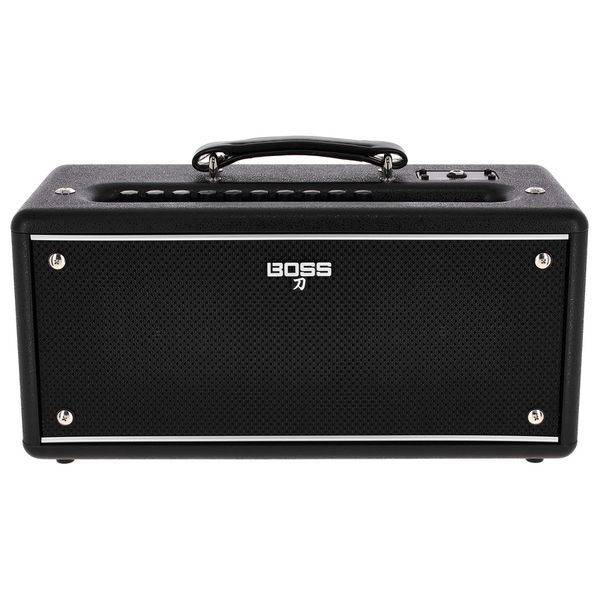
The „EX” in the name refers to an expanded cabinet resonance mode, and paired with the two 5-inch speakers in a proper wooden, bass-reflex-ported cabinet, it genuinely sounds bigger than its size suggests. Reviewers consistently call it full, punchy, and surprisingly capable of authentic high-gain tones for a desktop unit.
Because it runs in stereo, the effects — delay, reverb, modulation — actually spread across the two speakers in a way a lot of single-speaker practice amps just can’t do. It’s a genuinely more immersive listening experience than the name „desktop amp” implies.
If wireless is the main draw for you, it’s worth knowing Boss also makes the Waza-Air, which takes a completely different approach — wireless headphones with spatial amp simulation instead of an actual speaker cabinet. Quieter neighbours vs. an actual amp in the room; pick your priority.
Who It’s For
Bedroom and apartment players who want a genuinely good-sounding amp without a stack of cables on the floor, guitarists who want to record straight to a laptop via USB, and bassists or acoustic-electric players too — it’s voiced to handle more than just electric guitar.
If you mostly gig and just want a compact, no-frills combo, a wired modeling amp like the Marshall Code 50 or the battery-friendly Roland Cube Street EX might make more practical sense — you’re not really paying for the wireless feature in those cases.
The Honest Niggles
The wireless link is genuinely low-latency, but a few owners report the transmitter losing its connection if it doesn’t have a clear line of sight to the amp — furniture, your own body angle, or another room entirely can all cause dropouts. One reviewer also flagged that the transmitter isn’t compatible with certain Ibanez S-series guitars specifically.
There have also been scattered mentions of the transmitter occasionally needing a USB reset to get charging again, and one buyer noted the jack sockets felt a bit plasticky for the price. None of these are dealbreakers, but at this price point — you’re paying a real premium over a comparable wired Katana — it’s fair to expect a bit more polish on the small stuff.
Setup and Everyday Use
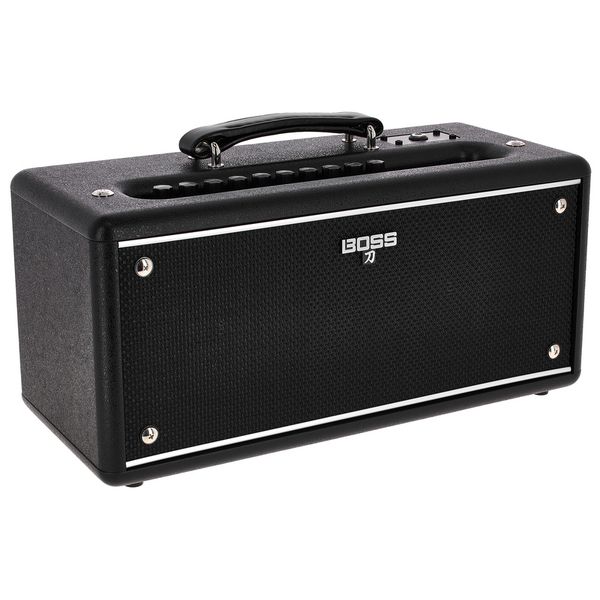
Pairing is basically instant once the transmitter and amp are switched on — there’s no faffing about with Bluetooth codes or app permissions just to get sound out. Bluetooth itself is reserved for streaming music or backing tracks to jam along with, separate from the guitar’s wireless link.
Battery life is rated at around 6 hours on AAs, which is plenty for a practice session, and the USB output means you can record straight into a DAW without an interface if you just want to capture ideas quickly.
One more thing worth mentioning: Thomann lists this as suitable for guitar, bass, and electro-acoustic instruments, not just electric guitar. That versatility is a real plus if you’re the kind of player who switches between an electric and an acoustic-electric at home and doesn’t want two separate amps cluttering the desk.
Specs at a Glance
- Wireless guitar transmitter included
- 5 preamp types from the Katana series
- 3 independent FX sections, 3 variations each
- 50+ effects total
- 6 onboard memory slots
- Power: 30W (stereo)
- Speakers: 2x 5″ in a wooden bass-reflex cabinet
- USB recording output
- Stereo line out with mic emulation
- Powered by 8x AA, optional rechargeable pack, or included mains adapter
- Weight: 7.6kg
Final Verdict
The Boss Katana Air EX does something genuinely useful — a proper-sounding stereo desktop amp you can play through with zero cables — and it does it well. The tones are authentic Katana, the effects are generous, and the wireless link works as advertised most of the time.
It’s a premium price for a practice amp though, and the occasional wireless quirk means it’s not flawless. If cable-free playing genuinely matters to your setup, it’s one of the more polished ways to get there. If it doesn’t, you’ll get more amp for your money with a wired Katana. IMO it’s a lot of fun to own either way.