Watch It First
Practicing guitar through headphones usually sucks. You get this flat, boxed-in sound that feels nothing like a real amp in a real room.
Boss tried to fix that problem properly with the Waza-Air, and honestly, it’s one of the weirder and more clever pieces of gear I’ve tested in a while.
Let’s get into what it actually does, how it sounds, and whether it’s worth the money over just buying a normal modeling amp.
What Is the Waza-Air, Actually?
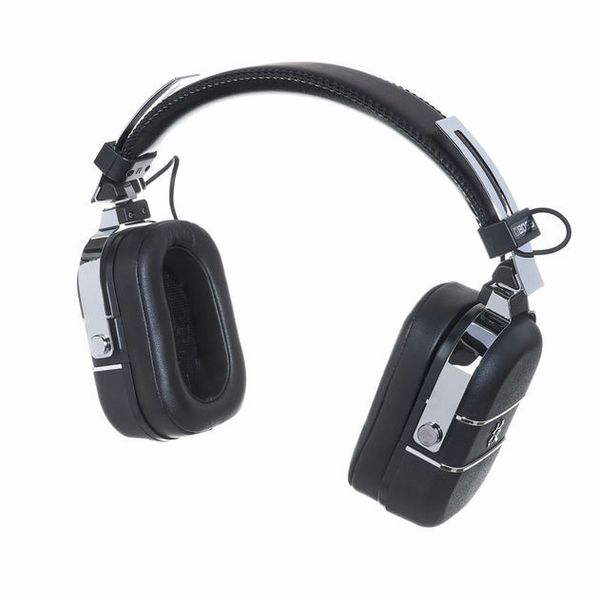
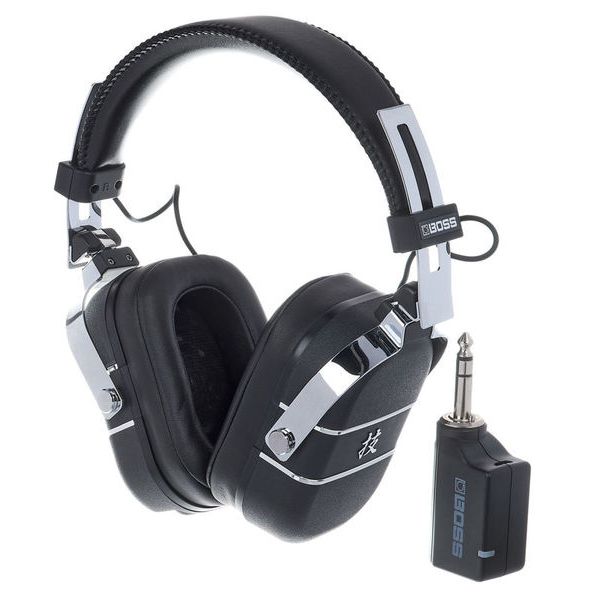
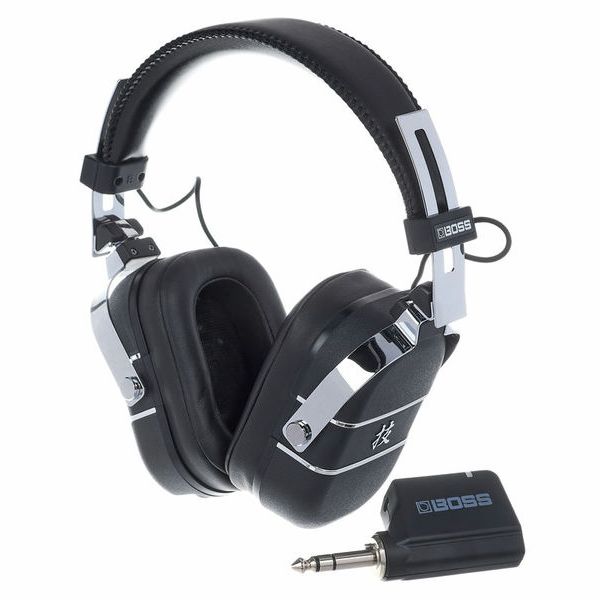
It’s a wireless headphone system built specifically for guitar. You plug a small transmitter (the WL-T) into your guitar’s output jack, put the headphones on, and that’s it – no cables between you and the amp.
Inside the headphones themselves is a full amp modeling engine pulled straight from Boss’s Katana amp line. Five amp types, plus over 50 effects you can tweak through the free BOSS Tone Studio app.
The Gyro Thing Is the Whole Point
Here’s the clever bit: a gyroscope inside the headphones tracks which way your head is facing, and the „amp” sound gets positioned in front of you like it’s actually sitting in the room.
Turn your head and the amp „stays” in place, spatially. It’s a genuinely strange sensation the first time you try it – your brain just accepts that there’s a real cab in front of you, even though it’s obviously not there.
How It Sounds
The Katana-derived amp models are genuinely good. Clean, crunch, lead – they all hold up well, especially compared to older modeling gear that sounded thin or harsh through headphones.
The 50mm drivers give you real low-end weight too, which matters a lot for guitar tones that lean on gain and sustain.
Static Mode vs Room Mode
You can switch off the gyro tracking and use „static” mode instead, which just gives you a more conventional stereo headphone sound. Some players actually prefer this for recording or silent stage monitoring, since the room-simulation panning can feel a bit much for extended sessions.
IMO the room mode is the fun party trick, but static mode is what you’ll actually reach for once the novelty wears off a bit.
Battery Life and Practical Use
The headphones themselves last around 5 hours on a charge, while the transmitter can go up to 12. That’s plenty for most practice sessions, but it does mean you need to remember to charge them regularly – unlike a normal wired amp that’s always ready.
Latency is genuinely a non-issue. Boss built their own 2.4GHz wireless protocol specifically to avoid the lag you’d get from standard Bluetooth guitar signal, and it shows – there’s no noticeable delay between picking a note and hearing it.
You can also stream music over Bluetooth to jam along with, separate from the guitar signal, which is a nice touch if you’re the type who learns songs by ear.
Setting It Up
Getting started takes about two minutes. Plug the WL-T transmitter into your guitar, power on the headphones, and they pair automatically – no manual Bluetooth pairing dance required for the guitar signal itself.
The onboard controls are refreshingly simple too: a volume knob, channel up/down buttons for six saved patches, and a multi-function Bluetooth button. You don’t need the app open to use it day to day – it’s genuinely a grab-and-play piece of gear once it’s set up.
Folding hinges let the headphones collapse flat for storage, and Boss sells a dedicated carry case if you’re planning to travel with it regularly, which a lot of touring players do.
Comfort for Long Sessions
The headband is wide and padded, and the earcups are adjustable enough to fit most head shapes comfortably. At roughly the weight of a solid pair of over-ear studio headphones, it’s not going to feel like a burden during an hour-long practice session.
Build quality leans on chromed metal parts rather than all-plastic construction, which matches the premium price tag and should hold up to years of regular use.
Who Should Buy This
Apartment dwellers, touring musicians who want quiet hotel-room practice, and anyone who’s tired of their partner complaining about amp volume at 11pm. This solves a real problem.
If you already own a Boss Katana 50 Gen 3 or similar Katana amp, the tones will feel instantly familiar, which is a nice bit of continuity if you’re already in the Boss ecosystem.
It also pairs surprisingly well with a compact, easy-to-travel-with electric – something we touched on when we reviewed the Höfner Shorty Bass, which lives in a similar „quiet practice anywhere” niche on the bass side.
Is It Worth It Over a Regular Modeling Amp?
Honestly, that depends on your situation. If volume isn’t a concern and you just want great tone in a room, something like the Fender Mustang LT25 or one of our favourite amps for distortion and overdrive will get you there for less money.
But if silence is the actual requirement – because of neighbours, family, or a shared flat – nothing else on the market replicates the „real amp in the room” feeling quite like this does. We touched on similar tradeoffs comparing budget combos in our Marshall MG10 vs MG15 breakdown, and the calculus here is the same: buy for how you’ll actually use it, not the spec sheet.
The Honest Cons
- Premium price for what is, at the end of the day, a headphone amp
- Battery needs regular charging – not grab-and-go forever like a passive setup
- Gyro/room mode isn’t for everyone; some reviewers find the panning distracting over long sessions
- Bluetooth connection has occasionally been reported as flaky by some users
None of these are dealbreakers, but they’re worth knowing going in so you’re not surprised.
Boss Waza-Air – Full Specs
- Type: Wireless guitar headphone amp system
- Amp models: 5 types, derived from Boss Katana amps
- Effects: 50+ via BOSS Tone Studio app
- Wireless: Proprietary 2.4GHz low-latency link + Bluetooth audio streaming
- Drivers: 50mm
- Battery life: ~5 hours (headphones), ~12 hours (WL-T transmitter)
- Included: WL-T wireless transmitter, micro USB charging cable
- App: BOSS Tone Studio (iOS/Android)
Final Verdict
The Boss Waza-Air isn’t for everyone, and it doesn’t need to be. It’s a specialist tool that solves a very specific problem: how to get real, satisfying amp tone without a single decibel escaping the room.
With a 4.4-star average across 143 reviews, plenty of players agree it delivers on that promise. It’s a niche product done really well.
If quiet, wireless practice is something you actually need rather than just want, this is about as good as it currently gets.