Watch It First
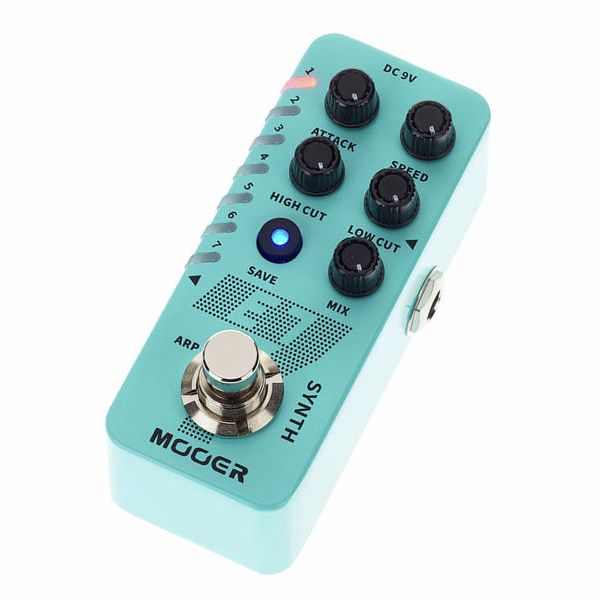
Guitar synth pedals used to mean spending real money on something like a Roland GR unit with a special pickup. The Mooer E7 throws that idea out entirely, plug straight into a normal guitar and get seven synth voices instantly, no special hardware needed.
Is it going to fool a keyboard player? No, not really. But that’s not really the point. It’s a compact, cheap way to add genuinely different textures to your board without committing to a full synth rig.
I spent time running through all seven presets on both guitar and bass, tweaking the arpeggiator and filters along the way. Here’s the honest verdict.
Tone and Sound
Seven presets, seven very different flavors. You get trumpet and organ-ish patches, a sawtooth voice with a wobbly LFO, an 8-bit chiptune tone, and a pad-style EDM synth sound that’s genuinely lovely for ambient swells.
The Good Presets
Mode 3, the ocean-wave pad tone, is easily my favorite. Roll off some high end, add a touch of reverb, and you get gorgeous, slow-moving atmosphere that fits perfectly if you’re already exploring the territory covered in our EHX Mel9 review.
Mode 5, the sawtooth lead, works great for single-note solos where you want something that cuts through without sounding like a normal guitar tone at all. It’s genuinely fun to solo over a static chord with this engaged.
The Weaker Presets
Not every preset lands. A couple of the organ and trumpet-style tones sound a bit thin and artificial, more toy than instrument. That’s the tradeoff you make at this price versus something in the Boss SY series.
Tracking is also noticeably slower on chords and lower notes. Single, higher-pitched notes respond quickly. Play a low chord and there’s a small but real lag before the synth voice catches up, worth knowing before you plan a tight rhythm part around it.
Bass players get a slightly rougher deal too. The polyphonic tracking on bass frequencies is noticeably less tight than on guitar, so don’t expect this to become your go-to synth-bass tool. It’s still fun for the occasional weird texture on a recording, just not something you’d rely on live.
Build and Features
The housing is metal and feels sturdier than the toy-like sound of some presets would suggest. Mooer clearly built this to survive pedalboard life, not just bedroom noodling.
- 7 selectable synth presets, each individually adjustable
- Per-preset arpeggiator with adjustable speed
- Attack, high-cut, and low-cut controls
- Mix knob to blend dry and synth signal
- True bypass footswitch
- Micro USB port for firmware updates
- Metal housing, compact footprint
The Mix knob is doing a lot of quiet heavy lifting here. It lets you blend the synth voice under your normal guitar tone instead of replacing it entirely, which honestly makes half these presets far more usable in a real band context.
Playability and Usability
Getting a usable sound takes about thirty seconds. Pick a preset, dial the mix, adjust attack if you want a slower swell instead of an instant hit. It’s genuinely intuitive for how much sonic range is packed in here.
The arpeggiator is where I spent most of my time, honestly. Set a slow speed on the pad preset and hold a chord, and you get this rolling, sequenced texture that sounds like a totally different instrument bolted onto your guitar rig.
Stack it with a good delay and the arpeggiated pad tones turn into something close to a mini modular synth patch. If you don’t already have a delay that plays nicely with textures like this, our best delay pedals under $100 roundup has a few options that pair really well with the E7’s ambient side.
Who Is This For
- Players who want synth textures without buying an actual synth
- Anyone building an ambient, shoegaze, or experimental pedalboard
- Home recording folks who want quick, weird layers for demos
- Players who already have a solid pedalboard and want one wildcard slot
- Budget-conscious buyers curious about guitar synths before committing to something pricier
If you’re already building out a board for that genre, it slots in nicely alongside picks from our best pedals for indie rock list, or if jazz is more your thing, there’s some crossover appeal with textures from our best pedals for jazz roundup too.
Who Should Skip It
If you need reliable, fast-tracking polyphonic synth tones for serious performance work, save up for something like a Boss SY-200 instead. And if you’re expecting studio-grade realism from any of the seven presets, temper those expectations now, this is a fun tool, not a synth replacement.
A Few Honest Niggles
The tracking lag on lower notes and chords is the real limiting factor here. It’s fine for pads and slow textures, less fine if you wanted tight, rhythmic synth-bass lines.
A few presets also feel more like tech demos than tools you’d reach for regularly. Realistically you’ll probably lean on two or three of the seven most of the time, which is still a fair deal at this price, just don’t expect all seven to be equally useful. Pair it with something like the picks in our best chorus pedals under $100 guide and the pad tones especially come alive.
Specs at a Glance
- Type: Polyphonic guitar synth pedal
- Presets: 7 selectable synth voices with arpeggiator
- Controls: Attack, Speed, High Cut, Low Cut, Mix, Save
- Bypass: True bypass
- Power: 9V DC adapter (not included, no battery option)
- Current draw: 200mA
- Available since: November 2019
Final Verdict
The Mooer E7 isn’t trying to be a serious synth rig, and once you accept that, it’s genuinely a lot of fun. A handful of the presets are legitimately useful for ambient textures, weird solos, and creative studio layering.
The tracking lag on chords and the occasional toy-ish preset keep it from being a no-brainer for everyone. But for the money, you’re getting a genuine creative wildcard for your board, and worth it if you’re the type who likes stumbling into weird new sounds instead of always playing it safe.