Watch It First
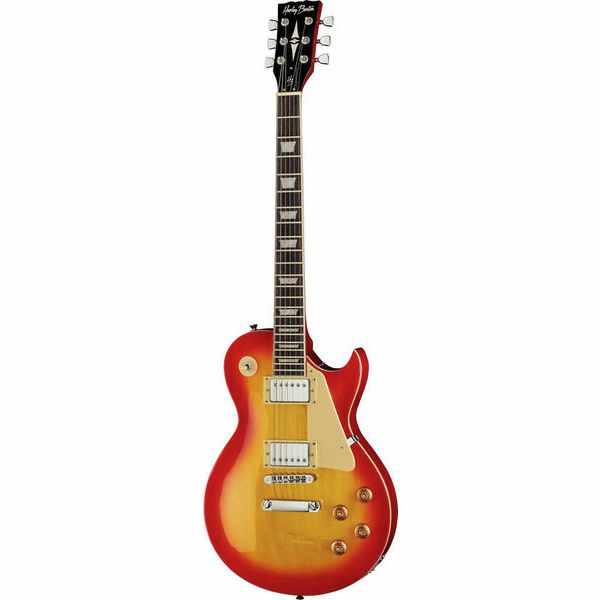
There are guitars that get talked about because they are good, and guitars that get talked about because nobody can quite believe they exist. The Harley Benton SC-450 is the second kind.
It is a single-cut, two-humbucker, set-neck Les Paul-shaped guitar that costs less than a night out. Which, on paper, should be a disaster.
I have spent enough hours with one to have opinions. Some of them are annoyingly positive.
The Bit Everyone Gets Wrong About It
People assume „cheap Les Paul copy” means bolt-on neck and a slab body with a photo-flame sticker on top.
It is not that. The SC-450 has a genuine set neck and a carved top, which is the structurally expensive part of building a Les Paul.
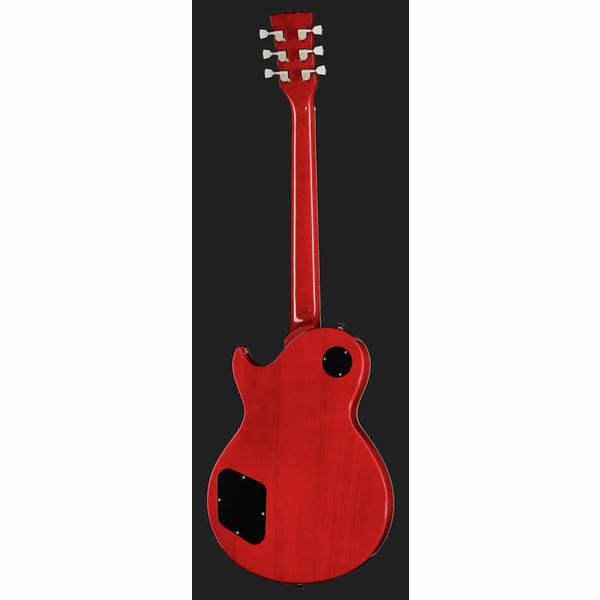
Body is poplar rather than mahogany, and yes, that changes things. It is a touch brighter and a touch less thick in the low mids.
Honestly? Through a band mix nobody is going to identify your tonewood. Through headphones at 2am you might notice.
It Is Heavier Than You Expect
Poplar is not light. Mine sat right in the same ballpark as a real Les Paul on the scales.
If your shoulder already has opinions about single-cuts, this one is not going to be the guitar that fixes that.
Plugged In: Better Than It Has Any Right To Be
Two covered humbuckers, a 3-way toggle, two volumes and two tones. Standard issue, no surprises.
The bridge pickup is hot and slightly aggressive, which suits rock and works fine for anything with dirt on it.
The neck pickup is the nicer of the two. Rolled back a bit it does a decent, woody clean tone that punches above what you paid.
Both are a little compressed compared to a set of ProBuckers. You lose some of that bloom on the note attack.
The Pickups Are the Obvious Upgrade
This is where the SC-450 gets genuinely interesting. It is the classic platform guitar.
Drop a decent pair of humbuckers in and you have a guitar that will embarrass instruments costing four times as much, because the woodwork underneath is already sound.
If you would rather not fiddle and just want the pickups sorted from the factory, the Epiphone Les Paul Modern Figured is the next rung up.
The Neck Is Surprisingly Grown Up
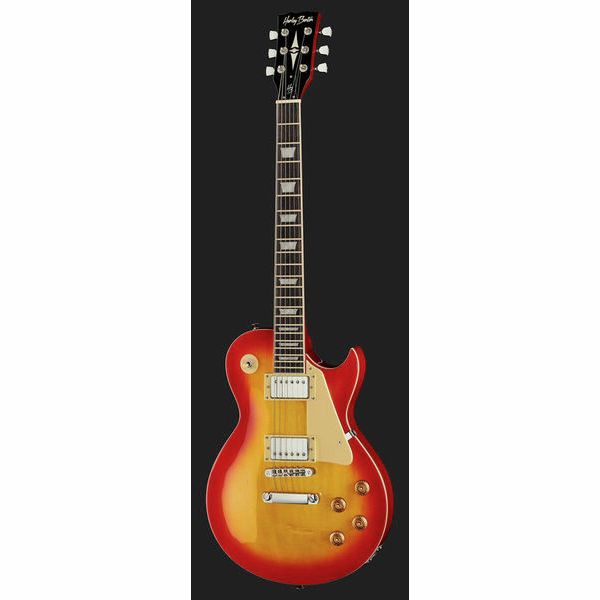
Maple, glued in, with a C profile that is medium in every direction. Not a baseball bat, not a pancake.
The fingerboard is Roseacer – roasted maple, essentially – and it looks dark enough to pass for rosewood without any of the CITES paperwork nonsense.
305mm radius, 22 medium jumbo frets, 628mm scale. All the numbers a Les Paul player would expect to see.
Fret ends on mine were the giveaway. Not sharp exactly, but you could feel them. Ten minutes with fine sandpaper sorted it.
Specs at a Glance
- Poplar body with a carved top, cherry burst high-gloss
- Glued-in maple neck, C profile, Roseacer fingerboard
- 628mm scale, 43mm nut, 22 medium jumbo frets, 305mm radius
- Cream body and neck binding, trapezoid inlays
- 2 covered humbuckers, 3-way switch, 2 volume and 2 tone
- Tune-O-Matic bridge, sealed die-cast tuners, chrome hardware
Nothing exotic in there. That is sort of the point – it is a straight, unpretentious take on a very old formula.
The Niggles
Because it is not magic and I am not going to pretend it is.
The tuners. Sealed die-casts that do the job but feel like they are made of cheese. They will hold a tuning; they will not feel nice doing it.
The nut. Plastic, and on mine it was cut just a little tight on the B string. Classic budget-guitar tuning-stability culprit.
Setup out of the box is a lottery. Mine arrived with the action high enough to slide a bus under. Twenty minutes of truss rod and bridge work and it was genuinely good.
Electronics are the usual budget pots. They work, the taper is a bit switch-like rather than gradual, and they are cheap to replace.
Who Is This Actually For?
First-guitar buyers who want a Les Paul and not a Strat copy. That is the obvious one and it is a genuinely good answer.
Second: modders. Anyone who enjoys swapping pickups, wiring, and hardware more than they enjoy playing. FYI, that is most of us at some point.
Third: people who need a knockabout gig guitar they will not cry over if a drunk knocks it off a stand.
And Who Should Skip It
If you want a Les Paul that is finished and ready to go with no fiddling, go up a tier. The Epiphone Les Paul Custom is the sane version of this urge.
If you want one pickup and pure attitude instead, the Epiphone Les Paul Junior is a different but very fun answer.
And if metal is the whole point, the Harley Benton Amarok-6 from the same brand is built for it from the ground up.
How It Compares to the Rest of the Range
Harley Benton makes about nine hundred variations of this guitar and it gets confusing fast.
The plain SC-450 is the Classic Series version – covered humbuckers, cherry burst, no frills.
The SC-450 Plus adds a flamed veneer top and a slightly fancier finish. The P90 version swaps the humbuckers for single coils and is arguably the most characterful of the lot.
For most people the standard SC-450 is the right pick, because you are going to change the pickups anyway.
Amp Pairing
It likes a bit of grit. Even something modest like a Marshall MG15GFX gets the bridge pickup doing its thing convincingly.
Clean amps expose the compressed pickups more than dirty ones do. Worth knowing if you play jazz or funk.
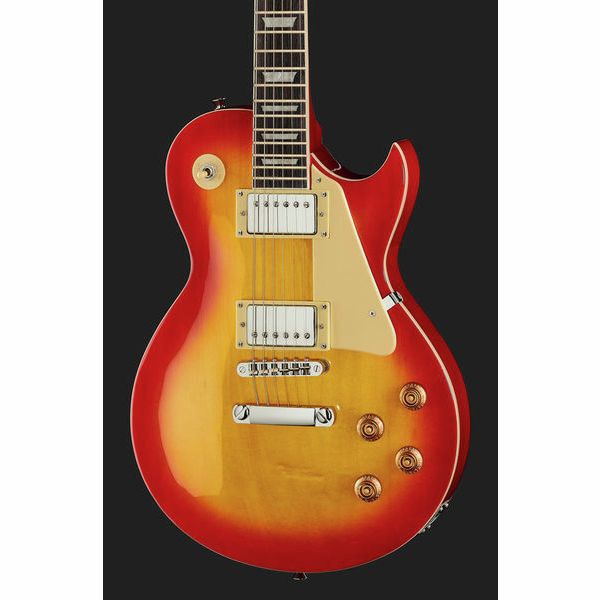
Cherry burst is the classic look, but it also comes in black and a P90-loaded gold top if you want something less traditional.
Final Verdict
The SC-450 is not the best Les Paul-style guitar you can buy. It is not close, and it does not need to be.
What it is: an honest, properly built platform that gets you a set neck and a carved top for pocket money, and then leaves the rest up to you.
Budget a bit for a setup and maybe a set of pickups down the line, and it will genuinely outlast a lot of guitars that cost far more.
If your heart wants a metal-ready single-cut instead, the Epiphone Prophecy Les Paul is the other end of this same idea.
For what it costs, it is one of the easiest recommendations on the site. Simple as that.