Watch It First
Every guitarist’s first „real” amp decision usually comes down to a shortlist, and the Marshall MG15GFX shows up on almost every one of them.
It’s a 15-watt combo with the Marshall name on the badge, a full set of digital effects, and a price that doesn’t require asking permission from anyone.
The question isn’t whether it’s a good deal on paper – it obviously is. It’s whether it actually holds up once you’re plugged in and playing.
Build and Design
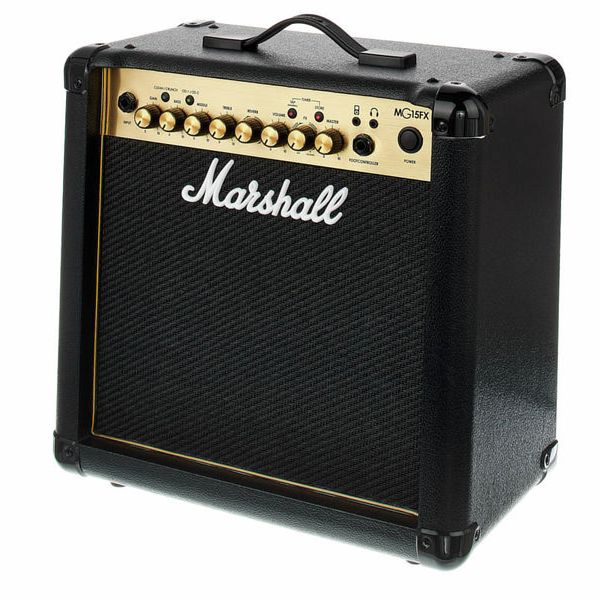
Physically, this is a small, dense little box – 382 x 379 x 205mm and about 7.7kg, so it’s genuinely portable without feeling flimsy. The black and gold Marshall livery is instantly recognizable, and it looks the part sitting in a bedroom or a rehearsal space.
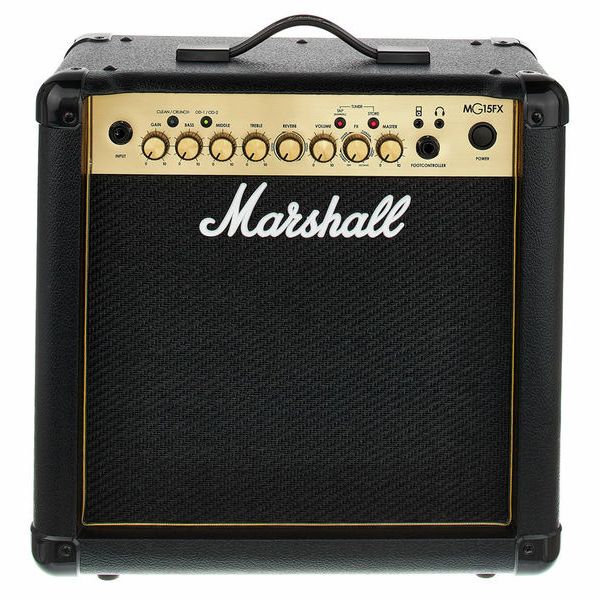
Inside is a single 8-inch speaker, which is the main physical limitation of an amp this size – more on that in a minute. Controls are laid out simply: gain, EQ, an FX section, and channel selection, all clearly labeled and easy to learn without a manual.
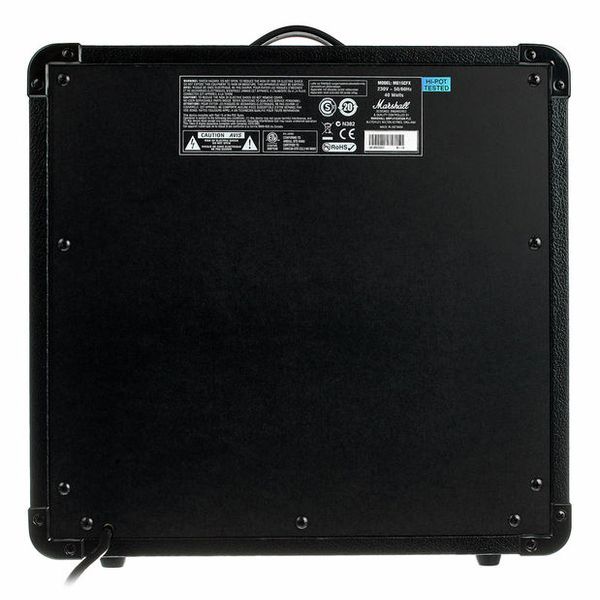
Round the back you get a headphone output that doubles as an emulated line/recording out, plus an MP3/line input for practicing along to tracks. For a beginner amp at this price, that combination is genuinely useful rather than a box-ticking exercise.
Tone, Channels, and Effects
Four channels are onboard: Clean, Crunch, Overdrive 1, and Overdrive 2, each independently save-able and recallable if you add the optional footswitch (sold separately, worth budgeting for if you plan to switch tones live rather than by hand).
The clean channel is genuinely decent for the price bracket – bright, reasonably full, and it takes pedals well if you want to build your tone externally rather than lean on the onboard gain. The crunch and overdrive channels are where Marshall’s reputation actually shows up; there’s real character here, not just generic fizz.
Built-in digital effects cover reverb (studio and emulated spring), and a handful of modulation and delay options. They won’t replace a proper pedalboard, but they’re more than serviceable for home practice, and the reverb specifically is a genuinely nice-sounding effect rather than an afterthought.
Where it shows its limits is volume and low-end punch. That 8-inch speaker and 15 watts are plenty for bedroom or small-room practice, but this isn’t a gigging amp – past a certain volume, things get thin and the low end starts to disappear rather than fill out the room.
Who It’s For
This is squarely a beginner and bedroom-player amp. If you’re starting out, learning at home, or need something for a practice room that won’t upset the neighbors, it’s a smart, low-risk purchase from a name brand that won’t embarrass you tonally.
It also works well as a secondary practice amp for a gigging player who already has a „real” rig elsewhere but wants something small for noodling at home or warming up backstage.
Pair it with an affordable first electric like the Harley Benton SC-Junior and you’ve got a genuinely capable, low-cost setup for someone learning the instrument from scratch.
The Honest Niggles
The 8-inch speaker is the elephant in the room. It’s fine for what it is, but you’ll never get a genuinely full, room-filling low end out of it – if that matters to you, you’re shopping in the wrong wattage bracket entirely.
The digital effects are good for the price but noticeably behind what you’d get from a dedicated multi-effects unit or a handful of quality pedals. Treat them as a bonus, not the main event.
Some units have reported the amp resetting to default settings unexpectedly, based on a few user reviews – not universal, but worth checking your unit thoroughly during the return window.
And the footswitch that unlocks the real value of the four-channel design isn’t included, so factor that into your budget if hands-free channel switching matters to you.
Where It Fits in a Rig
If you outgrow the onboard effects, a noise gate like the Boss NS-2 is a smart early addition once you start stacking gain and other pedals in front of it – the MG15GFX can get a bit noisy on the higher-gain channels.
For a delay pedal that’ll outlast this amp if you eventually upgrade your rig, the Boss DD-8 is worth a look. And if you want to compare this against an even smaller, grab-and-go option for travel, Marshall’s own MS-2 micro amp is a fun (if much more limited) alternative.
Curious how it stacks up against other budget tube-adjacent options? It’s worth reading about the Blackstar HT-20R MKIII for a sense of what a step up in price and tube circuitry actually buys you.
Specs at a Glance
- Type: Solid-state combo
- Power: 15W
- Speaker: 1x 8″
- Channels: 4 (savable/recallable with optional footswitch)
- EQ: 3-band
- Effects: Digital reverb (studio + spring emulation), modulation, delay
- Outputs: Headphone/emulated line out
- Inputs: MP3/line input
- Dimensions: 382 x 379 x 205mm
- Weight: 7.7kg
- Finish: Black/gold
Getting the Most Out of It
A few small tweaks make a real difference with this amp. Backing off the built-in gain slightly and pushing the volume a touch harder tends to sound more open than maxing gain and keeping volume low – the classic „amp on the edge of breakup” trick still applies even at 15 watts.
If you’re recording at home, the emulated output through the headphone jack is genuinely usable for quick demos straight into an interface, which isn’t something every amp in this price range bothers to get right.
And if you do pick up the optional footswitch down the line, it transforms the amp from „four channels you flick through by hand” into something that actually feels gig-ready for small, quiet rooms – open mics, church, or a low-volume rehearsal space.
Final Verdict
The Marshall MG15GFX does what it’s supposed to do: it gives a beginner or bedroom player a genuine taste of Marshall crunch, a usable set of effects, and a headphone/recording output, all in a small footprint that won’t dominate a room or a budget.
It’s not going to gig, and the 8-inch speaker keeps it firmly in practice-amp territory. But for the price, it’s one of the more sensible first-amp purchases out there – genuinely fun to play, and it won’t hold back a beginner’s progress. IMO it earns its spot on nearly every „first amp” shortlist for a reason.