Watch It First
There are pedals that feel trendy for a year and vanish. Then there’s the CH-1, which has been on pedalboards since before a lot of us were born.
It’s not flashy. It doesn’t do twelve modulation types or have a companion app. It just does chorus, really well, and keeps doing it.
Let’s talk about why this thing refuses to die, and whether it still deserves a spot on your board in 2026.
Build Quality – The Usual Boss Tank
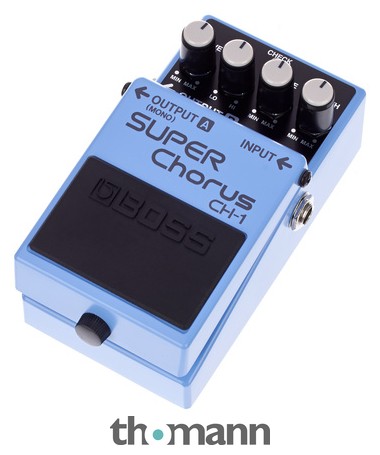
Standard Boss compact enclosure, metal chassis, chunky footswitch. There’s genuinely nothing to say here except that it’ll survive being kicked around in a gig bag for twenty years, because plenty of them already have.
Runs on battery or the usual Boss 9V adapter (sold separately). No surprises, no fuss.
Sound and Tone – Clean, Bright, and a Little Old-School
This is a genuinely clean-sounding chorus. Where some modulation pedals get murky or dark, the CH-1 stays crystal clear with a slightly bright top end that cuts through a mix nicely.
Mono is fine and usable, but stereo is really where this pedal shows off. Run it into two amps, or a stereo interface, and the width genuinely surprises people who’ve only heard it in mono clips online.
There’s a built-in EQ knob too, which is a small thing but genuinely useful — you can tame the brightness a touch if your amp is already fizzy, or push it further for that glassy 80s clean tone.
Turn the depth down low and you get a subtle thickening effect that’s barely noticeable as „chorus” — more like your guitar just sounds bigger. Turn it up and you’re in full-on shimmer territory.
Playability and Everyday Use
Four knobs: Level, EQ, Rate, Depth. That’s the entire interface, and that’s exactly the point. You can dial in a great sound in under a minute without reading a manual.
There’s no tap tempo and no presets, so if you need to switch between two chorus sounds mid-set you’ll be doing it with your fingers on knobs, not a footswitch. For most players that’s a non-issue since chorus tends to be more of a „leave it on” or „leave it off” effect anyway.
Mono vs Stereo Setup
If you’ve got two amps or a stereo rig, it’s worth the extra cable to run this in stereo at least once. It genuinely changes how you think about the pedal — what sounds like a decent chorus in mono becomes a completely different, wider instrument in stereo.
Worth a quick history note too: this circuit is basically the same one Boss has used across generations of chorus pedals with only minor tweaks. That’s not laziness — it’s because they nailed the fundamentals early and haven’t found a reason to mess with a good thing.
That kind of consistency is rare in the pedal world, where brands love to „innovate” a classic circuit into something worse. The CH-1 is refreshingly resistant to that trend.
Who Actually Needs This
Clean tone players — jazz, indie, funk, ambient, anything that leans on shimmering cleans — will get the most mileage here. It’s also a great „first chorus pedal” because it’s simple enough to learn on but good enough that you won’t outgrow it in six months.
If you’re building out a full modulation section on your board and want a dependable, no-nonsense chorus as the anchor, this is still a smart pick even decades after release.
Who Should Look Elsewhere
If you want a chorus with multiple voicings, tri-chorus modes, or vibrato blended in, this is too simple for you — look at something like the Boss DC-2W Dimension C instead, which does a lot more shape-shifting.
The Honest Niggles
- No tap tempo or memory — every setting is manual, every time
- Only one chorus voicing, no alternate modes
- Mono use is good but doesn’t show off what the pedal can really do
- Feels a little old-fashioned next to modern boutique chorus pedals
It’s basically the pedal equivalent of a reliable old truck. Not exciting on paper, just works every single time.
CH-1 vs the Rest of the Chorus Pack
Against the Ibanez CSMini Chorus, the CH-1 is bigger but gives you a dedicated EQ knob and proper stereo outputs, which the mini format usually sacrifices.
The MXR Analog Chorus leans warmer and more vintage-analog, where the CH-1 stays cleaner and brighter — pick based on which side of that fence you’re on.
If you want more of an 80s wobble character, the TC Electronic Afterglow Chorus pushes further into that vintage rack-unit vibe than the CH-1 does. And for a completely different modulation flavour on the same board, the EHX Nano Small Stone phaser is a great contrast pedal to pair alongside it.
Honestly, if you want the full lay of the land before deciding, my chorus pedal ranking covers most of what’s worth considering this year.
A Note on Pairing With Other Effects
Chorus pedals are one of the few effects that genuinely behave differently depending on where you place them. Put the CH-1 after your drive pedals for a smoother, more blended shimmer, or before them if you want the modulation itself to distort a little, which can sound great on more aggressive tones.
If you’re also running delay or reverb, try the chorus before those time-based effects rather than after — the modulation tends to sound more natural when it’s affecting the dry signal first rather than the trails.
Specs at a Glance
- Classic BOSS Super Chorus circuit
- Controls: Level, EQ, Rate, Depth
- Mono and stereo output options
- Battery or 9V power supply operation
- Standard compact Boss pedal enclosure
Final Verdict
The CH-1 doesn’t need to reinvent itself because it never really had a flaw worth fixing. It’s clean, it’s bright, it’s genuinely great in stereo, and the EQ knob gives it just enough flexibility to handle different amps and pickups.
Is it exciting? Not particularly. But if you want a chorus pedal that just works, sounds great, and will still be on the market in another twenty years, this is still one of the smartest, least risky buys in the whole modulation category.