Watch It First
Chorus pedals get a bad rap sometimes. Too much of it and you sound like you’re playing through a fish tank. But dial it in right and it’s one of those effects that just makes a plain clean tone feel three-dimensional, and the TC Electronic Afterglow Chorus is one of the easiest ways I know to get there.
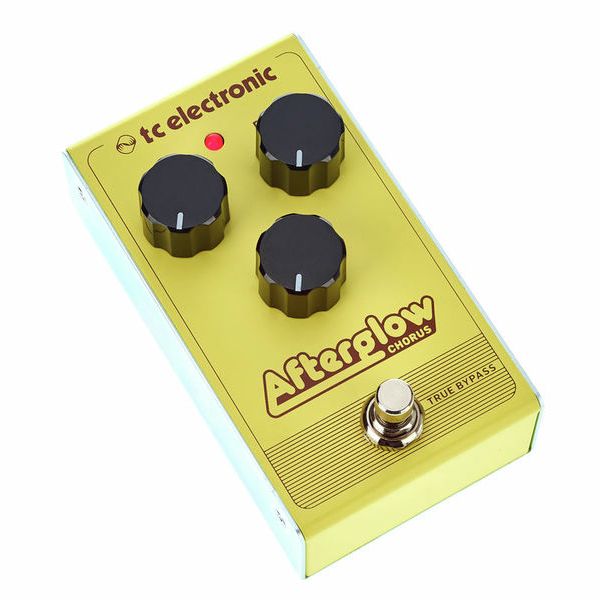
It’s a tiny, unassuming little pedal that’s been quietly sitting on pedalboards for almost a decade now. No frills, no app, no TonePrint gimmicks — just Rate, Depth and Mix.
Sometimes that’s exactly what you want. Let’s get into why this one keeps outselling flashier options.
What kind of chorus are we talking about
This is a vintage-voiced, all-analog chorus. Think warm, round, and a little dreamy rather than the icy, glassy digital choruses you get on a lot of multi-fx units.
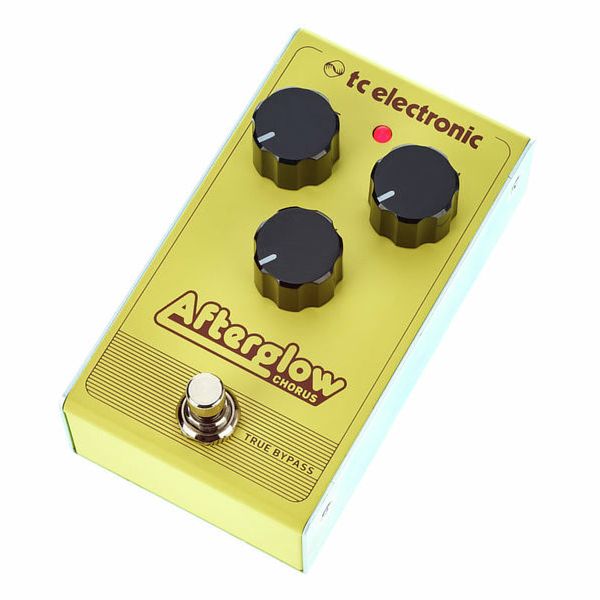
Rate controls speed, Depth controls how far the pitch wobbles, and Mix blends the wet signal in. That’s it. Three knobs, one job, done well.
If you’ve spent time with something like the MXR Analog Chorus, this sits in a similar family tonally — warm, watery, unmistakably 80s when you push it — just in a much smaller, cheaper box.
Dialing in the sweet spot
Low Depth and moderate Mix gets you that subtle, almost-invisible thickening that makes single-coil strumming sound like there are two guitars in the room. Great for clean rhythm work.
Crank the Depth and slow the Rate down and you’re in full 80s ballad territory — think chorused arpeggios that just shimmer forever. It gets genuinely lush at these settings, and honestly it surprised me how far it could go for such a compact pedal.
Push the Rate up fast and you get a warbly, seasick vibrato-adjacent sound that’s fun for texture but probably not your main setting. Good to know it’s there though.
Who should actually buy this
Budget-conscious players who just want one solid chorus without paying boutique prices. This is the pedal you grab when you’re building your first „real” board and don’t want to blow the whole budget on modulation.
It’s also a smart pickup for anyone running an acoustic-electric rig — I’ve heard it used really nicely alongside something like the Boss VE-8 Acoustic Singer setup to add width to a DI’d acoustic tone without muddying things up.
Skip it if you need stereo outputs or want deep tone-shaping control — this is mono in, mono out, and there’s no way around that. Players who want a multi-fx approach instead should probably look at something like the Valeton GP-200.
Build and everyday usability
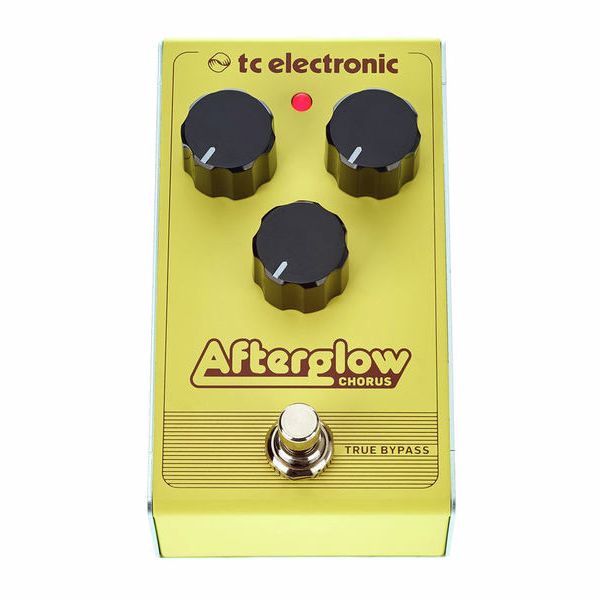
It’s a mini-format pedal, which is great for cramped boards but does mean the knobs are a bit close together if you’ve got bigger feet or fingers. True bypass switching means no tone-sucking when it’s off, which matters if it’s sitting in a long chain.
Runs on 9V battery or a standard power supply, and the footswitch has a satisfying, quiet click — no loud clunk that’ll show up on a quiet acoustic recording.
Setup is genuinely plug-and-play. No manual required, which honestly is refreshing after fiddling with menu-diving multi-effects units.
Honest niggles
No stereo output is the big one. If you’re chasing that huge, wide chorus sound that fills a room in stereo, you’ll want to look elsewhere — this stays mono.
The mini footprint also means the input and output jacks are a little close to neighbouring pedals if your board is packed tight. Not a dealbreaker, just plan your pedal order accordingly.
And yeah, it won’t do anything wild or experimental. If you want a chorus that can also flange or phase, this single-trick pony isn’t your pedal. It does one thing, but it does it very well.
Where it sits in your signal chain
Placement matters more than people think with chorus. Put it before drive and it can get a bit muddy and washy once the gain kicks in — the modulation and distortion fight each other for space.
Put it after your overdrive or fuzz and it stays clean and defined even at higher Mix settings. That’s the order I’d recommend if you’re running anything gain-heavy ahead of it, and it’s basically the standard modern pedalboard convention anyway.
Stack it ahead of a delay or reverb and the modulation gets carried through the repeats too, which sounds massive on ambient passages. Stack it after and you get a tighter, more contained wobble. Both are valid, just experiment and trust your ears.
In the studio, I’ve found it works especially well doubled up on clean rhythm tracks — record one dry pass and one with the Afterglow on, pan them apart, and you get an instant wide stereo rhythm bed without ever needing a stereo-out chorus. A cheap studio trick that a lot of home recordists overlook.
Quick specs
- Type: Analog chorus, vintage voicing
- Controls: Rate, Depth, Mix
- True bypass switching
- Mono in, mono out
- Runs on 9V battery or 9V DC power supply (not included)
- Compact mini-pedal footprint
Verdict
The Afterglow Chorus does exactly what it promises: warm, analog, vintage-flavoured modulation in a mini pedal that won’t dent your wallet. It’s not trying to be everything to everyone, and that focus is honestly its biggest strength.
If mono output and a lack of extra modes are dealbreakers for you, look at something more feature-packed like the Positive Grid Spark Mini ecosystem instead. But for straightforward, reliable, great-sounding chorus at a genuinely budget price, this is hard to beat.
Easy pedal to recommend to anyone starting out, and honestly a fine choice even for players who’ve been at this a while and just want something that works. Solid buy, no notes.