Watch It First
I’ll be upfront: I was skeptical of the Spark Mini before I plugged into one. Positive Grid’s app-controlled amps always sounded gimmicky to me on paper – a tiny speaker paired with a phone app, marketed hard at beginners. Then I actually used one for a month.
Now I get it. This thing is genuinely clever, and it does something most tiny practice amps don’t even attempt: it makes you want to keep playing instead of just tolerating the tone.
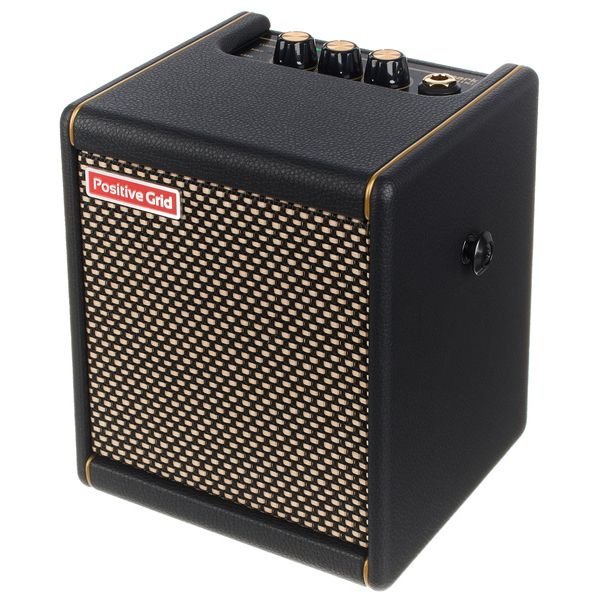
It’s the little sibling of the Spark 40, built for guitar, bass, or acoustic, and it fits in a bag with room to spare. Here’s the honest rundown.
What It Actually Is
Two 2-inch speakers, 10 watts, a rechargeable battery good for around 8 hours, and USB-C charging. It’s small – 147 x 123 x 165mm – genuinely pocket-of-a-backpack small, not „compact for an amp” small.
The magic is in the Spark app. It connects over Bluetooth and gives you access to a massive library of amp models and effects (Positive Grid claims 50,000+ tones, which sounds like marketing fluff until you realize it’s mostly community presets plus their own modeling engine). You also get Smart Jam, which generates AI backing tracks on the fly, and Auto Chords, which pulls chords for basically any YouTube video you throw at it.
Does It Sound Good Without the App?
Yes, actually. There are onboard Presets, Guitar, and Music controls that work standalone, so you’re not stuck tethered to your phone. It won’t have quite the same depth as digging through the app’s full library, but it’s genuinely usable on its own for quick practice sessions.
Tone – Surprisingly Convincing for the Size
For two 2-inch speakers, the range of usable tones is impressive. Cleans are shimmery without being thin, and the higher-gain models have real character instead of the fizzy mess you get on a lot of tiny modelers. It won’t fool anyone into thinking it’s a real tube amp mic’d up, but it’s genuinely fun to play through – which, honestly, matters more day to day.
Compare that to something like the Boss Katana Mini, which takes the opposite approach – three simple, all-analogue amp voices instead of a massive digital library. Both are excellent at what they do; the Katana Mini is more „plug in and go,” the Spark Mini is more „tweak until you find your exact tone.”
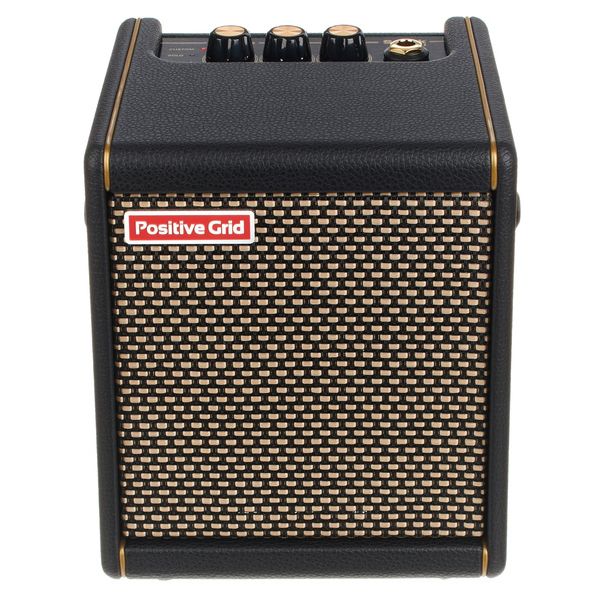
The App Is Where This Amp Either Clicks or Doesn’t
If you’re the type who enjoys tweaking gear settings, browsing presets, and geeking out over amp models, you’ll love the Spark app experience. If you just want to plug in and play with zero fuss, the onboard controls cover the basics but you’re leaving a lot of the amp’s value on the table.
Smart Jam is a genuinely fun practice tool – it listens to what you play and generates a bass-and-drums backing track that follows your chord choices. It’s not going to replace a real rhythm section, but for solo practice it’s a legitimately useful feature, not just a marketing checkbox.
Auto Chords deserves a special mention too – point it at basically any song on YouTube and it’ll pull up the chord chart in near real time. For anyone who’s ever paused a video fifty times trying to figure out a chord change by ear, this alone saves a genuine chunk of practice time. It’s not always perfectly accurate on complex jazz voicings, but for rock, pop, and blues it’s remarkably solid.
Who Should Buy This
- Players who want maximum tonal variety in a tiny, battery-powered package
- Anyone who practices with backing tracks or wants AI-generated jam companions
- Bedroom/apartment players who value app-based convenience over simplicity
- Bassists and acoustic players too – it’s genuinely multi-instrument capable
If you hate apps, subscriptions-adjacent ecosystems, or just want knobs you can grab without unlocking your phone, look at something simpler like the Katana Mini or my Fender Frontman 10G review instead.
The Honest Niggles
Bluetooth connection occasionally needs a reconnect if your phone falls asleep or you walk out of range – minor, but noticeable when it happens mid-session. The stock speakers, while good for their size, obviously can’t compete with anything bigger once you push distorted tones to real volume; things get a little congested at the top end when you’re really pushing gain.
It’s also worth being honest that the value proposition leans heavily on you actually using the app. If you never open it, you’re paying partly for software features you’re not using. And like most Bluetooth speakers/amps, it’s not gig-ready – this is strictly a practice and jamming tool, not a stage rig.
Battery life claims of around 8 hours held up reasonably well in my own casual use, though obviously that number drops if you’re running higher volumes or leaving Bluetooth active the whole session. Charging via USB-C means you can top it up from the same brick you use for your phone, which is a small but genuinely appreciated convenience when you’re packing for a trip.
Spark Mini vs the Alternatives
Against the Fender Tone Master Deluxe Reverb – obviously not a fair fight, different category entirely, but it illustrates the tradeoff: real amp tone and headroom vs. tiny portable convenience and tonal variety. Against the Fender Rumble 25 for bass players specifically, the Spark Mini actually handles bass duty reasonably well too, which is a nice bonus versatility play.
If you want Bluetooth audio streaming plus a genuinely good drive/delay pedal-like effects chain but in pedal form rather than an amp, the UAFX Starlight Echo Station is worth a look as a complementary pickup, not a replacement.
Specs at a Glance
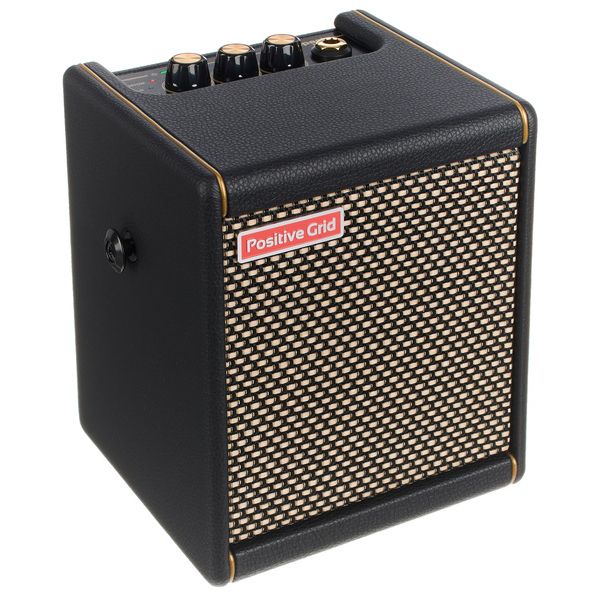
- Power: 10 W, 2x 2″ speakers
- Battery: rechargeable via USB-C, up to 8 hours
- Bluetooth streaming and app control (Spark app)
- 43 onboard effects, expandable via app
- Smart Jam and Auto Chords features
- Inputs: 6.3mm instrument jack, 3.5mm AUX
- Output: 3.5mm headphone/recording out
- Dimensions: 147 x 123 x 165 mm
- Weight: 1.5 kg
Final Verdict
The Spark Mini won me over more than I expected. It’s not just a gimmick amp riding on app hype – the tones are genuinely good, the portability is real, and the extra features (Smart Jam especially) actually get used rather than ignored after week one.
It’s not for purists who want knobs-only simplicity, and it’s not a gigging amp. But as a practice companion that goes anywhere and keeps things interesting, it’s one of the more genuinely fun pieces of gear I’ve tested this year. Easy recommendation for anyone who wants variety in a small package.