Watch It First
Acoustic amps have a bad reputation, and honestly, most of them deserve it. Plug a nice acoustic-electric into one and you often get a thin, quacky, unnaturally bright sound that has nothing to do with how the guitar actually sounds unplugged.
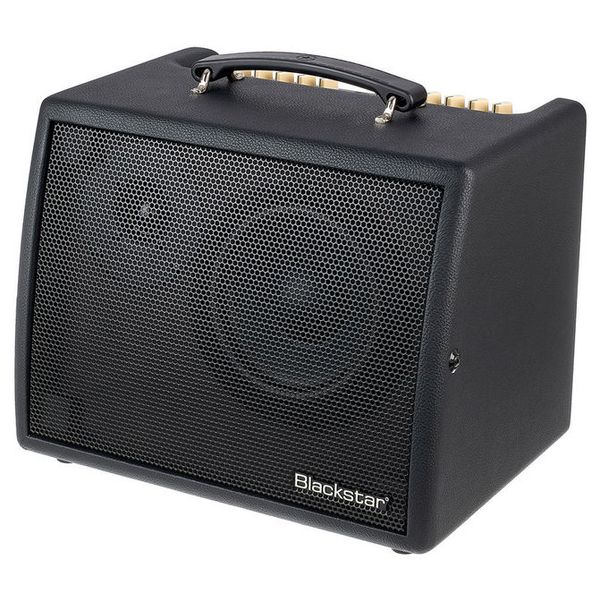
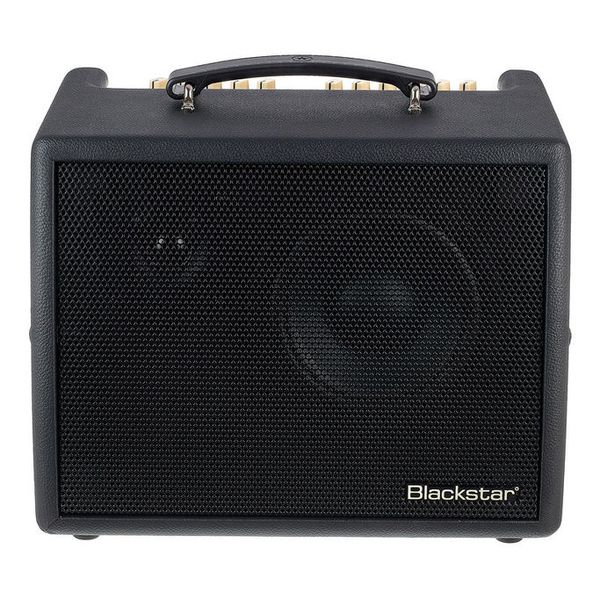
The Blackstar Sonnet 60 is one of the rare exceptions. It’s a 60W, 2-channel acoustic combo built specifically to avoid that quacky trap, with enough onboard tools to actually shape a natural tone rather than fight one.
I’ve tested a fair few acoustic amps at this point, and this is one of the few I’d genuinely recommend without a long list of caveats. Here’s why.
Two Channels That Actually Do Different Jobs
Channel 1 is built for your main instrument, with a full 3-band EQ (Low, Mid, High) plus Gain and its own Reverb send. Channel 2 drops the Mid control but keeps Low, High, Gain, and Reverb, making it a natural home for a vocal mic or a second instrument.
That’s a genuinely useful setup for solo acoustic performers who sing while they play. You get independent EQ and reverb per source instead of one shared tone control fighting two very different signals.
Channel 2’s input is a combo XLR/6.3mm jack, so a dynamic or condenser mic plugs straight in, no separate mixer required. For anyone doing coffee shop gigs or house concerts, that’s one less box to carry.
Both channels get their own dedicated reverb send too, which is a small detail that matters more than it sounds. You can drown your vocal in a bit of hall reverb while keeping the guitar dry and upfront, or vice versa, without any awkward compromise.
Why It Doesn’t Sound Quacky
A lot of the „acoustic amp quack” comes from piezo pickups fighting a speaker that’s voiced for electric guitar. Blackstar’s global Brilliance switch and H.P. Filter give you real control over that top-end harshness instead of just cutting treble across the board and losing clarity along with it.
The Shape switch is the other secret weapon here. It scoops the low-mids slightly and adds a touch of air, which is exactly the kind of correction piezo-equipped acoustics usually need to sound like themselves again rather than a nasal cousin of themselves.
The 6.5″ speaker plus tweeter combo also matters more than the modest size suggests. It’s voiced for clarity across the frequency range an acoustic actually occupies, rather than chasing bass extension it doesn’t need.
I ran a handful of different guitars through it, from a cheap laminate dreadnought to a nicer solid-top build, and the amp never imposed its own character on top. It just got out of the way, which is honestly the highest compliment you can pay an acoustic amp.
The Bluetooth and Streaming Angle
Built-in Bluetooth means you can stream backing tracks straight to the amp for practice, or even use it for casual home listening. It’s a small feature, but it removes yet another cable and adapter from your setup.
There’s also a USB audio connection for recording direct into a DAW, and a balanced XLR Mix DI out for going straight to a PA or mixing desk at a gig. Between those two, you’re covered whether you’re tracking at home or playing out.
Honest Niggles
At 60W and with a 6.5″ speaker, this isn’t going to fill a large room or outdoor venue on its own. Think coffee shops, small function rooms, and rehearsal spaces rather than festival stages.
The optional FS-17 footswitch isn’t included, which is a bit annoying if you want hands-free channel or reverb control from the first day. Budget for it separately if that matters to your setup.
It’s also worth saying: this amp is genuinely built for acoustic instruments and vocals. Don’t expect it to double as a competent electric guitar amp; that’s simply not what the voicing is designed around, and trying to force distortion or high-gain tones through it will just sound harsh.
Who Should Buy This
This is the amp for solo acoustic performers, singer-songwriters, and small acoustic duos who want their instrument to sound like itself, plugged in or not. It’s equally handy in a home studio for quick, natural-sounding acoustic recordings without a full mic setup.
If you’re playing a classical or nylon-string guitar through a pickup, the same natural-voicing logic applies, and it pairs nicely with something like a Yamaha nylon-string or classical build where tone purity matters most.
It’s less of a fit if you mainly need one amp for both acoustic and electric duties, or if you regularly play rooms bigger than a small cafe or living room. In those cases, you’re better off pairing this with a dedicated PA or looking at a higher-wattage acoustic combo instead.
- Power: 60W
- Speaker: 6.5″ + tweeter
- Channels: 2 (Ch1: Gain, Low, Mid, High, Reverb / Ch2: Gain, Low, High, Reverb)
- Global controls: H.P. Filter, Brilliance, Shape, Phase, Hall reverb
- Bluetooth audio streaming built in
- Inputs: 6.3mm instrument jack, combo XLR/jack mic input, 3.5mm aux
- Outputs: balanced XLR Mix DI, USB audio, footswitch (FS-17, sold separately)
- Weight: 7.9kg
Final Verdict
The Blackstar Sonnet 60 does the one job an acoustic amp actually needs to do: make your instrument sound like your instrument, not like a cheap PA speaker. Between the Shape and Brilliance controls, the dual-channel flexibility, and the Bluetooth/USB extras, it earns its place as one of the better acoustic combos in its class.
The missing footswitch and modest onboard power are the only real drawbacks, and neither is a dealbreaker for the intended use case of small venues and home practice.
Pairing this with the right acoustic makes a big difference too. Our Yamaha NTX1 review covers a great stage-ready nylon option, and our Yamaha C40 review is worth a look if you’re just starting out on classical guitar. If you also need an electric practice rig, check our Roland Cube-10GX review or our Orange Crush 35RT review. And if it’s electric grit and overdrive you’re after instead of clean acoustic tone, our 8 best amps for distortion and overdrive roundup has you covered, alongside our Orange Micro Terror review for something pocket-sized.