Watch It First
Here is the problem the Yamaha NTX1 solves. You are an electric or steel-string player, you love the sound of nylon, but a traditional classical neck feels like wrestling a plank.
Yamaha’s NX range is built for exactly that player. Nylon warmth, but with a neck and body that feel familiar to the rest of us.
So does it actually bridge the two worlds, or fall down the gap between them? Let’s find out.
The Short Version
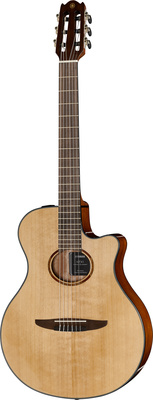
It is a stage-ready electro-nylon with a slim neck, a cutaway and a genuinely good pickup, aimed squarely at players coming from steel or electric. It nails that brief.
That 48 mm Neck Changes Everything
A normal classical guitar has a 52 mm nut and a flat, wide fingerboard. The NTX1 slims that down to 48 mm with a slight radius, so it feels much more like a steel-string.
For anyone crossing over from electric, this is the whole point. Chords you already know suddenly work, and you are not fighting the fretboard to play them.
If you are brand new to guitar entirely, a wider traditional classical might actually serve you better. It is worth a peek at the best cheap acoustic guitars for beginners to compare.
Built to Be Plugged In
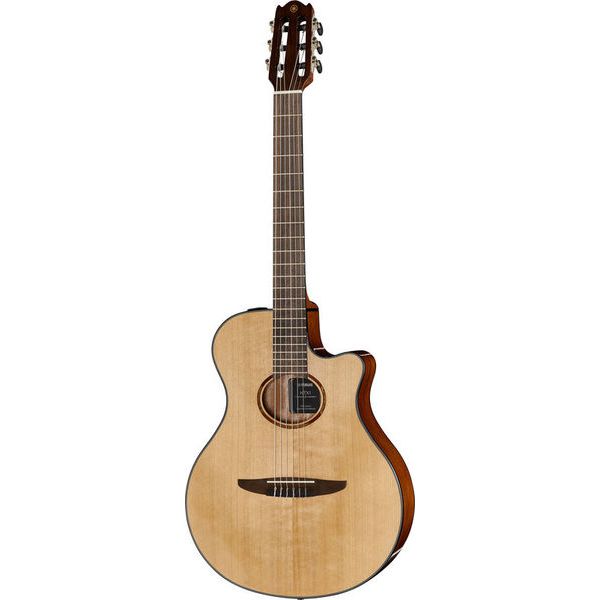
This is not a bedroom classical, it is a gigging tool. The single cutaway gives you easy access to the upper frets, which most classicals simply do not.
The Pickup
The onboard Yamaha system is clean, natural and has a built-in tuner. Plugged into a PA it sounds like a nylon guitar, not a quacky piezo mess, which is not a given at this price.
Build and Feel
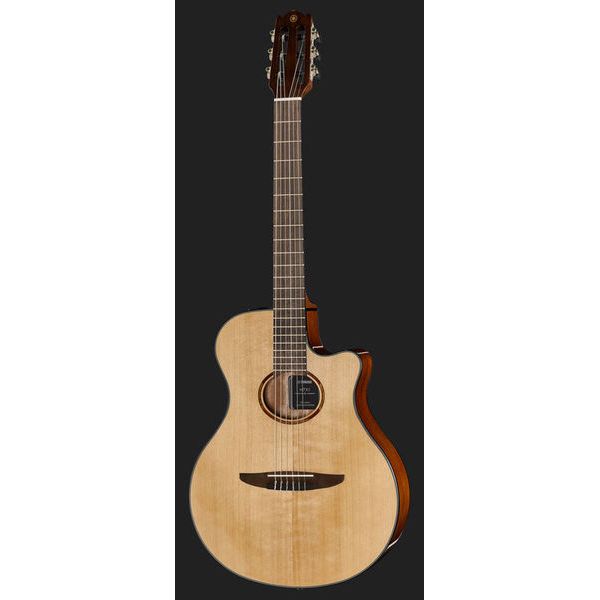
Solid Sitka spruce top over nato, tidy build, comfy thin body. It is light, resonant enough acoustically for practice, and clearly happiest through an amp.
So How Does It Sound?
Warm and rounded with that lovely nylon softness, but a bit more focus and clarity than a fat traditional classical. It suits pop, jazz, bossa and singer-songwriter stuff perfectly.
It is lovely for gentle backing on easy Taylor Swift songs and it makes a beautiful change of texture if your main axe is electric. If it is, keep an eye on the best cheap electric guitars for your other half of the rig.
The Niggles
Acoustically it is quieter and thinner than a full-depth classical, because the body is slim. Unplugged in a big room it will not fill the space.
The nato back and sides are humble, so tone snobs might sniff. In practice, plugged in, nobody in the crowd can tell.
And nylon-string newcomers should remember these strings need stretching in and going out of tune constantly for the first week. That is nylon, not the guitar.
Who Is It For?
Electric and steel-string players who want a proper nylon voice without relearning the neck. Also giggers who need a reliable plug-in nylon that behaves on stage.
If you want something more left-field in the nylon-crossover world, the Godin lineup is the obvious rival and well worth a look before you commit.
The Specs
- Type: crossover nylon-string, single cutaway
- Top: solid Sitka spruce
- Back & sides: nato
- Neck: nato
- Fingerboard: walnut
- Nut width: 48 mm (narrow for a nylon)
- Scale: 650 mm (25.6″)
- Electronics: Yamaha under-saddle pickup with tuner
- Bridge: ebony / walnut
- Thomann article no.: 483256
Verdict
The Yamaha NTX1 does a very specific job and does it brilliantly. It is the nylon guitar for people who do not think they like nylon guitars.
Slim neck, stage-ready electronics, familiar feel. If you are a plectrum player curious about fingerstyle nylon, this is the easiest way in. Highly recommended for the right player.