Watch It First
A while back I reviewed the Boss RC-500 Loop Station and spent most of it explaining menus, tracks, rhythm patterns and memory slots.
The TC Electronic Ditto Looper is the opposite of that pedal in every possible way. One knob. One footswitch. No display, no menus, no manual worth reading.
It has been on the market since 2013 and it is still one of the best-selling pedals on earth, which tells you something about how many features people actually need.
One Knob. That Is Not a Simplification.
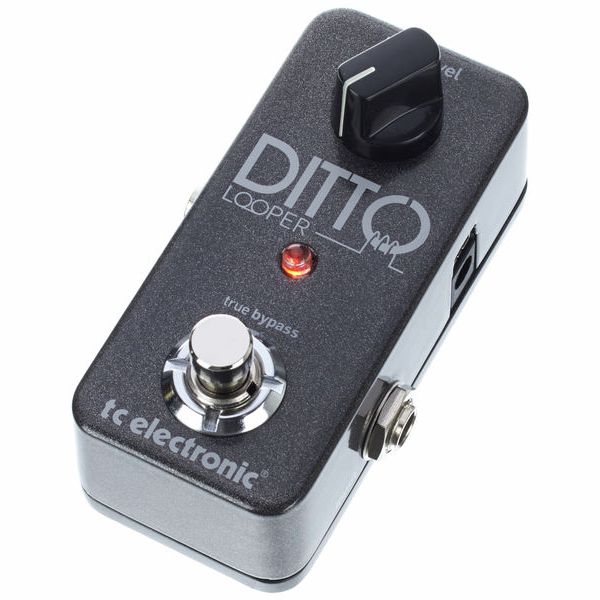
The single knob is loop level. That is the entire user interface.
Everything else happens with the footswitch. One press records. Second press plays. Third press overdubs. Double tap stops. Hold to clear.
You will have this memorised inside two minutes, and that is the design goal. The Ditto was built so you can use it on stage without looking down, which sounds trivial until you have watched someone squint at a screen mid-song.
Five Minutes of Loop Time
Five minutes sounds tiny next to the hours you get on a modern multi-track looper. In practice it is enormous.
A four-bar loop at a normal tempo is about ten seconds. Five minutes is a very long single loop, and if you need more than that you are not looping any more, you are recording.
Overdubs are unlimited, and there is undo and redo, which is the one feature you genuinely cannot live without. Fluffed the third layer? Hold the switch, it is gone.
The Sound Quality Argument
This is where the Ditto quietly beats a lot of cheaper competition.
It records at uncompressed 24-bit, and it has true bypass with analog dry-through. Your dry signal never goes near a converter.
That matters more than it sounds. Plenty of budget loopers colour your tone even when they are off, or thin out the direct signal while the loop plays. The Ditto does neither.
Loops sound like what you played. There is no generation loss creeping in after five overdubs, and the loop does not sit oddly behind your live playing the way it does on some cheap units.
Who Actually Needs This
- Anyone learning to solo. Loop a progression, then play over it for an hour. Best practice tool ever invented, and I will die on that hill.
- Singer-songwriters who want one backing part, not an orchestra.
- Anyone testing pedals. Loop a riff, then go fiddle with knobs using both hands.
- Players whose pedalboard is already full and who have exactly one slot left.
If you want backing drums, multiple tracks and song sections, you want the RC-500 and you should stop reading. Different job.
Pedalboard Reality
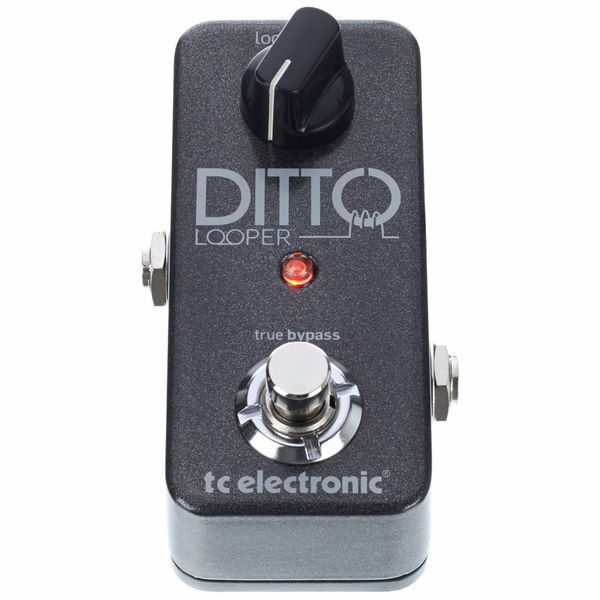
It is tiny. Mini enclosure, metal, and it takes up about as much room as a tuner.
Two catches, and I want to be straight about both.
First, there is no battery option at all. None. You need a 9V supply and TC does not include one, so factor that in.
Second, the loop is not saved when you power down. Turn it off and the loop is gone. For live use that is usually fine, but if you were hoping to store an idea overnight, you cannot.
Where to Put It in the Chain
Last, after your time-based effects, in almost every case.
Put it after your reverb and delay and the loop captures the whole finished sound. Put it before them and everything you loop gets reverb applied again on every pass, which turns to soup quickly.
If you are running a Hall of Fame 2 Mini or a Flashback 2, put the Ditto after both. Same brand, same board, no surprises.
Against the Alternatives
The obvious comparison inside TC is the Ditto Plus, which gives you 60 minutes, 99 loop slots and a display. It is a better pedal on paper and a worse pedal for the specific job of not thinking.
Outside TC, the EHX Canyon gives you a delay and a 62-second looper in one box, which is great if board space is your main constraint.
And if you are new to all this, our roundup of TC Electronic pedals covers where the Ditto sits in their range.
The Niggles
- No battery operation whatsoever. You must have a power supply.
- Loops are wiped on power down.
- No stereo. Mono only, which matters if you run a wet-dry rig.
- The footswitch is a click switch, so you get a faint click through the amp on some setups.
- Timing is entirely on you. There is no quantising and no metronome, so sloppy loop points stay sloppy.
That last one is the real learning curve. The pedal is easy; landing the loop point on the beat takes practice.
Specs at a Glance
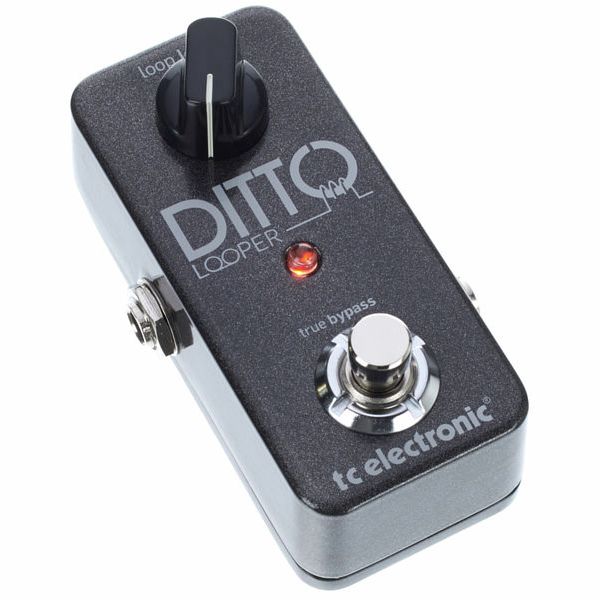
- Type: single-track looper for guitar and bass
- Loop time: 5 minutes
- Overdubs: unlimited, with undo and redo
- Audio: uncompressed 24-bit
- Bypass: true bypass with analog dry-through
- Connections: mono in, mono out, USB for firmware
- Power: 9V DC, supply not included, no battery operation
- Housing: compact metal mini enclosure
Using It With an Acoustic or a Bass
Worth saying, because a lot of people assume a looper this small is an electric-guitar-only device. It is not.
Run an acoustic with a pickup through it and the analog dry-through means your natural signal stays completely untouched, which is exactly what you want when the amp or the PA is already doing the heavy lifting. Loop a percussive strum pattern, then play the melody over the top. That is a whole solo act in one pedal, and plenty of buskers have worked it out already.
Bass works fine too. The 24-bit recording holds onto low end without the flabbiness you get from cheaper loopers that quietly high-pass the signal. The only thing to watch is loop level — bass loops sit louder in the mix than you expect, so you will be reaching for that one knob more often than a guitarist would. Which is, conveniently, the only knob there is.
Final Verdict
The Ditto has survived over a decade of loopers getting more complicated, and it survived by refusing to join in.
It does one thing, it does it with genuinely good audio quality, and it never makes you think about it. For practice alone it has probably improved my playing more than any other pedal I own.
The lack of battery power and the wiped loops are real limitations, not marketing quibbles, so go in knowing about them.
But if you have ever stood in front of a multi-track looper feeling vaguely stupid, this is the pedal for you. IMO it is still the best first looper anyone can buy.