Watch It First
Reverb pedals are the effect everyone owns but nobody talks about as much as fuzz or overdrive. Slightly unfair, because a good one changes your whole rig more than most drive pedals do.
TC Electronic’s Hall of Fame line has been a go-to answer for years, and the Mini version crams almost everything from the full-size pedal into a footprint that barely takes up pedalboard real estate.
I’ve had one bolted to my board for a few months now. Here’s where it’s earned its spot and where it hasn’t.
What’s Actually in the Box
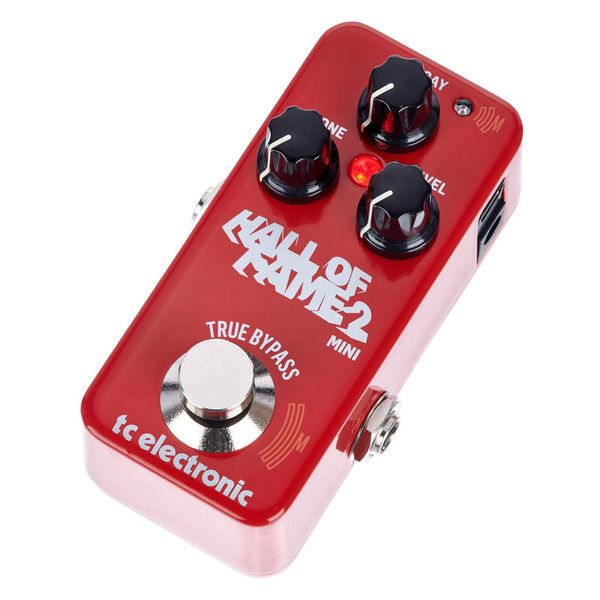
Three knobs – Decay, Tone, Level – control the core reverb, while TC’s MASH footswitch technology turns the stomp switch itself into a pressure-sensitive expression controller. Press harder, get more effect. No extra footswitch or expression pedal cable required.
The Shimmer-Reverb algorithm is the headline feature, adding an ethereal, pitched-up shimmer layer over your reverb tail – the kind of thing that turns simple chords into a wall of sound. TonePrint support means you can also load presets other guitarists have designed and shared, or build your own in the free editor. If you’re curious about the rest of TC’s lineup, our best TC Electronic pedals roundup covers more ground.
Tone – Does the Mini Give Up Anything?
Core Reverb Quality
Compared to the full-size Hall of Fame 2, the Mini loses stereo in/out and a couple of secondary switches, but the actual reverb engine is identical. Halls, rooms, and plates all sound convincing, and the Shimmer mode is genuinely lovely for ambient and post-rock textures.
Analog Dry-Through
This is a small detail with a big impact – your dry signal stays fully analog even with the effect engaged, so there’s none of the slight „digital sheen” some all-digital reverbs impose on your core tone. It just sounds like your amp, plus reverb.
Build and Everyday Practicality
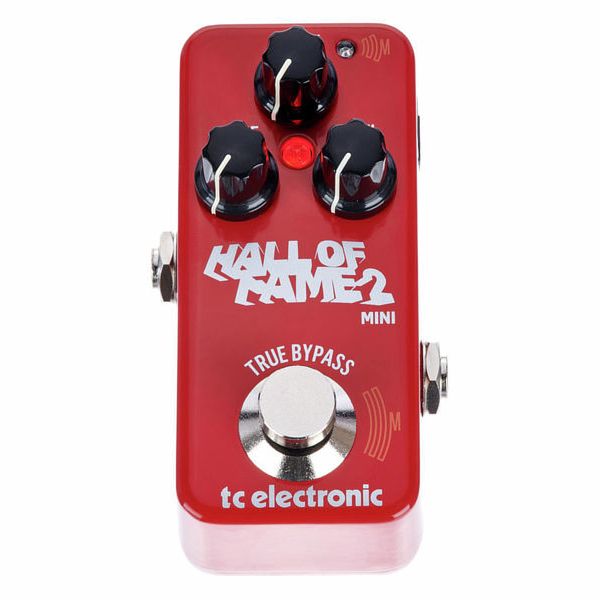
It’s genuinely tiny – about the size of a matchbox stood on end – which matters if your board is already packed. Mono in/out only, no battery option (9V PSU required, sold separately), and power draw is modest at 100mA.
The MASH footswitch is the standout practical feature. Instead of an expression pedal taking up more board space, you get real-time control baked into the stomp switch itself. It took me a session or two to get used to controlling it with foot pressure rather than a knob, but it’s intuitive once it clicks.
Who’s This Actually For?
Anyone building a small, efficient board who still wants a genuinely good reverb rather than a basic one. Ambient, shoegaze, and post-rock players will get the most obvious mileage out of the Shimmer mode – if that’s your thing, our best pedals for shoegaze list has more in this vein.
It also plays nicely for indie rock and clean-tone players who just want a tasteful hall or plate without wading through menus. Check our best pedals for indie rock roundup if you’re filling out the rest of the board, and pair it with something from our best delay pedals under $100 list if you want ambient trails to go with your reverb.
If you need stereo I/O for a more complex rig, or extensive onboard editing without a phone nearby, the full-size Hall of Fame 2 makes more sense.
Playability and Preset Habits
Once you’ve dialed in a decay and tone setting you like, the MASH switch becomes second nature surprisingly fast. Light presses give you a subtle room ambience for rhythm parts, and a firm stomp opens the reverb right up for a lead line or a big chorus hit – all without touching a knob mid-song.
I mostly kept mine on a Hall setting with the Shimmer voice loaded via TonePrint for ambient passages, and switched back to a plain Room voice for regular rhythm playing. Having two very different textures accessible without diving into a menu is honestly the pedal’s biggest practical win.
The Niggles
No stereo in/out is the big one if your rig is built around stereo wet/dry setups. No battery option means one more thing to plug into your power supply. And deep editing genuinely requires the TonePrint app or a USB connection – there’s no hidden secondary function on the three knobs.
None of these are surprising for a pedal this size. They’re the trade-offs you accept for the footprint, and honestly, most players building a compact board will barely notice them in practice.
Specs at a Glance
- Reverb pedal for electric and acoustic guitar
- TC MASH pressure-sensitive footswitch technology
- Shimmer-Reverb algorithm
- Analog Dry-Through signal path
- TonePrint enabled
- Controls: Decay, Tone, Level
- Mono 6.3mm jack in/out
- Powered by 9V DC PSU (not included), 100mA draw
- Dimensions 41 x 90 x 50mm, weight 200g
How It Compares
Against other mini reverbs in the same bracket, the Shimmer algorithm and MASH footswitch are what set this apart – a lot of competitors give you a decent hall sound and nothing else. TC’s TonePrint ecosystem also means you’re not stuck with the factory presets forever, which some of the cheaper mini reverbs simply don’t offer.
It won’t out-lush a dedicated ambient reverb from a boutique brand, but for the size and the price, it’s one of the more complete packages going.
Final Verdict
For a pedal this small, the Hall of Fame 2 Mini Reverb gives up remarkably little compared to its full-size sibling. If reverb was the last big gap in your compact board, this closes it convincingly.
Pair it with something from our best reverb pedals under $100 list if you want to compare options, or check out our are reverb pedals worth it guide if you’re still deciding whether you need one at all.