Watch It First
Small body, and yes, it really does sound like that.
Small-body acoustics have a reputation problem. People assume concert size means quiet, thin and a bit apologetic.
The FS800 spends its whole life disproving that, mostly because Yamaha put a solid spruce top on a guitar that costs about as much as a decent pedal.
It is the FG800 with a smaller waist, and for a lot of players that is the better guitar.
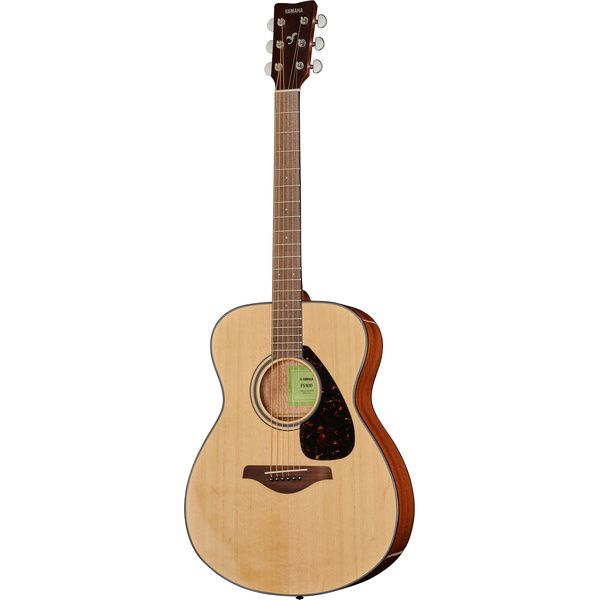
Why the Small Body Wins for Some People
The concert shape has a narrower waist and shallower depth than a dreadnought. It tucks into your body instead of fighting it.
If you are smaller framed, or you have ever finished a session with a sore right shoulder, this matters far more than any tonewood argument.
Kids and teenagers get on with it immediately. So do adults who have quietly hated their dreadnought for years and never said so.
Does It Actually Sound Small?
Less than you would expect. Yamaha revised the scalloped bracing on this generation and the low end is genuinely present.
It is more focused than a dread rather than smaller. Mids are forward, the top end is clear, bass is tight instead of boomy.
For fingerstyle that is a straight upgrade. For hard strumming a dreadnought still wins on sheer volume.
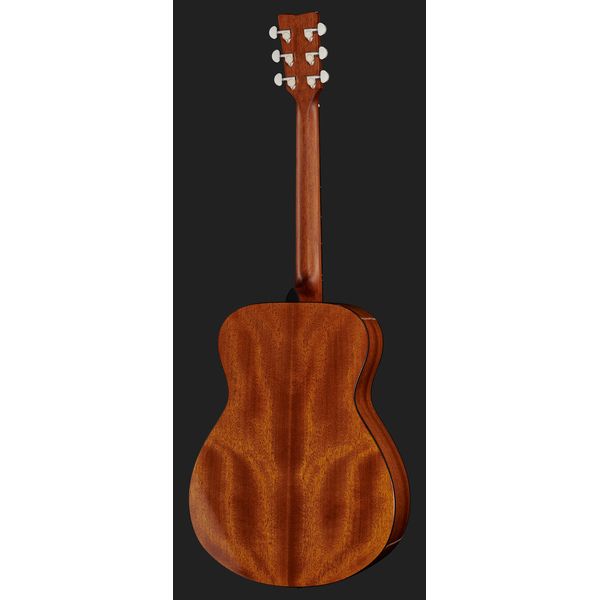
The Solid Top at This Price Is the Story
Solid spruce top, laminated nato and okoume back and sides. At this money most competitors give you laminate everywhere.
A solid top vibrates properly and opens up over time. A laminate top does not, really.
This one spec is why the FS800 keeps beating things that cost more on paper. It is the difference between a guitar that improves and one that just exists.
Build Quality
Yamaha factory consistency is close to legendary at this end of the market. The odds of getting a bad one are genuinely low.
Bracing is tidy inside, the finish is even, and there were no sharp fret ends on the one I handled.
That consistency is worth a lot when you are buying online and cannot play the actual instrument first.
Playability
Nato neck, walnut fingerboard, 634 mm scale, 43 mm nut, 20 frets.
The short scale means lower tension, which makes barre chords noticeably easier. This is a big deal for beginners and nobody talks about it enough.
Neck profile is a comfortable medium C. Not chunky, not razor thin.
Setup Notes
Factory action is usually a touch high. It is playable out of the box but a saddle sand and a small truss rod tweak transforms it.
Budget a small amount for a setup and this becomes a much nicer guitar than the price suggests. That advice applies to every acoustic under a certain price, honestly.
The Honest Niggles
- No electronics at all – if you need to plug in, look at the FS800 electric-acoustic siblings or a soundhole pickup
- Walnut fingerboard rather than rosewood or ebony, which is a cost decision more than a tonal one
- Laminated back and sides cap how good it will ever get
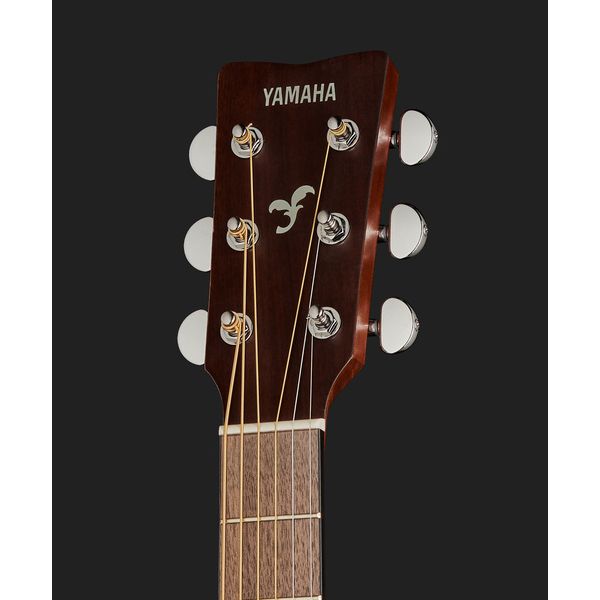
- Basic tuners – functional, not smooth
- No gig bag included
For what it costs, complaining about any of this feels ungrateful. But you asked.
Who Is It For?
First acoustic, easily. It is one of the few genuinely good beginner guitars that you will not immediately want to replace.
Also a great sofa guitar for people who already own something expensive. Small, comfortable, does not need babying.
If you want the dreadnought version, the Yamaha FG830 is the natural sibling. If you want to spend less, the Harley Benton D-120NT is the budget floor.
Stepping up, the Baby Taylor BT2 goes smaller and the Cort Core-OC SP is the more grown-up small-body option. For a pretty small-bodied Yamaha with electronics, the CSF3M is worth a look.
FS800 vs FG800: Which One Should You Get?
Same top, same electronics (none), same price bracket. The only real difference is body shape, and it matters more than the spec sheet implies.
The FG is the dreadnought. Bigger low end, more raw volume, better for hard strumming and playing over other people.
The FS is the concert. More comfortable, more focused, better for fingerstyle and recording. If you mostly play sitting down at home, get this one.
The Comfort Argument
I have watched a lot of people give up guitar because their instrument was physically awkward and they blamed themselves.
A body that fits you is not a luxury. It is the difference between practising and not practising.
How It Records
Better than a dreadnought in a small room, and that surprises people every time.
Less low-end boom means less fighting with the mic position and less corrective EQ afterwards.
A single condenser aimed at the twelfth fret gets you a usable track almost immediately. That is not something you can say about every cheap acoustic.
Strings and Tweaks
It ships with lights. Trying custom lights or even elevens makes it even easier to play without gutting the volume.
A bone saddle is the single best cheap upgrade. Noticeably more clarity and sustain for very little money.
Beyond that, leave it alone. It does not need help.
The Spec Sheet
- Body: Concert size
- Top: Solid spruce
- Back and sides: Laminated nato and okoume
- Neck: Nato
- Fingerboard: Walnut
- Scale: 634 mm
- Nut width: 43 mm
- 20 frets
- Chrome hardware
- Finish: Natural
Final Verdict
The FS800 is one of the best value acoustics on the market and has been for years. That is not hype, it is just what happens when a big factory decides to do a cheap guitar properly.
Solid top, comfortable body, low string tension, consistent build. Those four things cover almost everything a new player needs.
Small body, surprisingly big sound turns out to be accurate rather than marketing. It will not out-volume a dreadnought, but it holds its own far better than the size suggests.
Get it set up and it is a guitar you could happily keep for a decade. FYI that is not something I say about many beginner instruments.