Watch It First
The RG421 has been on shop walls since 2014 and it never seems to go away. There is a reason for that.
It is the point in the Ibanez range where the guitar stops being a beginner instrument and starts being a proper tool – 24 frets, a fixed bridge, a Wizard III neck – for money that still feels almost accidental.
I have recommended this thing to more people than any other electric under a certain price. Let me explain why, and also where it genuinely falls short.
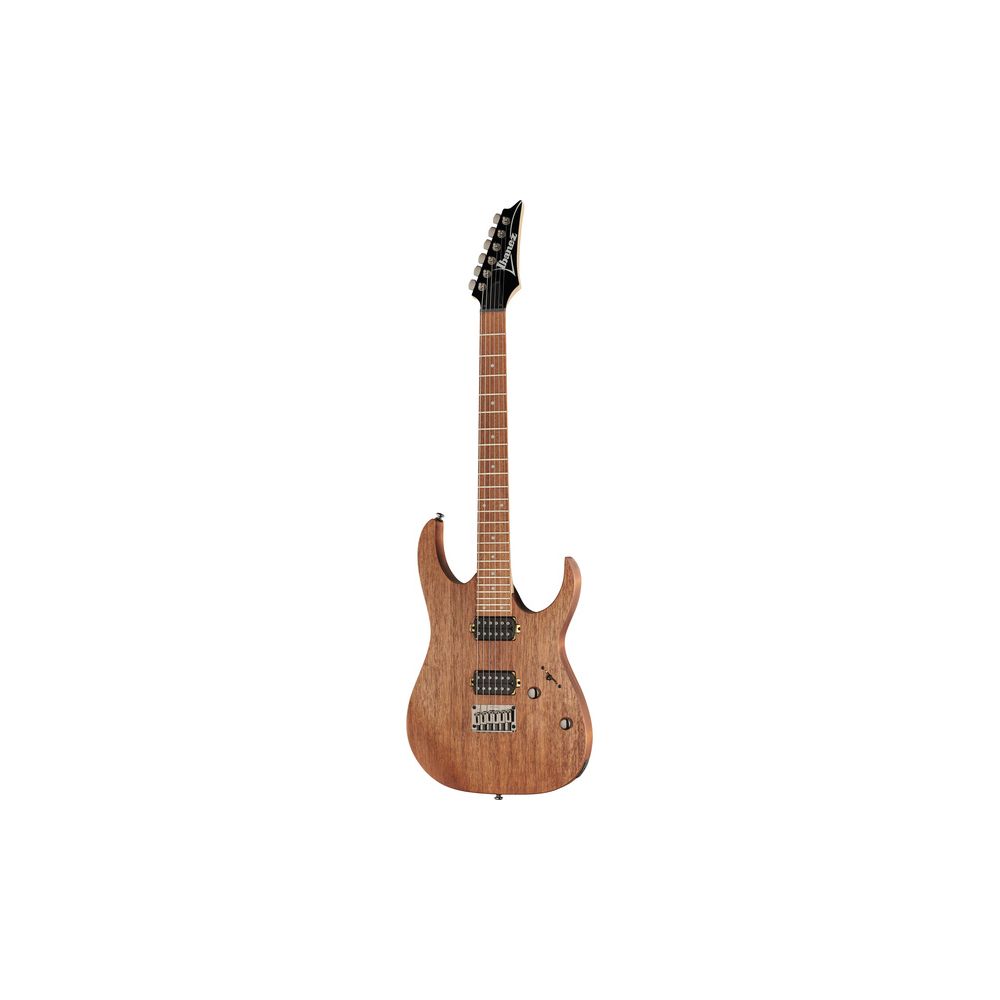
The Wizard III Neck Is The Whole Point
If you have never played an Ibanez, the neck is going to surprise you. The Wizard III profile is thin, flat and fast in a way that Fender and Gibson necks simply are not.
Your thumb sits behind the neck rather than over the top, which changes how you approach everything. Wide stretches, three-note-per-string runs and legato all get noticeably easier.
It is not universally better – it is a different tool. Blues players who anchor their thumb over the low E often hate it. Shredders convert instantly.
Fixed Bridge, Zero Drama
The RG421 skips the tremolo entirely and that is arguably its best feature at this price.
No Floyd means no knife-edge to wear out, no locking nut to mess up, no forty-minute string changes. You can drop to D in ten seconds and nothing goes out of tune.
Budget floating trems are where cheap guitars go to die. The GRG131DX takes the same approach a rung lower down the ladder, and it is the right call there too.
24 Frets And What You Do With Them
Two full octaves on every string, with the all-access joint Ibanez uses so you can actually reach them.
The heel on this guitar is scalloped and shallow. Compare it to a bolt-on Strat-style heel and the difference at the 22nd fret is night and day.
The 648 mm (25.5 inch) scale keeps things tight, which is what you want if you are tuning down. Standard, drop D, D standard – all fine with a slightly heavier set.
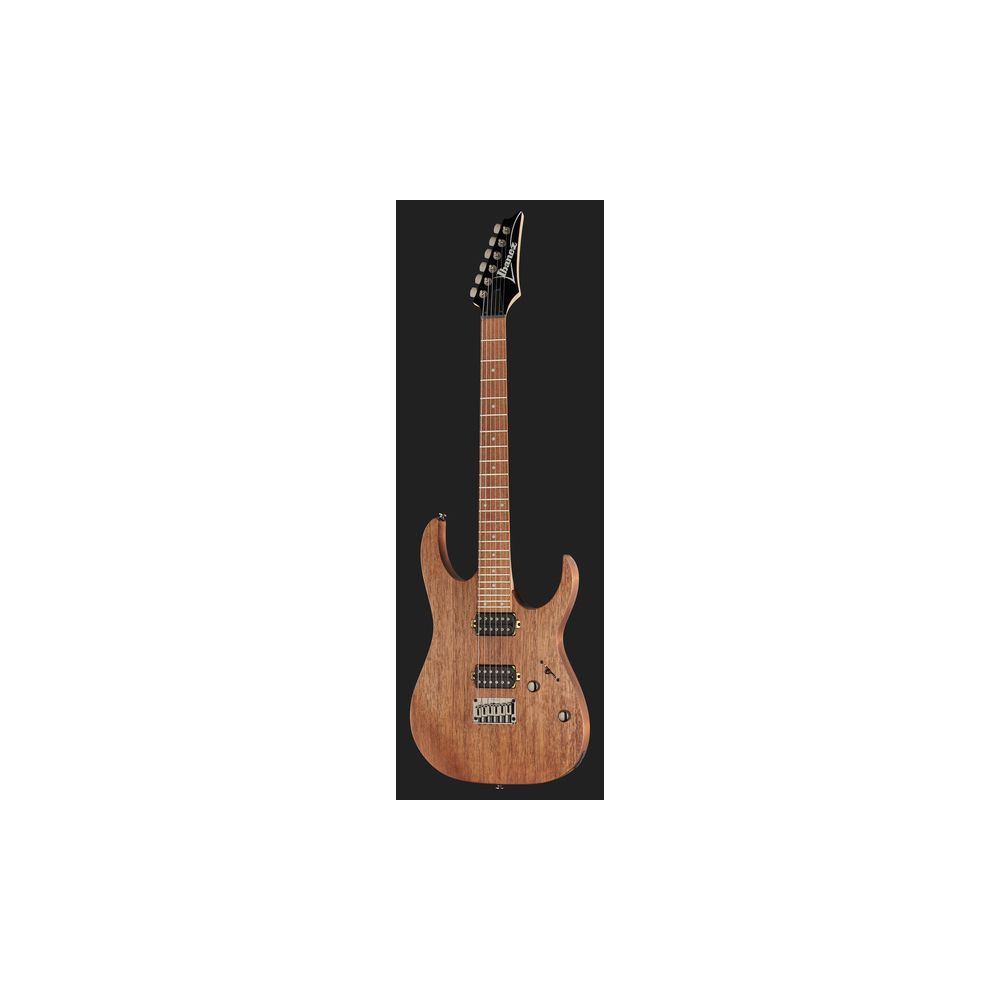
The Quantum Pickups: Better Than You Expect, Not Amazing
This is where I have to be honest rather than enthusiastic. The Quantum humbuckers are decent. They are not the reason to buy the guitar.
The bridge Quantum is hot and tight with a scooped-ish midrange that suits modern metal well. Chugs are defined, harmonics jump out, and it takes a boost pedal nicely.
The neck is muddier than I would like. Clean tones are usable but a bit lifeless, and lead work up high loses definition compared with anything in the AZ Prestige range.
The 5-Way Switch Is A Genuine Bonus
Most HH guitars give you a 3-way. The RG421 has a 5-way switch that adds split and parallel positions.
Positions 2 and 4 get you closer to single-coil territory – thinner, quackier, useful for clean arpeggios. Not a Strat, but a lot more range than you would expect at this money.
It is the kind of feature that makes this a viable only-guitar rather than a metal-only guitar.
Where It Falls Short
No guitar this affordable is without compromise, and pretending otherwise would be daft.
- Meranti body rather than mahogany. It is lighter and a bit less resonant. In a mix, honestly, nobody will ever know.
- The Quantum neck pickup is the weak link. A pickup swap transforms this guitar and it is the first mod I would do.
- Fret ends can be a bit sharp depending on which unit you get. Quality control at this price is variable.
- The Cosmo Black hardware shows fingerprints and wear faster than chrome.
- No case, no bag, no cable. Budget for that.
None of those are dealbreakers. They are the things you accept in exchange for a spec sheet that would have cost twice as much fifteen years ago.
Who Is This For?
The obvious answer is the player upgrading from a first guitar who wants to play metal and does not want to learn Floyd Rose maintenance yet.
But it is also a great backup or a great drop-tuned second instrument for someone who already owns something nicer. Cheap enough to throw in a van, good enough to gig.
If you want the same idea with a seventh string, the GRG7221QA is the natural next step. If you want the same idea with a much bigger budget, look at the ESP LTD M-1000HT and prepare for sticker shock.
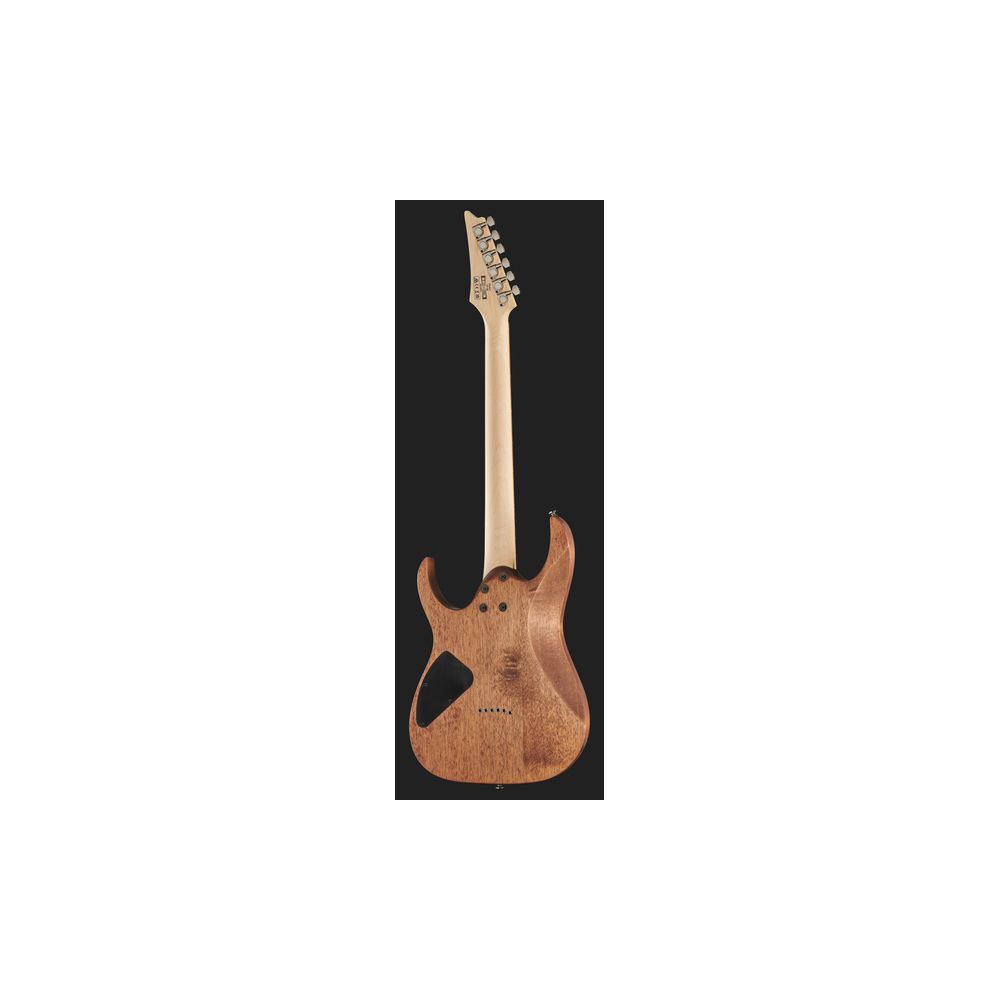
Specs at a Glance
- Body: Meranti
- Neck: One-piece maple, Wizard III profile, all-access joint
- Fingerboard: Jatoba with white dot inlays
- Frets: 24 jumbo
- Scale: 648 mm (25.5 in)
- Pickups: 2 x Ibanez Quantum humbuckers
- Controls: 1 volume, 1 tone, 5-way switch
- Bridge: Fixed
- Hardware: Cosmo Black
- Finish: Mahogany Oil (MOL)
How It Stacks Up Against The Obvious Rivals
The RG421 does not exist in a vacuum. At roughly this money you are also looking at the Harley Benton Amarok-6, which frankly gives you more spec on paper for less cash.
What the Ibanez has is consistency and resale. Harley Benton quality swings more from unit to unit, and try selling one secondhand – the badge just does not carry the same weight. The RG421 holds value in a way almost nothing else at this price does.
The other honest comparison is the Jackson JS22 Dinky, which is cheaper again and aimed slightly lower. The Jackson wins on price, the Ibanez wins on neck feel and that 5-way switch. If you can stretch, stretch.
Final Verdict
The RG421 is the best value electric guitar Ibanez makes and it has been for over a decade. That is not hype, it is just what happens when a design gets left alone long enough to be properly sorted.
You get a fast neck, 24 accessible frets, a bridge that will never let you down and a switching system with actual range. The pickups are the one obvious compromise, and they are also the easiest thing in the world to change later.
If you are stepping up from a starter pack and you play anything heavier than blues, this should be at the top of your list.
Buy one, play it for a year, and put the money you saved into a set of pickups. That is about as good as budget guitar advice gets. 😉