Watch It First
If you came here looking for the Les Paul Muse, bad news – Epiphone quietly retired it, and the shelf it used to sit on now belongs to this.
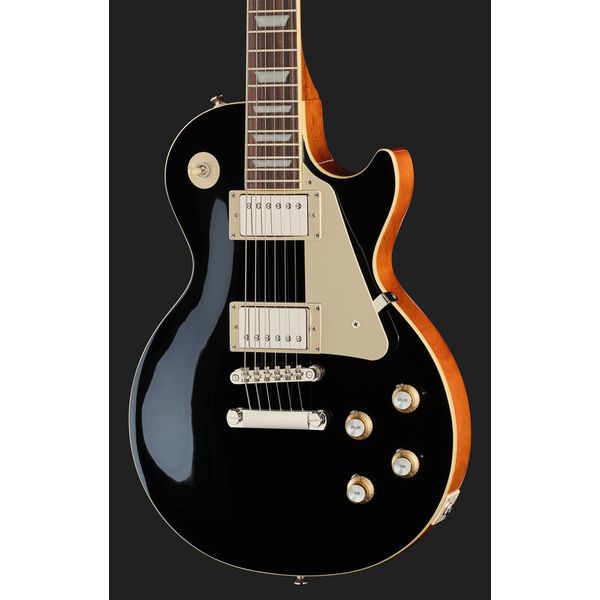
The Les Paul Standard 60s is the version most people actually end up buying anyway, and in ebony it is about as no-nonsense as a Les Paul gets.
I have spent proper time with one. It is very good, it is not perfect, and the reasons for both are worth going into.
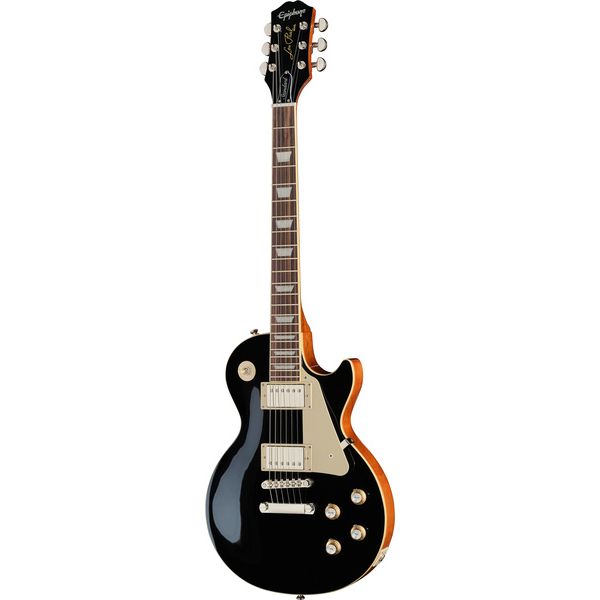
The 60s Neck Is the Reason to Pick This One
Epiphone splits the Standard into 50s and 60s versions, and the only difference that really matters is what is in your hand.
The 60s gets the SlimTaper C profile – shallower front to back, a bit flatter, noticeably faster.
The 50s neck is the fat one. Lovely if you have big hands and play a lot of chords, tiring if you do not.
I am firmly in the 60s camp. Bending on the SlimTaper takes less effort, and hour four of a rehearsal feels very different.
It Is Still a Les Paul Though
Slim neck or not, this is a 629mm scale single-cut with a chunky mahogany body and it weighs what it weighs.
If you want a Les Paul that fights you less physically, look at the Les Paul Modern Figured with its contoured heel and weight relief.
ProBuckers Are the Real Upgrade Over Cheap Copies
ProBucker 2 in the neck, ProBucker 3 in the bridge, both with alnico magnets and proper 18 percent nickel-silver covers.
These are the pickups that stopped people sneering at Epiphones about a decade ago, and they are still the reason to spend here rather than lower.
The bridge has that mid-forward, slightly aggressive push that makes a Les Paul sound like a Les Paul through a cranked amp.
The neck pickup is warm without being muddy, and it does the thick lead tone thing that every rock guitarist wants at some point.
Clean Tones Are Better Than People Expect
Everyone talks about Les Pauls with gain. Roll both volumes back and the middle position does a lovely, glassy clean that gets ignored constantly.
It is not a Telecaster and it never will be. But for warm chordal work it is genuinely usable, which is not always true at this price.
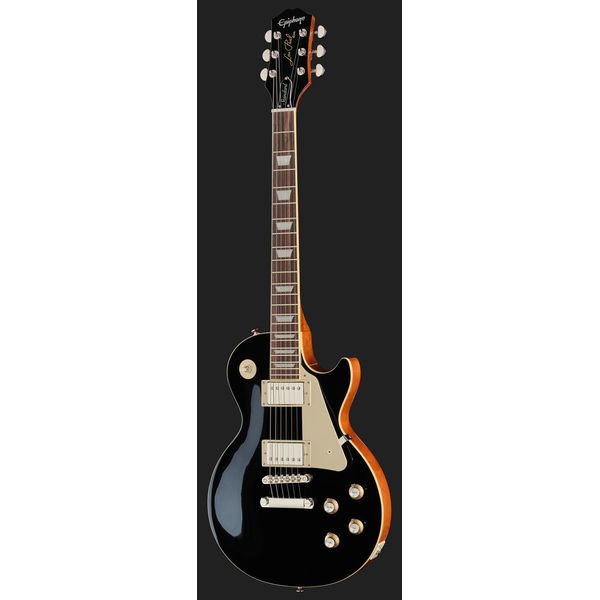
Hardware That Does Not Let It Down
This is where Epiphone quietly got serious, and it is the least glamorous but most useful part of the guitar.
- Mahogany body with a maple top, ebony high-gloss finish
- Glued-in mahogany neck, SlimTaper 60s C profile
- Rosewood fingerboard, 305mm radius, trapezoid inlays
- 629mm scale, 42.9mm nut with a GraphTech nut
- 22 medium jumbo frets, single-ply body and fingerboard binding
- ProBucker 3 and ProBucker 2 humbuckers, 2 volume and 2 tone, 3-way toggle
- LockTone Tune-O-Matic bridge, Grover Rotomatic tuners, nickel hardware
- Gig bag included
The GraphTech nut is the sleeper item on that list. Budget guitars almost always go wrong at the nut, and this one simply does not.
Grover Rotomatics are proper tuners, not lookalikes. Combined with the nut it means the thing actually stays in tune, which sounds like a low bar until you own something that does not.
The LockTone bridge and tailpiece stay put when you change strings instead of falling off into the carpet. Small mercy, genuinely appreciated.
The Niggles
It is not flawless and I am not going to pretend otherwise.
Weight. There is no weight relief here. Mine was in the region of four and a half kilos and a full gig standing up is a workout.
Fret ends. Not sharp on mine, but slightly proud in a couple of spots. Common on imports and easily sorted, just not what you want out of a box.
The pot taper is functional rather than lovely. If you rely on riding the volume knob for gain control you might want to swap them eventually.
Ebony shows everything. Fingerprints, dust, the ghost of every arm that has ever rested on it. Keep a cloth in the case.
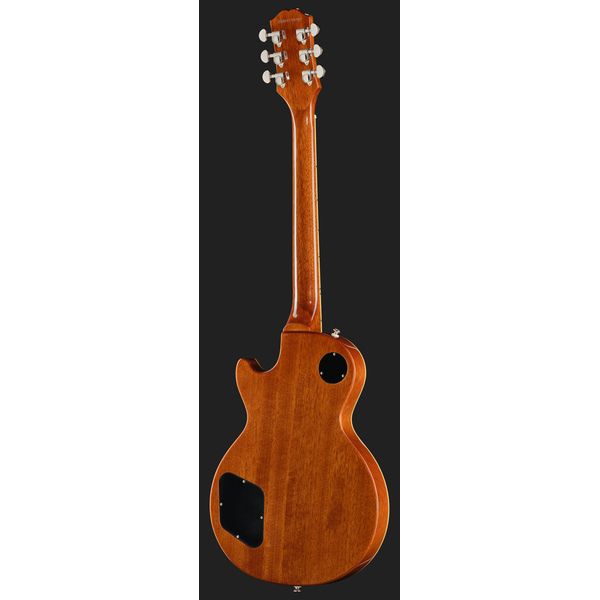
Where It Sits in the Epiphone Les Paul Maze
Epiphone makes an absurd number of Les Pauls and the naming does nobody any favours. Quick map.
The 1959 Les Paul Standard is the top-tier Inspired By Gibson version. Better everything, considerably more money.
The Les Paul Custom is the tuxedo option – multi-ply binding, gold hardware, ebony board, and a lot more visual drama.
The Prophecy Les Paul is the same shape rebuilt for metal, with Fishman Fluence pickups and a much flatter board.
And the Les Paul Junior is the stripped-back punk answer – one P90, no top, all attitude.
The Standard 60s is the middle of all that, and honestly it is where most people should start.
Who It Is For
Anyone whose first proper electric needs to be a Les Paul and who wants to skip the upgrade cycle entirely.
Gigging players who need something reliable that will not embarrass them and will not cost a month of wages to replace.
And anyone coming off a very cheap single-cut who has decided the shape suits them and wants to do it properly this time.
Who Should Look Elsewhere
Anyone with shoulder trouble. Seriously – go and try one in a shop with a strap on before you order.
And anyone who wants coil splits and modern switching. This is a resolutely traditional wiring loom with nothing clever going on.
How It Actually Plays, Amp By Amp
Spec lists tell you nothing about what happens when you plug in, so here is the short version.
Clean Amp
Neck pickup with the tone at about 8 gives you that thick, round jazz-adjacent tone that Les Pauls do better than anyone admits.
Middle position cleans are chimey and slightly hollow, and they suit strummed rhythm parts far better than you would expect from two humbuckers.
Edge of Breakup
This is the sweet spot. The ProBucker 3 in the bridge pushes the front end just enough to get grit without losing note definition.
Rolling the guitar volume down to 6 or 7 cleans it up reasonably well, though the pot taper means the useful range is narrower than it should be.
Full Gain
It handles it. Chugging low riffs stay tight because of the mahogany and the set neck, and there is no unwanted noise thanks to the humbuckers doing their job.
It is not a metal guitar in the modern sense – the 305mm radius and medium jumbo frets are traditional, not shred-focused. For that, look at the Prophecy.
A Note on the Ebony Finish
Plain colours are unforgiving. There is no flame veneer to distract from a wonky binding line or a dodgy finish edge.
On the one I had, everything lined up. The binding was even, the finish was deep and free of orange peel, and the neck joint was tidy.
It also has that slightly menacing all-black look that suits heavier music, which the sunburst versions never quite manage. If you prefer a semi-hollow with the same vibe, the Epiphone ES-335 is worth a look too.
Final Verdict
The Les Paul Standard 60s does the thing that matters most: it feels and sounds like a Les Paul rather than like a guitar impersonating one.
ProBuckers, a GraphTech nut, Grover tuners and a genuinely fast neck add up to an instrument that punches well above its money and does not need a shopping list of upgrades.
The weight is real and the fret ends could be tidier. Those are the honest costs of buying at this level, and they are small ones.
If the Muse is what brought you here, you are not losing out. FYI, this is the better guitar of the two anyway.