Watch It First
Every guitarist has a Les Paul phase. Mine never really ended, if I’m honest.
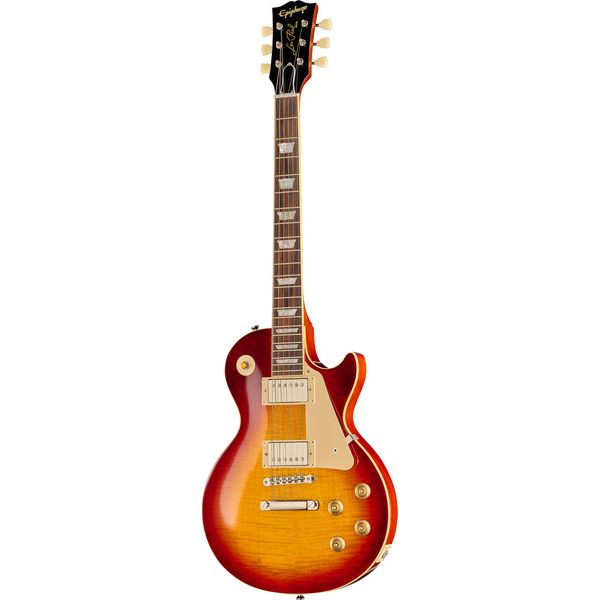
Epiphone’s Inspired by Gibson Custom range has been closing the gap between „copy” and „the real thing” for a couple of years now, and the 1959 Les Paul Standard is the flagship of that push.
I spent real time with one of these, plugged into a few different amps, and this is the honest version of what I found – specs, feel, warts and all.
What Epiphone Actually Changed This Time
Epiphone has released a lot of Les Pauls over the years. Most of them were fine. Some were genuinely great value. But this „Inspired by Gibson Custom” line is a different animal, and it shows in the details Epiphone usually skimps on.
Custombucker Pickups, Not Generic Humbuckers
The big one: this guitar ships with USA-made Custombucker Alnico 3 pickups. Not a licensed clone, not a budget humbucker with a fancy name – actual Gibson-spec pickups built in the States.
That matters more than it sounds. A huge chunk of what separates a „nice Les Paul copy” from „an actual Les Paul” lives in the pickups, and Epiphone finally stopped cutting that corner.
The Neck Profile Actually Matters
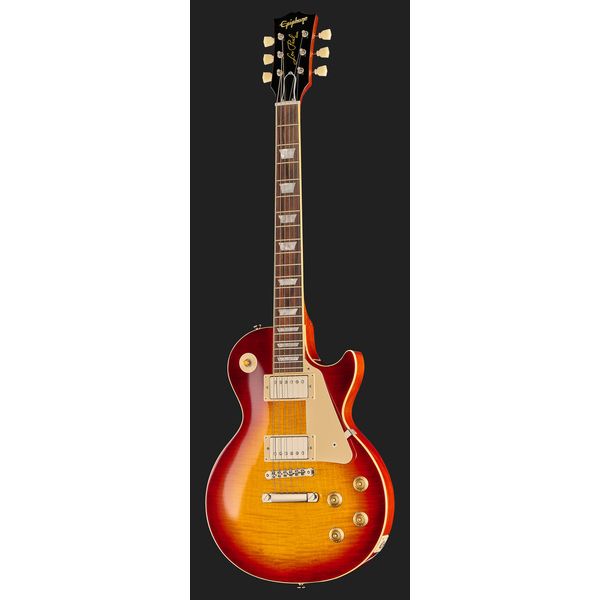
It’s carved to a 1959 Rounded „C” profile, which is chunkier than most modern Epiphones. If you’ve only played slim modern necks, it takes an evening to adjust. After that, it just feels right for this kind of guitar.
Playing It: First Impressions
This is not a light guitar. Mahogany body, maple top, all the traditional Les Paul mass – expect it to sit heavy on a strap for long sessions. That’s a Les Paul thing, not an Epiphone thing, so don’t be shocked.
Fretwork out of the box was solid. Not perfectly polished glass-smooth like a boutique build, but no sharp edges, no dead frets, nothing that needed a setup before it was playable. IMO that’s about what you should expect at this price point, and it beats a lot of the competition.
Balance on a strap is good. It doesn’t neck-dive like some cheaper single-cuts do, which is a small thing until you’re two hours into a gig and your fretting hand is doing all the work holding the neck up.
Tone Through a Real Amp
Plugged into something with real headroom, the neck pickup is creamy without turning to mud, and the bridge has that aggressive upper-mid growl Les Pauls are known for. I ran it through a Marshall JVM410H for most of the testing and it was an obvious pairing – British breakup and a mahogany/maple body just work together.
For higher gain, I also tried it through an EVH 5150 Iconic 40, and the Custombuckers held their clarity even with the gain pushed further than I’d normally go. No mush, no farting out on the low E.
If you’re building a pedalboard around this guitar, a transparent boost like the Xotic BB Preamp or a low-gain drive like the Wampler Belle Overdrive complements the neck pickup nicely without stepping on what makes it sound good in the first place.
Specs at a Glance
- Body: Mahogany with maple top
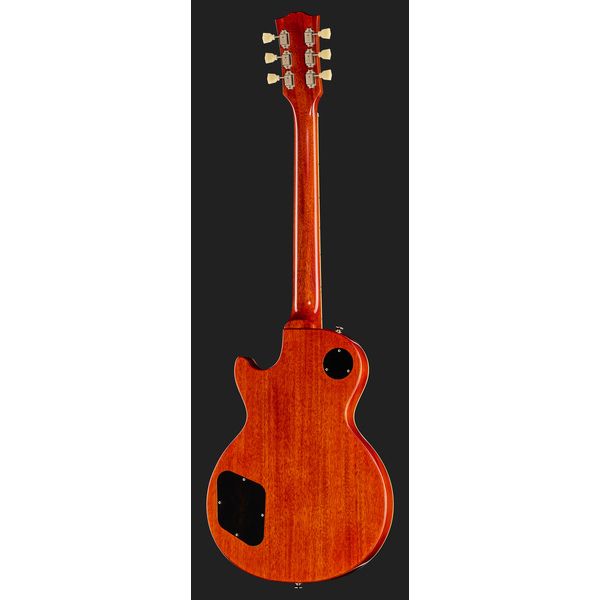
- Neck: Mahogany, glued-in, 1959 Rounded „C” profile
- Fretboard: Rosewood, 305mm (12″) radius, trapezoid inlays
- Scale length: 629mm (24.75″)
- Frets: 22
- Pickups: 2x USA Custombucker Alnico 3 humbuckers
- Controls: 2x volume, 2x tone, 3-way switch, .022uF Luxe Bumblebee caps
- Hardware: Nickel
- Finish: Deep Cherry Sunburst
- Case included
The Niggles
Nothing’s perfect, so let’s talk cons.
- It’s heavy – some owners report their unit tipping past 4.4kg, which is on the upper end for a Les Paul-style guitar.
- The satin-finished neck feels great to play but looks a little less „premium” than a full gloss neck if you’re picky about aesthetics.
- Shipping lead times from Thomann can run a few weeks since these aren’t always in stock locally – worth checking before you plan a gig around one arriving.
- The maple top figuring varies unit to unit, so what you see in one photo isn’t guaranteed on the one that ships to you.
None of these are dealbreakers. They’re just things I’d want to know before buying if I were you.
Who Should Buy This
This one’s for players who want the Custombucker, mahogany-and-maple Les Paul experience without stretching into Gibson USA pricing. If you’ve been eyeing something like the Epiphone Prophecy Les Paul but want a more traditional, vintage-voiced instrument instead of a metal-focused one, this is the better call.
It’s also worth cross-shopping against something like the PRS SE CE24 Standard if you’re not dead-set on the Les Paul shape, or the Schecter Sun Valley Super Shredder if metal is more your lane than blues-rock. Different voicing entirely, but similar price bracket, so it’s a fair comparison to make before you commit.
If you mostly play at bedroom volume and don’t care about vintage-correct specs, you can save money elsewhere in Epiphone’s Les Paul range. This model is for people who actually care about the Custombucker/Bumblebee cap/rounded neck combo – if that means nothing to you, it won’t feel worth the jump.
Final Verdict
The Epiphone 1959 Les Paul Standard is the closest Epiphone has come to actually earning the „Inspired by Gibson Custom” name rather than just borrowing it for marketing.
Real Custombuckers, a genuinely vintage-correct neck carve, and finish quality that doesn’t feel like a compromise – that’s a rare combination at this price. Is it identical to an actual ’59 reissue Gibson? No, and it shouldn’t be compared like that’s the bar.
But as a guitar you can actually afford, gig with, and not baby like a museum piece? It punches well above where Epiphone Les Pauls used to sit. If the classic Les Paul recipe is what you’re after, this is one of the smartest ways to get it right now.