Watch It First
Quick heads up before we start: the JVM210H got discontinued and Thomann no longer lists it at all, new or used.
What’s still very much alive and kicking is its bigger sibling, the JVM410H — same JVM platform, same all-tube philosophy, just two extra channels and a proper flagship price tag.
So that’s what we’re actually looking at here. If you were after the 210H specifically, this is where Marshall pointed its money and R&D instead.
Four Channels, Zero Compromise
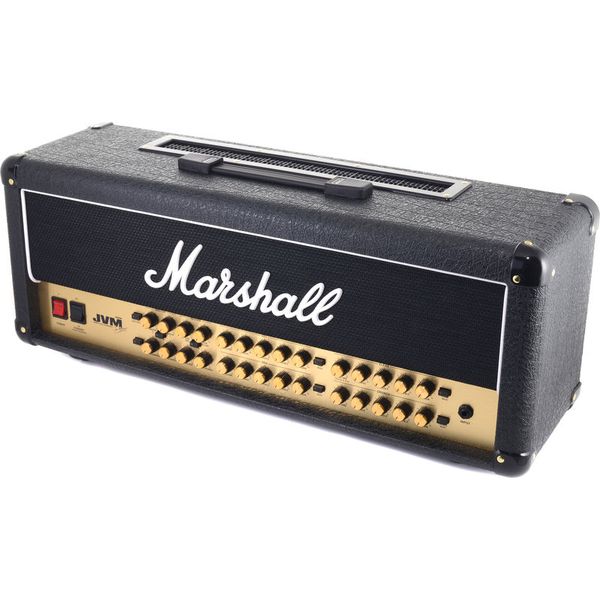
This is a genuinely all-tube signal path — 5x ECC83 preamp tubes and 4x EL34 power tubes, no semiconductors hiding anywhere in the actual tone circuit. That matters more than people give it credit for.
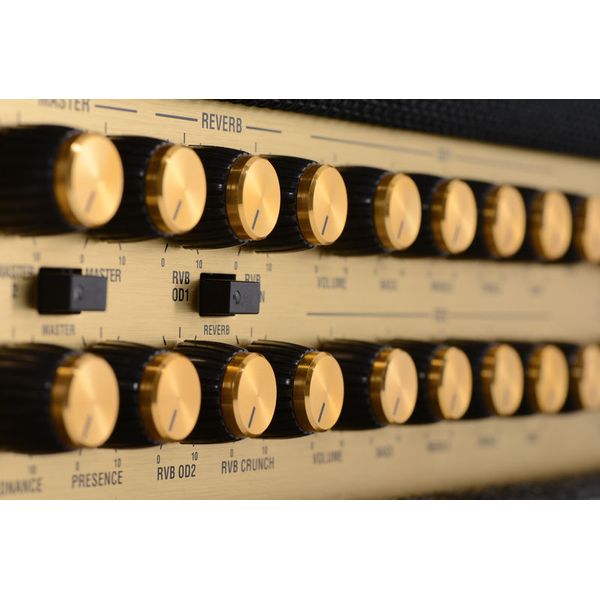
Each of the four channels gets its own 3-band EQ plus independent Gain and Volume, and within each channel there are three further modes (Clean/Crunch/Overdrive depending on channel), giving you 12 base tones total, switchable via the included footswitch or MIDI.
If you’ve read our roundup of the best amp heads for metal, you’ll know this segment gets crowded fast. What sets the JVM apart is genuinely covering clean jazz tones through to OD2’s near-djent saturation on a single unit.
Tone, Channel by Channel
Channel 1 (Clean) is genuinely gorgeous — proper Marshall chime, plenty of headroom, great for anyone who thought this amp was „just” a metal head.
Channel 2 (Crunch) is classic rock territory, think Bluesbreaker into JCM800 flavour depending on where you set Gain.
Channels 3 and 4 (Overdrive 1 and 2) are where things get serious. OD1 is thick, sustaining rock lead tone. OD2 pushed hard is genuinely one of the heaviest stock tones Marshall has ever shipped — this is the channel that made the JVM series a metal-forum favourite despite Marshall’s classic-rock reputation.
Presence and Resonance controls on the power amp section let you shape the low end and top-end sizzle independently of the preamp EQ, which is a genuinely useful bit of tone-shaping most budget heads just don’t offer.
Who’s This Actually For
Gigging and touring guitarists who need a genuine backline workhorse, session players who need four completely distinct tonal personalities on tap, and metal players who want authentic tube saturation rather than a modeler’s approximation.
It pairs beautifully with something like an Epiphone Explorer for a proper old-school metal rig, or an ESP-style axe — check our thoughts on the ESP LTD EC-1000 if that’s more your lane.
This is not a bedroom amp. 100 watts of EL34 headroom is genuinely loud, and even with the master volumes down you’re still dealing with a serious rig. Home players who just want tube tone at sane volumes should look elsewhere — our best tube amps for metal guide has lower-wattage options that suit apartment living better.
Build Quality
At 22kg it’s not light, but it’s built like Marshall heads always have been — solid ply cabinet, proper metal chassis, the kind of thing that survives decades of van transport if you look after it.
The footswitch is included in the box, which is genuinely appreciated at this price point — some rivals charge extra for something this fundamental to actually using the amp live.
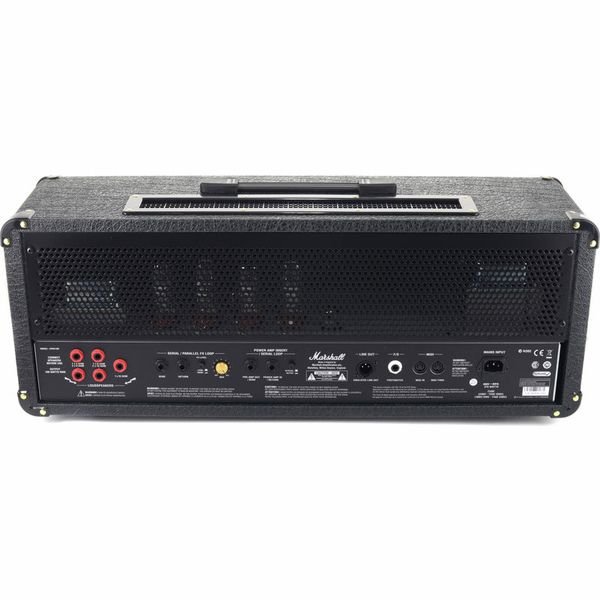
MIDI in and thru means you can integrate it into a bigger rig with a proper MIDI controller if you’re that deep into your setup, and the emulated DI out is handy for silent recording or front-of-house feeds without micing a cab.
The Honest Cons
- Genuinely intimidating control panel — four channels times multiple modes times EQ is a lot to learn
- 100W all-tube means it’s loud even at „low” settings — not apartment friendly
- 22kg head alone, before you add a cabinet — this is a two-person load-in amp for most people
- No built-in effects beyond reverb, you’re bringing your own pedals or rack
- Premium price puts it well above entry and mid-tier gigging heads
This one earns its cons through ambition rather than corner-cutting, which is a fair trade if you actually need everything it offers.
How It Compares
Against modeling combos like the Boss Katana 50 Gen 3, there’s genuinely no comparison in raw tonal authenticity — real tubes just respond differently under your hands. But the Katana costs a fraction of the price and fits in a car boot solo.
Against other serious metal heads, we’ve covered the wider field in our best amp heads for metal guide — the JVM410H’s real advantage is versatility. Most dedicated metal heads nail one or two tones; this one genuinely does four channels’ worth of distinct, usable sounds.
If budget solid-state alternatives interest you at all before committing to a rig this size, our piece on whether Bugera amps are actually any good is worth a read for context on the value end of the market.
Full Specs
- Power: 100 W all-tube
- Preamp tubes: 5x ECC83
- Power tubes: 4x EL34
- Channels: 4, each with independent 3-band EQ, Gain and Volume
- Base tones: 12, footswitch or MIDI selectable
- Effects: Digital reverb per channel, parallel FX loop with hardware bypass
- Extras: Emulated DI out, MIDI In/Thru, 2 programmable master volumes
- Footswitch: Included
- Weight: 22 kg
- Dimensions: 740 x 310 x 215 mm
- Made in: UK
Final Verdict
Losing the JVM210H stings a bit if you had your heart set on it, but the JVM410H isn’t a consolation prize — it’s the more capable amp full stop.
Four genuinely distinct channels, real EL34 power amp character, and a footswitch in the box rather than sold separately. For gigging guitarists who need one head to cover an entire set’s worth of tones, this is about as complete as it gets.
It’s a serious investment and a serious amp. Don’t buy it if you just want something loud in your bedroom — buy it if you’re building a rig that needs to work on a real stage for the next twenty years.