Watch It First
Quick housekeeping before we start. If you came here looking for the Squier Bullet Stratocaster HT, it has been discontinued and is no longer stocked in Europe.
The Affinity Series Stratocaster is where that budget-Strat conversation lives now, and honestly it is a better guitar than the Bullet ever was.
So: is it the cheapest Strat actually worth owning? Mostly yes, with a couple of conditions I want to be upfront about.
The 2021 Redesign Fixed the Old Complaints
This matters, because a lot of the internet’s opinions about Affinity Strats are based on guitars that no longer exist.
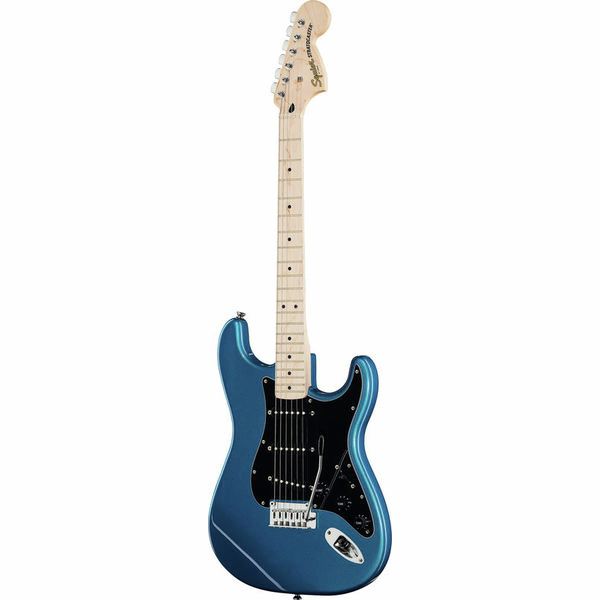
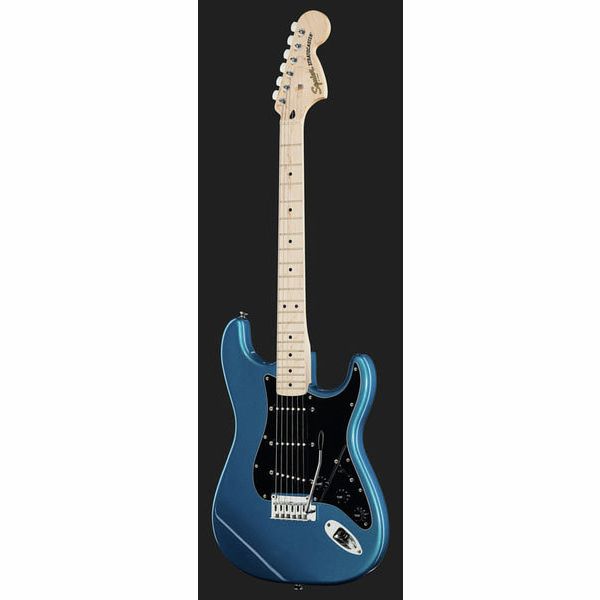
Squier reworked the whole line. The headstock is now the correct full-size vintage shape instead of the awkward small one, the body is thinner and lighter, and the neck got a proper C profile with a rolled fingerboard edge.
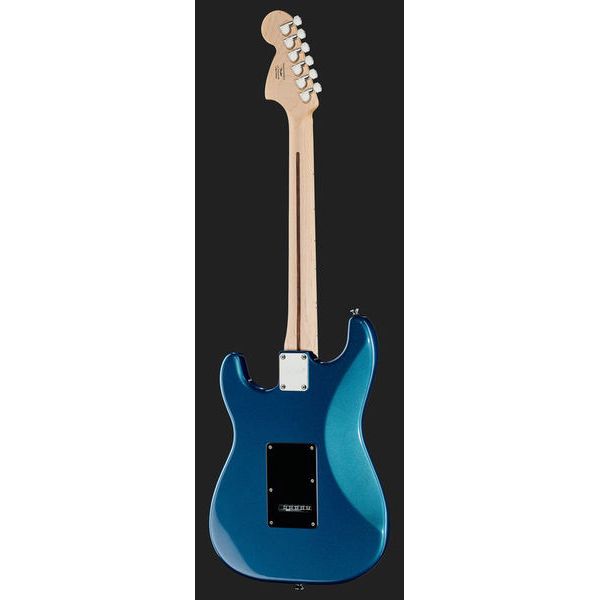
They also moved to a slimmer poplar body with a sculpted heel and swapped in a two-point synchronised tremolo with block saddles instead of the old six-screw unit.
The tremolo upgrade is the sleeper feature
A two-point trem at this money is genuinely unusual. It pivots more smoothly, returns to pitch better and feels much closer to a real Fender than the old bridge did.
You still get the classic Strat trade-off of course. Use the bar aggressively with a cheap nut and you will go out of tune. That is a nut problem, not a bridge problem.
How It Sounds
Three ceramic single coils, one volume, two tones, five-way switch. The formula has not changed since 1954 and it still works.
Ceramic magnets mean a slightly brighter, more aggressive voice than Alnico pickups would give you. Position four and two still do the quacky, hollow thing perfectly.
The neck pickup is the weak spot. It can sound a bit thin and glassy compared to a pricier Strat, though rolling the tone back to seven or eight sorts most of that out.
Noise, as always
These are true single coils, so they hum near computer monitors, dimmer switches and dodgy stage wiring. Nothing unusual, but worth knowing if this is your first single-coil guitar.
Through a small practice amp like the Fender Frontman 10G it sounds exactly like you expect a Strat to sound. Through a decent modelling amp it genuinely holds up.
Playability and Build
The neck is maple with a maple or laurel fingerboard depending on the variant, a 241 mm (9.5 inch) radius and 21 medium frets. Nut width is 42 mm.
That rolled fingerboard edge is the detail that punches way above the money. It makes a new guitar feel broken in, and beginners notice the comfort even if they cannot explain why.
Poplar is a light, neutral tonewood. Body weight is usually modest, which matters for younger players and for anyone standing up for a couple of hours.
Where the corners got cut
The nut is moulded plastic and it is the first thing worth replacing. A bone or TUSQ nut costs very little and improves both tuning stability and sustain.
The tuners are functional rather than good. They will hold, but they are vague to adjust and they are the second upgrade most owners make.
Fretwork is generally decent nowadays, though sprouted fret ends can show up on units that have crossed a few climate zones. Check the edges when it arrives.
Who Is It For?
First-time buyers who want the real Strat experience rather than an approximation. This is the sweet spot, and it is why the Affinity outsells almost everything.
Players who want a cheap platform to modify. Poplar body, standard routing, standard pickguard – it takes upgrades beautifully and there is a whole industry of parts for it.
Anyone needing a knockabout second guitar for alternate tunings, rehearsals or venues where you do not want to risk anything expensive.
Buying for a child under about eleven? Look at the Squier Mini Strat instead. Full scale is a lot of guitar for small arms.
The Rivals Worth Knowing
One step down, the Squier Sonic Strat is cheaper and genuinely decent, but you lose the rolled fingerboard edge, the two-point trem and a chunk of the build quality.
The HSS version of the Sonic is covered in our Sonic Stratocaster HSS review if you want a humbucker at the bridge for heavier stuff.
Move up in money and the Sterling Cutlass CT20HSS is a serious jump in quality. Our roundup of cheap electric guitars for beginners covers the wider field.
Which Affinity Variant Should You Get?
The Affinity Strat comes in more configurations than most people realise, and the differences are bigger than the colour swatches suggest.
The standard SSS version is the one to buy if you want the classic Strat experience – clean, chimey, quacky, exactly what the shape is famous for.
The HSS swaps in a humbucker at the bridge. If you play rock, punk or anything with real gain, that one pickup change makes a far bigger difference than any finish option will.
There is also a flame maple top FMT version, which costs a bit more and buys you looks rather than tone. Nice if you want it, entirely optional if you do not.
Fingerboard wood is worth a thought too. Maple boards feel slicker and look sharper under stage lights, laurel is a touch warmer and hides fingerprints better. Pure preference, no wrong answer.
Specs at a Glance
- Body: poplar, thin and contoured with sculpted heel
- Neck: maple, “C” profile, bolt-on
- Fingerboard: maple or laurel depending on variant, rolled edges
- Fingerboard radius: 241 mm (9.5”)
- Frets: 21 medium
- Scale: 648 mm
- Nut width: 42 mm
- Pickups: 3 ceramic single coils
- Controls: 1 volume, 2 tone, 5-way switch
- Bridge: 2-point synchronised tremolo with block saddles
- Headstock: full-size vintage shape
- Finishes include Lake Placid Blue, Olympic White, 3-Colour Sunburst and more
Final Verdict
The Bullet HT is gone and nobody should mourn it too hard, because the current Affinity Stratocaster does the same job noticeably better for not much more.
The rolled fingerboard edges, the corrected headstock and the two-point tremolo are the three things that make this feel like a real instrument rather than a starter object.
Swap the nut, maybe the tuners eventually, get it set up properly, and you have a guitar that will happily see you through years of playing and quite possibly a few gigs.
Is it the cheapest Strat worth owning? At this exact moment, yes – and it is not particularly close. Just budget twenty minutes and a fresh set of strings before you judge it.