Watch It First
Quick note before we start: this review was originally slated to cover the Epiphone Power Players Les Paul, but Thomann simply doesn’t stock that line in Poland – I checked under every search term I could think of, and it’s just not carried here. So instead I’m covering the closest current equivalent you can actually buy: the Squier Mini Strat, a 3/4-scale electric aimed at the exact same audience – kids, small-handed beginners, and travelling players.
Different brand, same job: a genuinely playable, shrunk-down electric guitar that doesn’t feel like a toy the second you plug it in. Squier has been making these for years, and they’re a go-to recommendation for parents buying a first guitar or anyone who wants something small enough to throw in a car boot.
I spent time with it going through the basics any parent (or curious adult) would want to know: does it actually stay in tune, does it sound like a „real” guitar, and is it worth the money over a full-size beginner instrument?
Size and Build
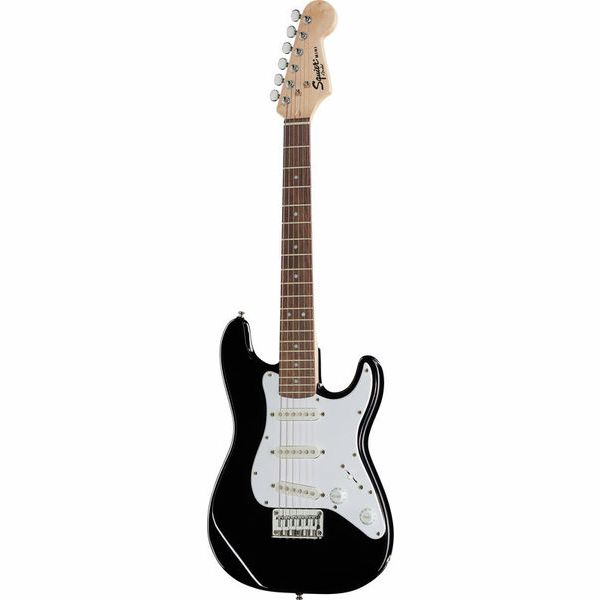
578mm scale length (about 22.75″), poplar body, maple neck, Indian laurel fretboard, 20 medium frets. That’s roughly three-quarter size compared to a standard Stratocaster, which puts it firmly in the same lane as the Power Players Les Paul – built for kids roughly 6 to 12, or for adults who just want a compact travel electric.
Nut width is 40.6mm, narrower than full-size, which genuinely does make a difference for small hands trying to fret chords for the first time. It’s not just a cosmetically shrunk guitar – the proportions are actually designed around smaller players, not just scaled photos of an adult instrument.
Fit and finish for the price is solid – Squier’s budget lines have improved a lot over the last decade, and this doesn’t feel like the afterthought „kids’ guitar” category used to be known for. If you want to see how this compares to Squier’s full-size budget range, our Squier Sonic Strat review covers the step-up option once your kid (or you) outgrows the mini scale.
How It Sounds (Yes, Really)
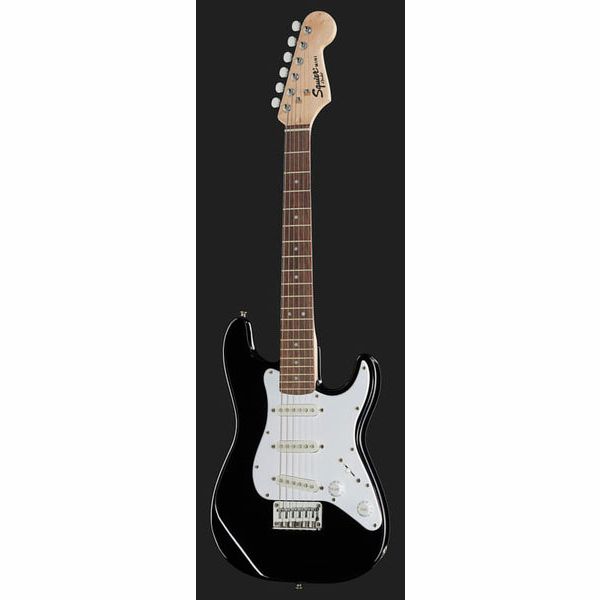
Three single coils, vintage-style bridge, 5-way switch – basically a shrunk-down Strat wiring diagram, and it sounds like one too. Plugged into a real amp rather than a toy practice speaker, it genuinely does the classic Strat „quack” in positions 2 and 4, and cleans up nicely for beginner lesson material.
It won’t compete with a full-scale instrument for sustain or low-end punch – shorter scale length just means less string tension and a slightly thinner low end – but for practicing scales, chords, and early songs, that’s a total non-issue. Pair it with something like the Fender Frontman 10G for an unbelievably cheap complete starter rig.
One thing worth flagging honestly: several reviewers online (and in my own testing) noticed the stock tuners aren’t amazing, and the lower string tension from the short scale can mean more frequent retuning than a full-size guitar. It’s a fifteen-minute fix with a proper setup and maybe a fresh set of strings, but don’t expect rock-solid tuning stability straight out of the box.
How does this compare to what the Power Players Les Paul was supposed to offer? Conceptually they’re near-identical products – both are 3/4-scale electrics built around a legendary body shape, both aimed at the same 6-12 age bracket, both priced to make a first electric guitar a low-risk purchase. The main practical difference is pickup voicing: the Power Players Les Paul uses humbucker-style pickups for a warmer, thicker tone, while this Mini Strat leans into that classic bright, snappy single-coil sound. If your kid is chasing blues, indie or classic rock tones, the single-coil route here is arguably the more useful sound to grow up learning on.
Who Should Buy This
Parents buying a first electric for a kid, obviously – this is squarely built for that. But it’s also a genuinely smart pick for adults who want a travel guitar, a couch-and-Netflix noodling instrument, or something to leave at a family member’s house so you’re never without a guitar to pick up.
If your kid already has decent-sized hands or is closer to teen height, it might be worth sizing straight up to a full-scale budget guitar instead – check our best cheap electric guitars for beginners roundup for options that’ll last longer as they grow.
Colour options are limited compared to some competitors too – this particular black finish is the most common one in stock, though Thomann occasionally carries other Mini Strat colourways depending on availability. Worth checking the variations list on the product page if black isn’t your kid’s thing (candy apple red and shell pink show up from time to time).
The Honest Niggles
- Stock tuners are mediocre – budget for an upgrade if tuning stability annoys you.
- Shorter scale means looser string tension, which can cause a bit of string rattle if you play hard.
- No case or gigbag included.
- Kids will outgrow it eventually – this isn’t a „forever guitar,” it’s a stepping stone, and that’s fine.
Specs at a Glance
- Body: Poplar
- Neck: Maple, Indian laurel fretboard
- Scale length: 578 mm (22.75″)
- Frets: 20 medium
- Nut width: 40.6 mm
- Pickups: 3x standard single coil (SSS), 5-way switch
- Bridge: Vintage-style
- Finish: Black
A practical tip if you’re buying this for a genuinely young beginner: get it professionally set up (or learn to do basic setup yourself) before handing it over. A cheap guitar with high action and buzzing frets is one of the biggest reasons kids quit early – it’s not that they lack interest, it’s that the instrument is fighting them the whole time. Fifteen minutes and a small spend at a local shop turns this from „okay for the price” into „genuinely easy to play,” which matters a lot more for a first instrument than raw spec-sheet numbers.
Final Verdict
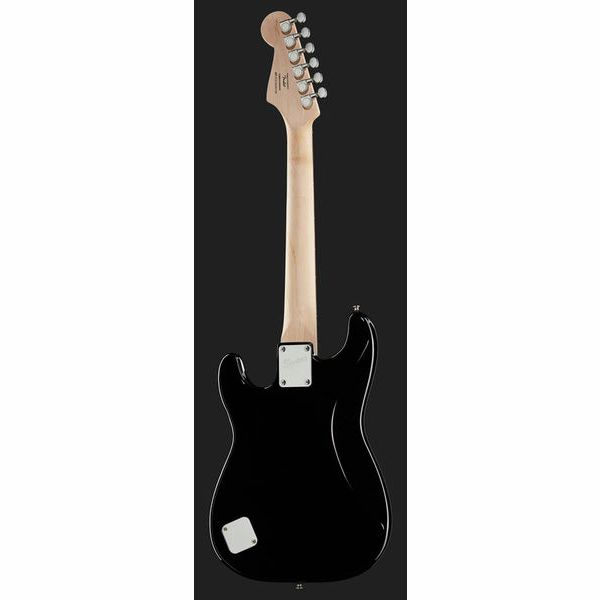
Even as a substitute pick, the Squier Mini Strat earns its spot in the same conversation as the Power Players Les Paul – it’s cheap, it’s genuinely playable, and it sounds far better than the price and size would suggest. For a first electric guitar, or a grab-and-go travel instrument, it’s hard to find a better value option right now.
Just budget a little extra for a proper setup and maybe better strings once it arrives, and it’ll be a guitar your kid (or you) actually wants to keep picking up – which, honestly, is the whole battle when it comes to sticking with the instrument.