Watch It First
Baton Rouge is one of those brands that flies under the radar in Poland, and I genuinely don’t get why.
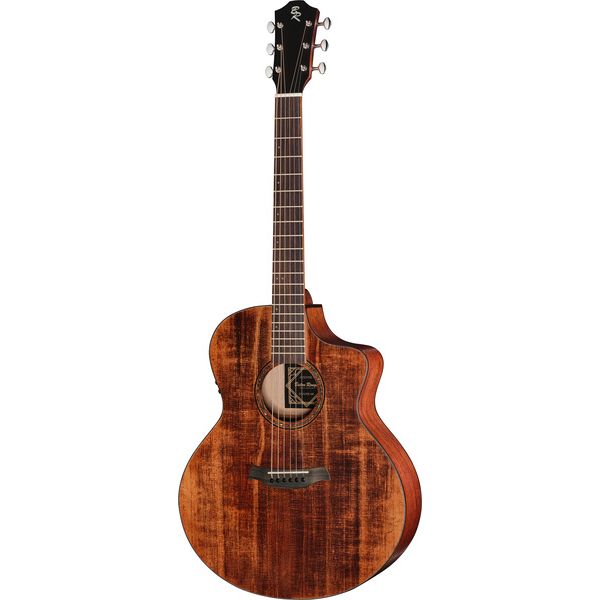
The X11S/FJE-AB is a folk jumbo cutaway acoustic-electric with a solid spruce top and mahogany back and sides, and it’s one of the more surprising guitars I’ve plugged in this year.
Let’s get into why it’s earned a permanent spot on my „actually recommend this” list.
Build and Materials
This is a folk jumbo body with a cutaway – big and round-shouldered like a proper jumbo, but with a slightly narrower waist that’s easier to hold than a full-fat dreadnought.
Top is solid spruce, back and sides are mahogany, and the whole body is wrapped in ABS binding that actually looks tidy up close, not just from three feet away.
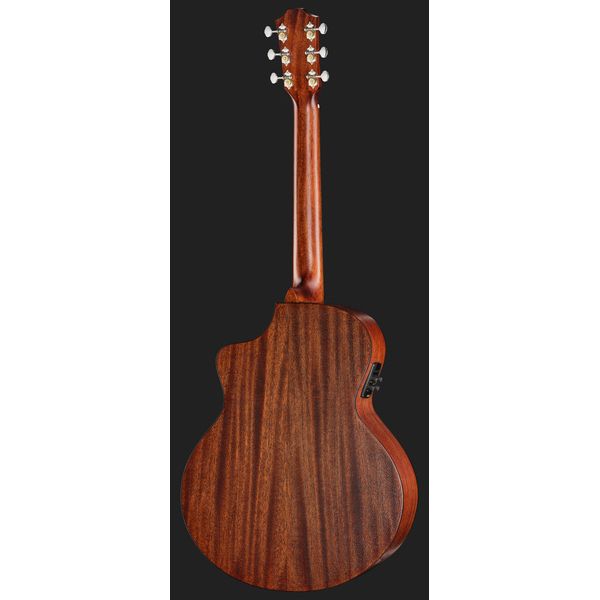
Neck is mahogany with an ovangkol fretboard and bridge, 21 frets, bone nut and saddle. Chrome open-back tuners round it out, and they’re smoother than you’d expect at this price.
Finish
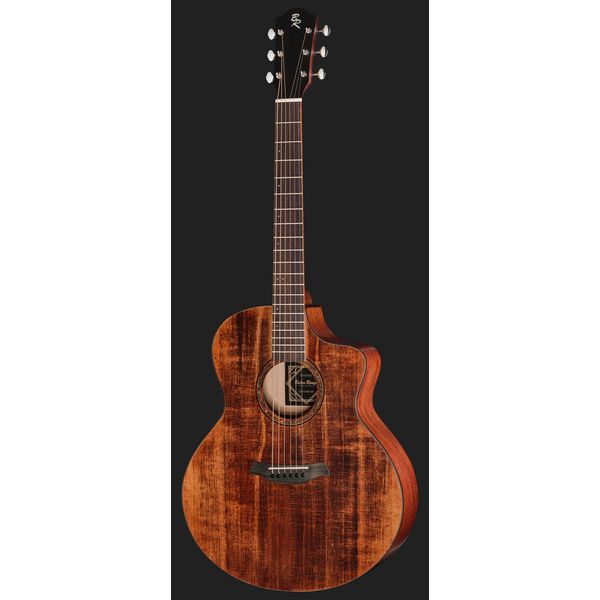
It comes in an Antique Brown, matte, open-pore finish. No high-gloss shine here, and honestly that’s part of the appeal – it looks handmade rather than dipped in plastic.
Open-pore finishes let the top breathe more, which plays into how resonant this guitar is unplugged. More on that in a second.
Baton Rouge is a German-designed brand manufactured in Indonesia, and that combination tends to produce guitars with tighter quality control than you’d expect from the price tag alone.
It ships with Elixir coated strings as standard, which is a nice touch – Elixir strings usually cost extra as an upgrade, so getting them stock straight out of the factory box is a small win.
Playability and Feel
The 46mm nut width is on the wider side, which fingerstyle players will appreciate and aggressive strummers might need a session or two to adjust to.
Despite being a jumbo, it doesn’t feel like a barrel on your knee. The cutaway shape helps balance it out, and the neck profile is comfortable enough for long sessions.
Fret access up top is genuinely usable thanks to the cutaway – a small thing, but it matters if you ever solo or noodle above the 12th fret.
Compared to a smaller-bodied guitar like a Taylor GS Mini, this obviously takes up more real estate, but the trade-off is a much bigger low end when you dig in.
The BR2.1P system also includes a built-in tuner, which is a genuinely useful inclusion Baton Rouge doesn’t make a big deal about but should – it’s one less thing to buy separately.
Sound and Tone
Jumbo body, mahogany back and sides – this is a loud, boomy, projection-heavy guitar unplugged. Strum a big open chord and it fills a room without hesitation.
There’s real low-end punch here that smaller guitars like the Taylor GS Mini simply can’t match, though you do give up a bit of that snappy top-end clarity in exchange.
Plugged in, the Baton Rouge BR2.1P pickup system is genuinely one of the better budget-tier setups I’ve heard – it’s a soundboard transducer plus preamp combo, and it avoids that quacky, piezo-only harshness a lot of cheap systems have.
It also handles percussive playing surprisingly well – tap the body and it picks that up cleanly rather than just farting out feedback.
Recording engineers who’ve mic’d this guitar note that it takes EQ well without getting boxy, which says something about how balanced the underlying tone actually is before you even touch a knob.
Who It’s For
Strummers and singer-songwriters who want volume and low-end without going full dreadnought will get on well with this. It’s also a great choice if you gig regularly and need a reliable plugged-in tone.
If your main thing is delicate fingerstyle, you might find a smaller body like the one on the Cordoba C5 CE more forgiving, but for strumming-first players this jumbo shape is hard to beat at the price.
How It Compares
Against something like the Epiphone Dove Studio, another affordable jumbo, the Baton Rouge edges ahead on plugged-in tone thanks to that BR2.1P system, while the Epiphone leans more on brand recognition and looks.
If you want a genuinely premium dreadnought experience and have more to spend, the Martin D-X2E is worth a look, but it’s playing a different game price-wise.
Baton Rouge tends to get overlooked next to the big names, but guitar for guitar, it’s one of the better value stories in this segment of the market right now.
Honest Cons and Niggles
The wide 46mm nut isn’t for everyone – if you have small hands or play mostly barre-chord rock rhythm, it can feel like a stretch at first.
It also doesn’t come with a case or gig bag included, so budget for one separately if you’re planning to actually transport it anywhere.
A couple of owner reviews mention needing a truss rod tweak or fresh strings out of the box for the tuning to fully settle – not unusual for factory setup, but worth knowing going in.
And if you specifically want an acoustic simulator tone for an electric rig instead of a real acoustic-electric, that’s a different tool entirely – check out the Boss AC-3 for that use case.
Small niggles aside, none of them are dealbreakers – they’re the kind of things you’d expect to manage on any guitar at this price.
Specs at a Glance
- Body: Folk jumbo with cutaway
- Top: Solid spruce
- Back and sides: Mahogany
- Neck: Mahogany, ovangkol fretboard and bridge
- Frets: 21
- Scale length: 630mm
- Nut width: 46mm
- Electronics: Baton Rouge BR2.1P pickup system
- Finish: Antique Brown, matte open-pore
Final Verdict
The X11S/FJE-AB is proof that you don’t need a big logo on the headstock to get a genuinely good-sounding acoustic-electric jumbo.
Big low end, a surprisingly capable pickup system, and solid tonewoods make this one punch well above its price bracket. If you’re strumming-focused and want a guitar that fills a room, this deserves to be on your list – alongside the Alhambra 1C if you want to compare against a more traditional build.