Watch It First
Quick note before diving in: Fender has retired the old GTX line. The GTX50 that a lot of players still ask me about isn’t sold new anymore.
Its replacement is the Fender Mustang LTX50, and it’s not just a rename — it’s a genuinely different beast under the hood, with a real 12″ Celestion speaker instead of the smaller full-range cones the old GTX used.
So the question a lot of you are actually asking is „is the new one worth it,” and I think it deserves a proper answer rather than a shrug.
What Changed From the Old GTX Line
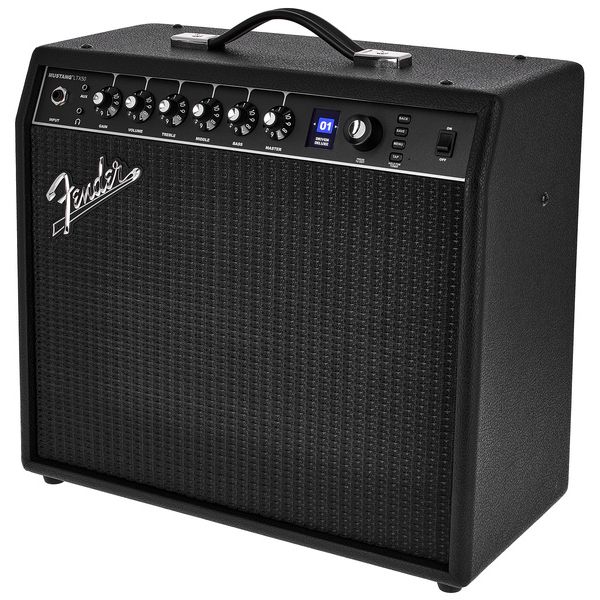
The biggest upgrade is that 12″ Celestion G12P-80 speaker. A real guitar speaker driving 50 watts gives you way more low-end thump and a more natural amp-in-the-room feel than the tiny full-range cones a lot of budget modelers use.
Bluetooth is also new here, which the GTX line never had. You can stream a backing track straight to the amp, and use the Fender Tone app wirelessly to browse and tweak presets instead of fiddling with tiny onboard buttons.
Controls and Layout
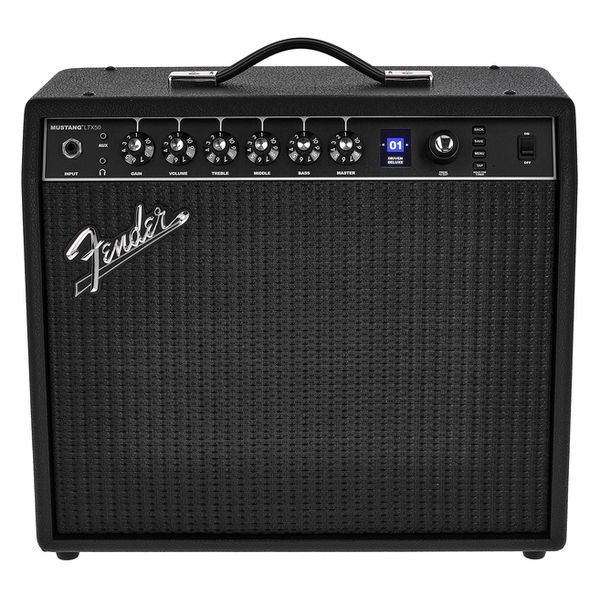
Gain, Volume, Treble, Middle, Bass, Master, plus preset select and the usual Back/Save/Menu/Tap Tempo cluster. It’s a familiar Fender modeling layout if you’ve used any Mustang amp before.
At 9.7kg it’s noticeably heavier than the entry-level LT models, which tracks given the bigger speaker and cabinet. Still very much a one-hand-carry amp though.
25 Amps, 25 Effects
This is where the LTX50 pulls ahead of cheaper Mustang models. Twenty-five amp models paired with twenty-five effects means a genuinely huge number of combinations, and Fender’s modeling has matured a lot since the earliest Mustang generation.
Cleans are lush and shimmery, crunch tones have real touch sensitivity, and the higher-gain models sound convincing enough that you won’t feel like you’re settling. If you’re coming from something like the Peavey Vypyr X2, you’ll find the interface a bit more streamlined here, if slightly less deep in raw parameter tweaking.
100 Memory Slots
You get 100 preset slots to save your own tones, which is honestly more than most players will ever fill. It means you can build entirely separate rigs for practice, recording, and gigging without ever overwriting a tone you liked.
Setting Up Through the App
Pairing via Bluetooth to the Fender Tone app is painless, and it’s honestly the best way to actually explore what this amp can do. Scrolling through 25 amps and 25 effects with two knobs and a tiny screen gets old fast.
Once paired, you can browse community presets, tweak every parameter with sliders instead of menu diving, and push your favourites straight to the amp’s memory slots. It genuinely changes how usable the amp feels day to day.
Worth noting the app works over Bluetooth for control, but streaming audio for jamming along runs through the same Bluetooth connection too, so don’t expect to do both a firmware update and a jam session at the same time without a bit of juggling.
Connectivity for Gigging and Recording
There’s a proper XLR line output with ground lift, which is a genuinely gig-useful feature for running direct to a PA or mixing desk without a DI box.
USB-C handles recording and firmware updates, there’s a stereo effects loop for external pedals, and the headphone/aux combo covers silent practice. It’s a well-rounded connection panel for the price.
Compared to the Boss Dual Cube LX, which leans more desktop-friendly, the LTX50 is clearly built with small-gig use in mind rather than just bedroom duty.
Who Should Buy This
Gigging players who need one amp to cover multiple tones without hauling pedalboards and heads around will get the most out of the LTX50.
If your budget is tighter, the smaller Marshall MS-2 or the tiny NUX Amp Academy cover the practice-only use case for a fraction of the price, just without the real speaker and stage-ready connections.
Build and Cabinet
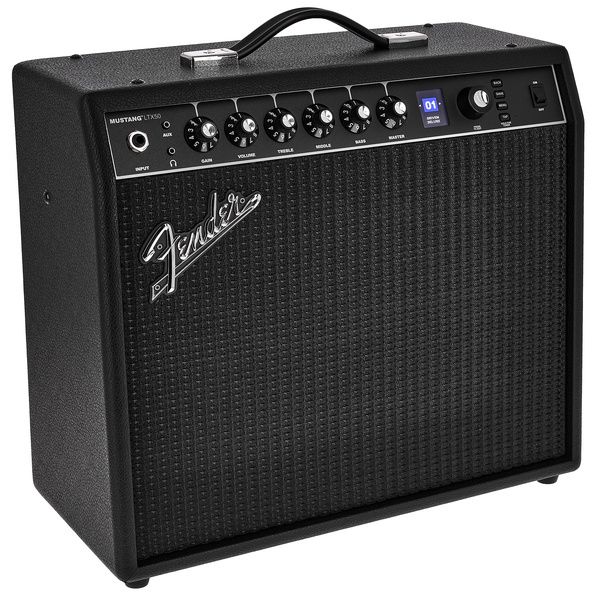
The cabinet is a proper closed-back-feeling build, more substantial than the LT-series shells, which makes sense given there’s a real 12″ speaker doing the work inside.
It still looks unmistakably Fender — black tolex, silver grille cloth, clean lines. Nothing about it screams „digital modeler” from across the room, which some players will appreciate if they’re a bit precious about looks matching a classic Fender aesthetic.
Specs at a Glance
- Power: 50W
- Speaker: 1x 12″ Celestion G12P-80, 8 ohm
- Amp models / effects: 25 / 25
- Memory slots: 100
- Connectivity: Bluetooth, USB-C, XLR line out, stereo FX loop, headphone, aux
- Weight: 9.7kg
The Niggles
Real-world reviews are mixed on the onboard menu navigation — some players find it a bit fiddly to dig through presets without the app open next to you.
The footswitch is a separate purchase again, same story as most Mustang amps, which stings a little at this price point. It’s also noticeably heavier than the LT-series amps, so it’s less of a grab-and-go option.
And while the amp models are strong, a few users report the factory presets need some EQ massaging before they sound their best in a live mix — budget some setup time before your first gig with it.
It’s also worth a quick side-by-side against the Mooer GE200 if you’re the type who’d rather run a multi-effects unit into a clean power amp instead of buying into one brand’s whole modeling ecosystem. Different philosophy, similar end goal.
And if tube warmth is non-negotiable for you no matter what, it’s worth at least skimming our thoughts on the Blackstar HT-20R MKIII before committing to any modeling amp, LTX50 included.
Final Verdict
So, is the Fender Mustang LTX50 worth it? For anyone who outgrew the old GTX line or wants one gig-capable modeling combo, yes — the real speaker and Bluetooth alone justify the step up.
It’s not perfect: the footswitch costs extra and the menu system takes some getting used to. But the tone quality and connectivity punch above what you’d expect at this price.
If you want a single amp that can handle practice, recording, and the odd small gig, this is one of the smarter modeling combos going right now IMO.