Watch It First
Nylon strings scare a lot of guitarists off. Wide neck, softer attack, totally different feel under your fingers.
But the Cordoba C5 CE keeps coming up whenever someone asks for a first „real” classical guitar that doesn’t feel like a toy.
So I spent some proper time with one. Here’s the honest rundown.
What You’re Actually Buying
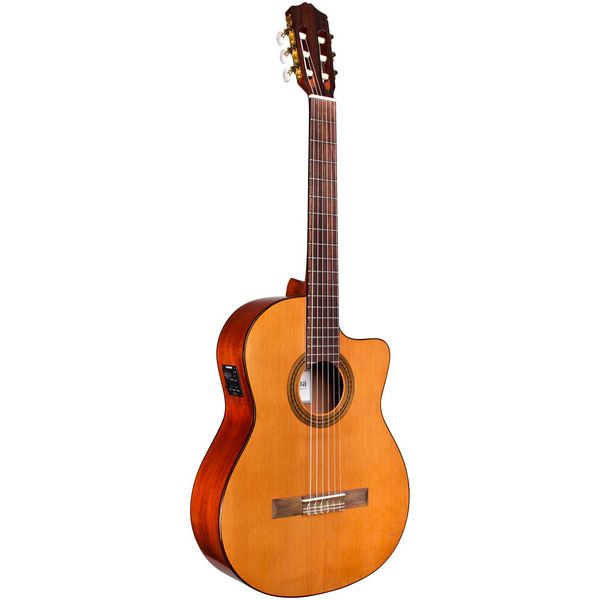
Solid cedar top. That’s the headline spec, and it matters more than most beginners realise.
Cedar responds fast. You get a warm, mellow tone almost straight out of the box, without years of „playing it in” like a spruce top needs.
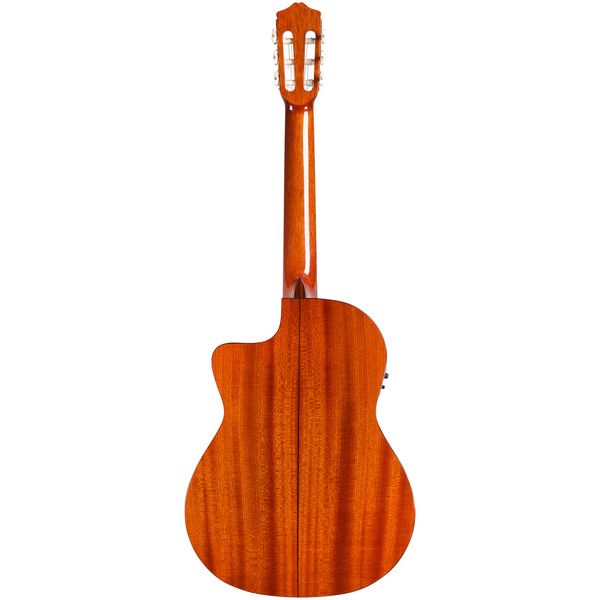
Back and sides are laminated mahogany, which keeps the price sane while still giving decent warmth and enough projection for a bedroom or a small room gig.
The Cutaway Changes Things
This is the CE version, so it has a Venetian cutaway plus a built-in Fishman pickup.
If you’re coming from electric or steel-string, that cutaway matters more than you’d expect. Upper fret access on a classical guitar is usually rubbish.
Not here. You can actually reach past the 12th fret without contorting your whole arm.
Neck Width — The Classical Guitar Dealbreaker
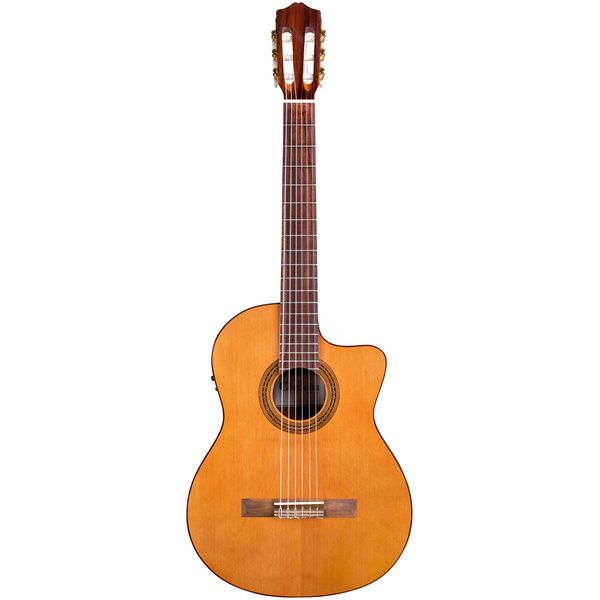
Nut width is 50mm. That’s wide by electric guitar standards, but narrower than a lot of full traditional classicals.
That’s Cordoba’s whole pitch with the „Iberia” range — narrower necks so crossover players don’t feel like they’re hugging a tree trunk.
Still, if you’ve got small hands or you’re used to a Strat neck, give yourself a couple of weeks to adjust. It’s a genuine adjustment period, not a dealbreaker.
How It Actually Sounds
Fingerstyle is where this guitar shines. Bossa nova, folk picking, gentle classical repertoire — it all comes out warm and clear.
Push it harder with rasgueado or aggressive flamenco strumming and it compresses a bit, which is completely normal at this price point.
Plugged in through the Fishman, it’s usable for small gigs, though like most under-saddle pickups it can get a bit quacky if you don’t ride the EQ carefully.
Who This Is Actually For
Electric or steel-string players who want to explore classical technique without buying a full flamenco-spec instrument.
Songwriters who want that nylon warmth in the mix occasionally, without owning something they’ll only touch twice a year.
If you already play a decent steel-string like the Seagull S6 or you started out on something like the Fender CC-60S, this is a sensible next step into different territory.
Not really for hardcore classical students who need a full traditional neck width and a purely acoustic instrument. Cordoba themselves sell models built for that further up their range.
Build Quality and Setup
The finish is clean, the rosette is tasteful rather than gaudy, and the rosewood fretboard feels genuinely nice under the fingers.
Setup out of the box can be hit or miss. Mine needed a slight action adjustment at the saddle, which is pretty normal for guitars shipped straight from a warehouse rather than set up by a local shop tech.
Budget for a setup, or learn to do basic saddle adjustments yourself. It’s not hard and it transforms how the guitar feels.
The Niggles, Because Nothing’s Perfect
The gold-plated tuner hardware looks a bit cheap up close. A few owners mention it in reviews, and honestly, they’re right.
The Fishman pickup is fine, not amazing. Don’t expect studio-quality DI tone straight out of it — it does the job for practice and small rooms.
Nylon strings also take longer to settle in tuning-wise during the first week or two. That’s physics, not a Cordoba problem specifically, but worth knowing if you’ve never owned a nylon-string guitar before.
How It Stacks Up Against Other Beginner Options
For beginners weighing this against a straight-up steel-string acoustic like the Cort Earth 100 or the ultra-budget Epiphone PR-150, remember that nylon and steel are genuinely different instruments, not just a style choice.
And if cedar-top tone is what’s drawing you in, it’s worth comparing against something like the Martin D-X2E just to hear how differently cedar and spruce behave across totally different body shapes.
IMO, for the price bracket, the C5 CE is one of the more honest crossover classicals out there right now.
Strings and Maintenance
Cordoba ships this with a decent set of nylon strings, but they’re not going to be the last set you ever buy.
A lot of owners swap to a lighter tension set within the first month or two, mostly to get a slightly snappier response out of that cedar top.
Keep an eye on humidity too. Nylon-string guitars are generally more forgiving than steel-string acoustics, but a cheap humidifier in the case never hurts, especially over winter.
String changes are simple once you’ve done one or two. YouTube has plenty of tutorials specific to classical guitar tie-block bridges if you’ve never dealt with one before.
A Quick Word On Resale
Cordoba holds its value reasonably well on the used market, better than a lot of budget classical brands.
That matters if you’re not 100% sure classical guitar is going to stick for you. Worst case, you’re not losing much if you decide to sell it on in a year.
Full Specs
- Top: Solid cedar
- Back & Sides: Laminated mahogany
- Fretboard: Rosewood
- Scale length: 650mm
- Nut width: 50mm
- Cutaway: Yes (Venetian)
- Electronics: Fishman pickup
- Finish: Natural
- Customer rating: 4.4/5 from 42 Thomann reviews
Final Verdict
The Cordoba C5 CE isn’t trying to be a purist’s flamenco guitar, and it doesn’t need to be.
It’s a genuinely playable crossover classical for people who’ve never owned nylon strings and want to actually enjoy the transition rather than fight it.
The cutaway, the narrower neck, the Fishman pickup — every choice here is aimed at making classical guitar less intimidating for people coming from other styles.
It won’t replace a proper concert classical for serious students, but for everyone else? It’s a smart buy that doesn’t feel like a compromise.