Watch It First
Quick heads up before we start: if you came here looking specifically for the Epiphone Starling, Thomann has pulled it from their European catalogue. It’s simply not available to order anymore over here.
So instead I’m covering the guitar that fills exactly the same role in Epiphone’s lineup — the PR-150. Same idea: a genuinely cheap, no-nonsense dreadnought built for someone picking up a guitar for the very first time.
I went through the specs and a stack of owner and instructor reviews to see if it’s actually a smart first guitar, or just the cheapest thing on the shelf.
A No-Frills Beginner Dreadnought
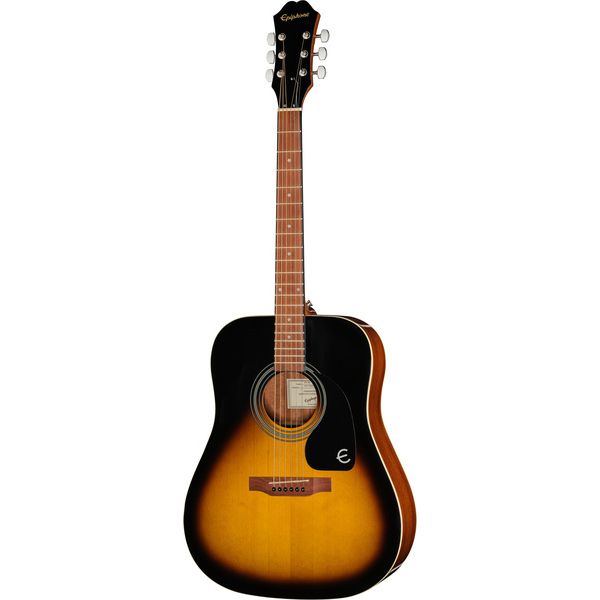
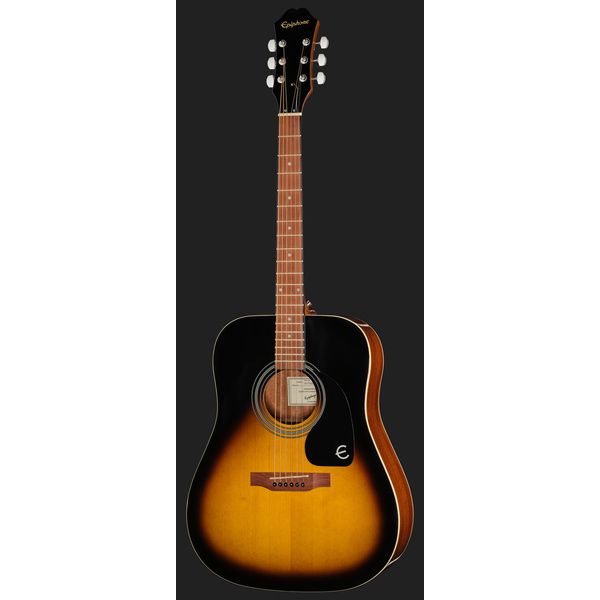
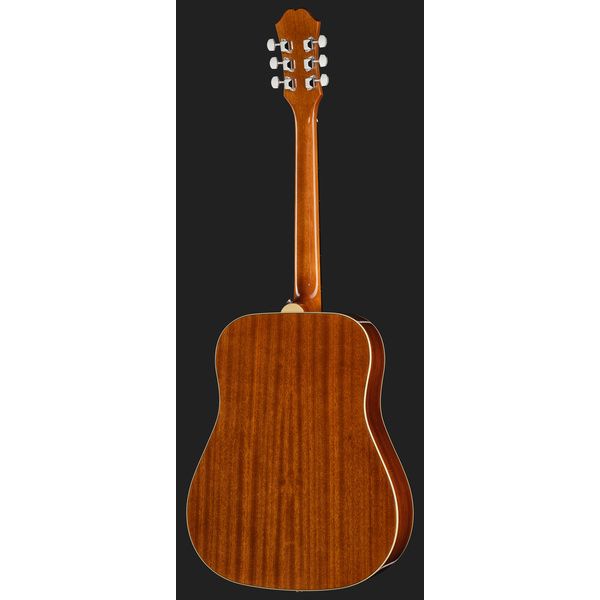
This is a classic dreadnought shape through and through — spruce top, mahogany back and sides, mahogany neck with a slim taper profile that’s genuinely comfortable for smaller hands. Rosewood fretboard with simple dot inlays, single-ply body binding, and a black pickguard round out the look.
Scale length is 648mm with a 43mm nut and 20 frets — completely standard dreadnought dimensions, nothing scaled down or simplified for beginners here. It plays like a proper guitar, not a toy version of one.
Build Quality for the Money
At this price, don’t expect solid tonewoods — this is a laminate-topped guitar through and through, and that’s completely normal for the category. What matters more is that the construction is consistent and the guitar plays in tune up the neck, which by most accounts it does.
If you want to see how it stacks up against the other usual suspects in this bracket, our roundup of cheap beginner acoustics covers several, and the Yamaha FG800 remains the classic benchmark to measure any budget dreadnought against.
How It Sounds and Plays
One detailed review sums it up better than I could: warm and mid-forward, with clear highs that cut just enough to make fingerpicked passages readable, and a tight low end that works well for rhythm playing. That’s a genuinely balanced description for a guitar at this price.
It’s brighter up top than something like our Fender CC-60S, which leans warmer thanks to its all-mahogany build, and it’s a more traditional dreadnought voice than the deeper, boomier Ibanez AW54. If you’re not sure which flavour you want, that’s honestly a good reason to try a few in person before buying.
More than one guitar teacher reviewing this online mentioned recommending it to students regularly — not because it’s spectacular, but because it’s a reliable, playable, no-surprises first instrument.
Who It’s For
This is squarely aimed at first-time buyers — a kid starting lessons, an adult finally picking up the hobby, or a teacher who needs a reliable loaner instrument that won’t break the bank if it gets knocked around a bit.
If you already know you’re serious about the instrument and have a bit more to spend, stepping up to something like the Epiphone Hummingbird gets you a lot more character and heritage styling for not a huge jump in price.
The Honest Niggles
Budget guitars in this bracket are notorious for needing a setup out of the box, and this one’s no exception — some units arrive with the action a touch higher than ideal. It’s a cheap, quick fix at a local shop, but budget for it rather than assuming it’ll be perfect on arrival.
No case or gigbag is included, the tuners are basic rather than premium (though they hold tuning reasonably well by most accounts), and it’s a laminate build so don’t expect it to open up and improve with age the way a solid-wood guitar would. None of that is unusual at this price — it’s just worth knowing going in. If you want something a bit smaller and easier to handle for a young beginner specifically, our Harley Benton CLP-15ME review covers a genuinely tiny alternative.
Why Not Just Import a Starling?
You can technically still find Epiphone Starlings floating around on marketplaces like Reverb or through US sellers, but by the time you factor in international shipping, import duty, and the hassle of a returns process across borders, it stops making financial sense for a guitar in this price bracket.
The PR-150 is sitting right there on Thomann’s shelves in the same price range, backed by Thomann’s own 30-day money-back guarantee and 3-year warranty, with none of the cross-border headache. For a first guitar especially, that peace of mind is worth more than chasing a specific model name.
Getting Started With It
If this is genuinely your first guitar, spend a little extra on a decent set of light-gauge strings and a clip-on tuner right away — cheap factory strings tend to go dull fast, and fresh strings make a bigger difference to how encouraging a beginner guitar feels than almost anything else.
A basic setup (nut, saddle, action check) at a local shop shortly after buying is money well spent too — it turns a decent budget guitar into one that’s genuinely easy and encouraging to practice on daily, which is really the whole point of a first instrument.
Specs at a Glance
- Body: dreadnought
- Top: spruce
- Back & sides: mahogany
- Neck: mahogany, Slim Taper profile
- Fretboard: rosewood, dot inlays
- Scale length: 648mm
- Nut width: 43mm
- Frets: 20
- Binding: single-ply body binding
- Finish: Vintage Sunburst
Final Verdict
The PR-150 isn’t trying to be exciting — it’s trying to be a dependable, properly-sized dreadnought that won’t fight a beginner or empty their wallet, and on both counts it delivers. It’s exactly the kind of guitar that quietly does its job for years.
Since the Starling itself isn’t something you can actually buy here anymore, this is genuinely the guitar I’d point a first-timer toward instead. Budget for a basic setup and a fresh set of strings, and IMO you’ll have a genuinely encouraging first guitar rather than one that fights you every step of the way.