Watch It First
Ask ten bass players what their first „real” amp was, and at least four of them will say a Rumble.
The Rumble 40 sits right in that sweet spot – loud enough to gig a small room, small enough to actually fit in your hallway.
I’ve used one for home practice and light rehearsal duty, so here’s the honest rundown.
Build Quality
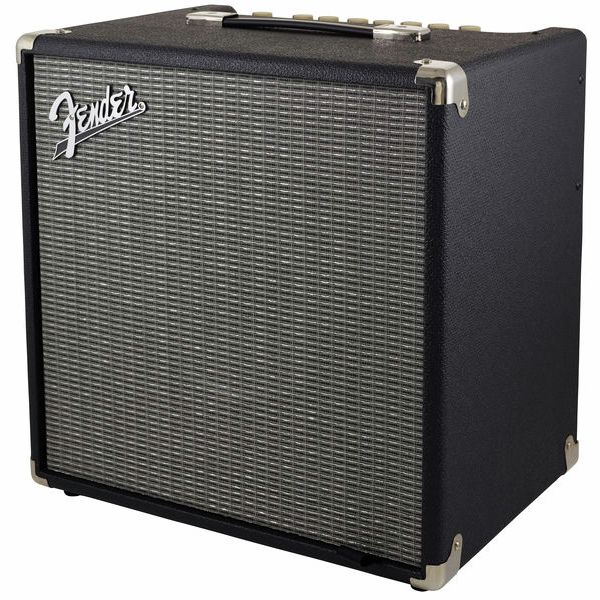
At just over 8 kg, this thing is stupidly easy to carry one-handed, which matters more than you’d think when you’re hauling gear up a third-floor walkup.
The vinyl covering and silver grille look properly „Fender” rather than generic practice-amp beige, and the corners feel like they’ll survive a few knocks.
Controls are all metal-shafted pots with soft-touch caps, so nothing feels flimsy even after months of gigging use.
It’s a Class D amp, which is how Fender keeps the weight down while still pushing a genuine 40 watts through the 10-inch speaker.
Tone and Sound
Plugged in flat, the Rumble 40 has a clean, slightly scooped low end that suits fingerstyle and pick playing equally well.
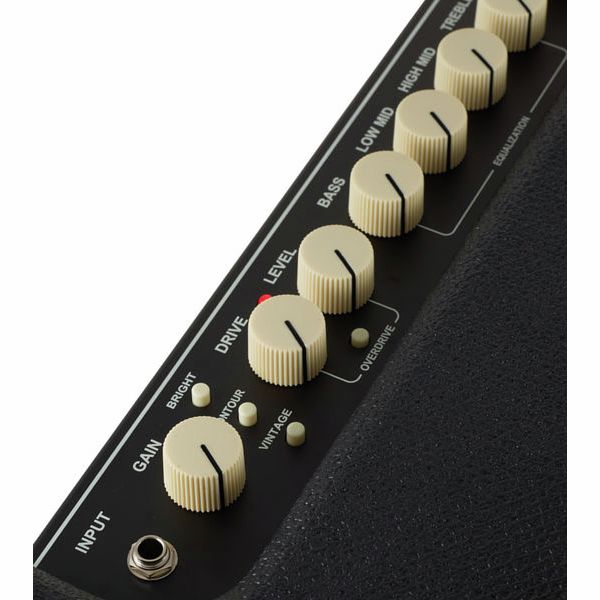
The Contour switch is the one control I use constantly – it scoops the mids for a modern slap tone, and flicking it off gets you back to something flatter and more vintage.
Speaking of vintage, the Vintage switch rolls off some top end for an older, woolier voicing that’s great for old-school rock and reggae lines.
The Built-In Overdrive
There’s a Drive control and a separate Overdrive switch, and it’s genuinely usable – not the afterthought grit you get on a lot of cheap bass combos.
It won’t replace a dedicated pedal if you’re chasing something specific, but compared to a purpose-built box like the one in this Ripped Speaker Fuzz review, it’s a lot more polite and usable for everyday gigging grit.
If you want something closer to a proper overdrive pedal’s character, running one in front like the multi-drive covered in this Boss OD-200 review still stacks nicely with the amp’s own Drive circuit.
Playability and Usability
Four-band EQ (Bass, low-Mid, high-Mid, Treble) gives you enough control to dial out room boominess without needing a graphic EQ pedal.
The headphone output doubles as a line out for silent practice, and it automatically mutes the speaker when you plug in – handy at 11pm when the neighbours are asleep.
There’s also a stereo mini-jack aux input for jamming along to tracks, and a balanced XLR DI out with ground lift for going straight to a mixer or interface.
That DI output alone makes this a genuinely useful home-recording tool, not just a practice amp you’ll want to upgrade from in six months.
Who Is This Amp For
Beginners buying their first bass rig, obviously – but also gigging bassists who want a reliable, portable backup amp for small rooms.
It’s loud enough for most rehearsal spaces and small pub gigs, though a drummer with no dynamic control will still bury it.
If you’re a guitarist dipping a toe into bass, or vice versa, it’s also worth a look alongside something like this Boss AC-3 review if you’re building out a flexible home setup that covers multiple instruments.
Honest Niggles
- 40 watts is genuinely practice/small-gig territory – don’t expect to compete with a loud drummer unmiked
- Single 10″ speaker means it can get a bit boxy at high volumes without EQ tweaking
- No onboard effects beyond the built-in Drive/Overdrive circuit
None of this is a surprise for the price point, but it’s worth setting expectations before you buy expecting a gig-conquering rig.
How It Compares to Alternatives
Step up to a Rumble 100 and you get more headroom and a bigger speaker, but you also lose the „throw it in the car with one hand” portability.
Against combos from Orange or Markbass in a similar price bracket, the Rumble’s EQ section is more flexible thanks to the Contour and Vintage switches doing real tonal heavy lifting.
If you’re running effects pedals into it, pairing the amp’s clean channel with something like this Boss PH-3 phaser or a slap-back delay such as the Ibanez AD Mini opens up some fun textures that a lot of bassists never bother trying.
For studio work, running the DI out through an A/B box like this Boss LS-2 setup lets you blend a mic’d cab with the direct signal for a fuller recorded tone.
Unboxing First Impressions
Out of the box there’s basically nothing to set up – no manual to wade through, no firmware to update, just plug in a cable and go.
The power cord is a standard IEC kettle lead, so if you ever lose it, any spare from an old PC will do in a pinch.
It ships without a cover, so if you’re gigging regularly, budget for one separately – the vinyl finish is tough but not scratch-proof against being tossed in the back of a van.
Setting Up for Practice or Gigs
For bedroom practice, just plug in headphones and you’ve got a silent setup with zero extra gear needed.
For small gigs, mic the amp from the front if the venue has a PA, or run the DI straight to the desk if the sound engineer prefers that – either works fine.
Keep the Contour switch off for a flatter reference tone when you’re first dialing in a room, then flip it on once you know how the space behaves.
Key Specs
- Type: Bass combo amplifier, Class D
- Power: 40 W
- Speaker: 1x 10″ Fender Special Design
- Controls: Gain, Bright, Contour, Vintage, Drive, Overdrive, Level, Bass, Low-Mid, High-Mid, Treble
- Inputs: 6.3 mm jack, stereo mini-jack aux
- Outputs: Headphone jack, balanced XLR DI with ground lift
- Weight: 8.16 kg
Final Verdict
The Fender Rumble 40 earns its reputation as the default first bass amp for a reason – it’s light, it’s flexible, and the DI output means it doesn’t get outgrown as fast as most practice amps.
It’s not going to headline a festival stage, and it’s not meant to.
For home practice, small gigs, and home recording, it’s genuinely hard to beat at this price point, and the tone-shaping switches give you more range than the simple control layout suggests.
Solid recommendation, especially if portability and a usable DI matter to you.