Watch It First
If you play bass and you’ve spent more than five minutes on a gear forum, somebody has told you to get a Big Muff. Not the guitar one though.
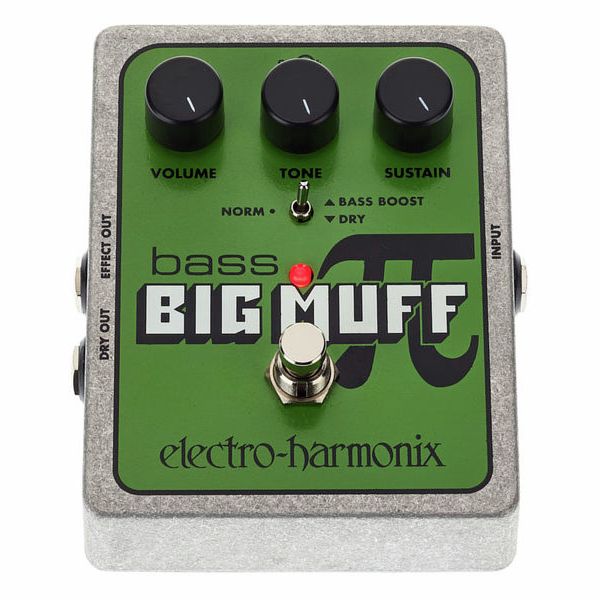
The Electro-Harmonix Bass Big Muff Pi is the low-end-specific version, built so the fuzz doesn’t just eat your bottom octave and leave you with a kazoo.
I finally got proper rehearsal and stage time on one recently, and honestly? The hype mostly checks out.
What’s Actually Different From the Guitar Muff
Plenty of bass players just grab a regular Big Muff and call it a day. It works, sort of, but you lose a shocking amount of low end once the fuzz stage clips.
EHX voiced this one specifically for four (and five) strings. The clipping stage is tuned so the fundamental survives, instead of turning into a thin, farty mess above 200Hz.
The Bass Boost Mini-Switch
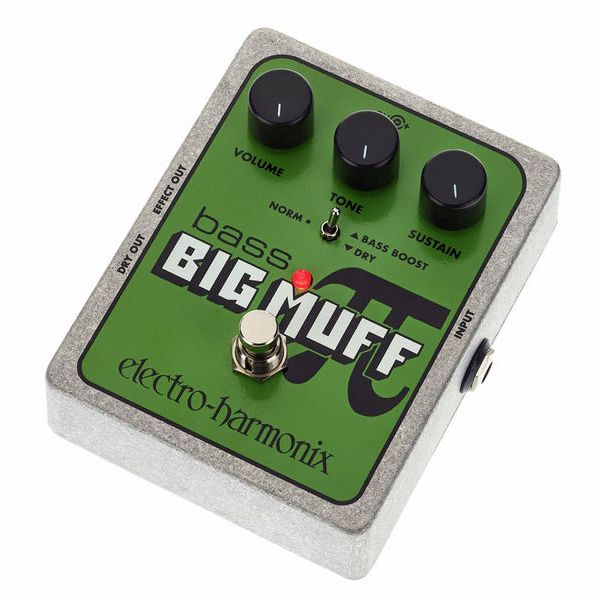
There’s a small toggle on the top of the enclosure for Bass Boost. Flip it on and you get a noticeably fatter low-end push before the signal even hits the fuzz circuit.
Leave it off for tighter, more focused fuzz that sits better in a busy mix. Flip it on for doom-y, room-shaking stuff. Simple, but it genuinely changes the character.
Tone – How It Actually Sounds
The Sustain knob is really your gain control here, and it goes from „slightly hairy compression” all the way to full-on wall-of-fuzz. There’s a lot of usable range in between, which isn’t always true of fuzz pedals.
For doom and stoner tones it’s basically unbeatable at this price – thick, sustained, a little nasty in the best way. Roll the Sustain back and your volume knob down a touch and it cleans up into something almost like an overdrive.
Funk players use this thing too, believe it or not – dime the Tone knob, back off Sustain, and you get a spitty, aggressive edge on slap lines that cuts through without losing low end. Not what I expected going in, TBH.
On the Pedalboard – Playability and Build
It’s true bypass, so no tone-sucking when it’s off. Standard 9V DC power, though EHX doesn’t include the adapter – budget for that separately.
The enclosure is the classic EHX big-box shape. It’s not huge, but it’s not a mini pedal either, so plan your board real estate accordingly.
Three knobs (Volume, Tone, Sustain) plus the boost toggle is basically all you get – and honestly, that’s kind of the point. This isn’t a pedal you tweak for twenty minutes before a gig.
Who It’s Actually For
- Doom, stoner, sludge bassists who want their tone to be felt as much as heard
- Funk and rock players who want an aggressive texture layer, not a full-time distortion
- Anyone who’s tried a regular Big Muff on bass and been disappointed by the lost low end
- Studio use – layering a fuzzed bass track under a clean one is a classic trick, and this makes it easy
If you’re assembling a full low-end rig around a pedal like this, our Ibanez TMB30 review covers a short-scale bass that pairs surprisingly well with thick, low fuzz tones like this one.
Honest Niggles
It’s a one-trick pony, and that trick is „fuzz.” If you want a subtle overdrive or a boost for solos, look elsewhere – our Ibanez TS9 Tube Screamer review covers that territory much better.
No blend knob either, so you can’t mix dry and fuzzed signal to keep some clarity – the newer Bass Big Muff Pi 2 fixes that, but it’s a different (pricier) pedal entirely.
And it can get noisy at high Sustain settings, especially with single coil basses or cheap cables. Nothing a decent noise gate can’t handle, but worth knowing going in.
If you’d rather tame your low end before the fuzz stage instead of fighting it, pairing this with something like the MXR Six Band EQ ahead of it on your board gives you a lot more control over what actually reaches the Muff.
Quick Specs
- Type: Bass fuzz / distortion pedal
- Controls: Volume, Tone, Sustain, Bass Boost mini-switch
- Bypass: True bypass
- Power: 9V DC (adapter sold separately)
- Dimensions: 102 x 121 x 89 mm
- Built: New York, USA
If chorus is more your texture of choice than fuzz, our MXR Analog Chorus review is a good look at the warmer, more ambient alternative. And guitarists chasing this same circuit family on six strings should check out our Electro-Harmonix Nano Metal Muff review.
Bass Big Muff vs the Regular Big Muff
People ask this constantly, so let’s settle it. If you plug a normal (guitar) Big Muff into a bass rig, it can sound cool on its own – but stack it under a band mix and the low end just vanishes.
That’s the whole reason this pedal exists. EHX didn’t just repaint the guitar version and slap „Bass” on the box – the circuit is genuinely re-voiced so the fundamental note survives the clipping stage.
Side by side, the guitar Muff feels brighter and more mid-forward, while the Bass version feels rounder and noticeably heavier in the low end. If you’ve only ever tried the guitar one on bass and been unimpressed, this is genuinely a different animal – not just a marketing tweak.
It’s also worth comparing against the newer Bass Big Muff Pi 2, which adds a Blend knob so you can mix in your dry signal. If you need clarity alongside the fuzz, that’s the pricier option to look at – this standard version is the straightforward, all-in fuzz choice.
Final Verdict
The Bass Big Muff Pi does one job and does it properly: big, thick, low-end-preserving fuzz that doesn’t disappear the second you dig in. For doom, stoner, and heavier rock bassists, it’s close to essential.
It’s not subtle, it’s not versatile in the „does everything” sense, and it won’t replace a good overdrive for polite grit. But for what it does, it punches well above its price – and there’s a reason it keeps showing up on pedalboards decades after it launched.
If your bass tone needs more low-mid grit and less „buzzy guitar fuzz on bass strings,” this is still one of the smartest, most affordable ways to get there. Worth a look even if you’re only mildly curious – and if you want a punchier alternative for shorter drive tones, the Fender Hammertone Breakup Driver is worth comparing too.