Watch It First
Octave pedals have a bad reputation for glitchy tracking. Bend a string, get a weird warble. Play a chord, get mush.
The Micro POG has been the exception to that rule since 2007, and it’s still one of the most recommended octave pedals around nearly two decades later. Polyphonic tracking, three simple knobs, no presets, no menus, just an instant 12-string or 8-string sound at the stomp of a switch.
I’ve had one on my board for a while now, on both guitar and bass, and it’s earned its permanent spot.
What Makes It Different From a Regular Octave Pedal
„Polyphonic” is the key word here. Older octave pedals, and a lot of cheaper ones today, only track a single note cleanly. Play a chord and the tracking falls apart into digital nonsense.
The POG circuit (short for Polyphonic Octave Generator) tracks full chords accurately, which is what lets you strum a whole progression and hear a clean, convincing 12-string or organ-like layer underneath it. It’s a genuinely different technology from a basic octave-down box like a TC Electronic SubNUp, and it shows in how musical the result sounds.
Controls Are Dead Simple
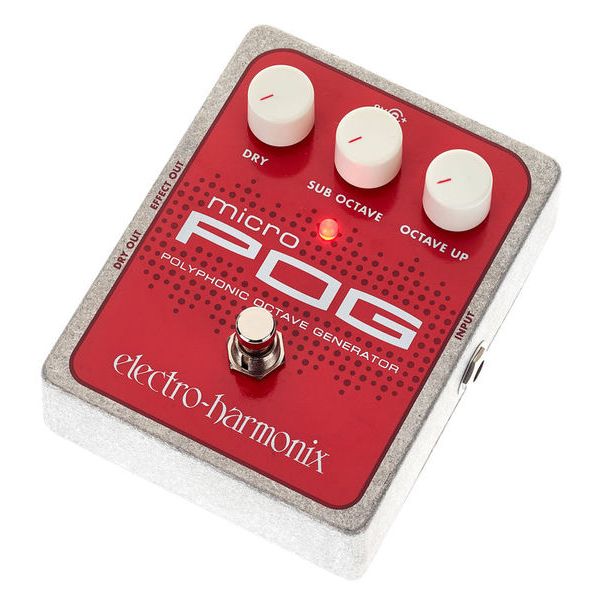
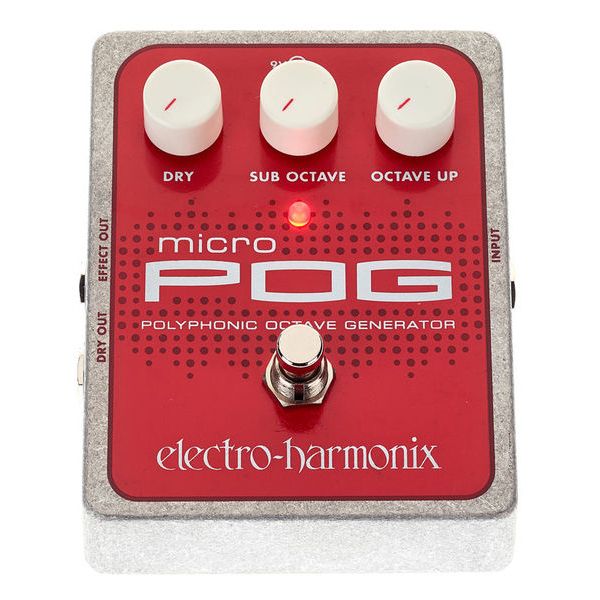
Three knobs: Dry (your original signal), Sub Octave (one octave down), and Octave Up (one octave up). No presets, no digital menu diving. You dial in a blend and that’s it — the pedal does the rest.
- Type: Polyphonic Octave Generator
- Controls: Dry, Sub Octave, Octave Up
- On guitar: Turns a 6-string into a convincing 12-string
- On bass: Turns a 4-string into an 8-string
- Dimensions: 102 x 121 x 57mm
- Power: Mains adapter included
- Available since: 2007
How It Sounds on Guitar
Dial in some Octave Up and you get that shimmering, chorus-like 12-string effect that’s genuinely hard to distinguish from a real double-string guitar in a mix. It’s a brilliant trick for solo acoustic-electric arrangements or thickening up a clean rhythm part.
The Sub Octave knob is where things get fun for riffing — blend it in under a distorted chord and you get a doom-y, synth-bass-adjacent low end that’s massive without being muddy. Push both octaves in at once and you’re basically playing an organ.
Tracking stays clean even on fast lead runs and bent notes, which is the thing that sets this apart from cheaper octave pedals. It doesn’t glitch, warble, or lag behind your playing.
How It Sounds on Bass
This is where the Micro POG has a bit of a cult following. Bassists use it to fatten up a tone with a sub-octave layer that adds serious low-end weight without needing a second amp or a synth bass rig.
Reggae, dub, and modern pop bassists lean on this pedal constantly for exactly that reason. It’s genuinely one of the best-value ways to get a huge low end out of a standard 4-string bass.
Build Quality and Reliability
EHX builds these in a sturdy metal enclosure that can survive years of gigging and being thrown in a gig bag pocket. Mine has taken a fair few knocks over time and shows zero signs of the tracking or knobs degrading.
The footswitch has a solid, positive click, and the LED is bright enough to see under stage lighting, which matters more than people think until they’re squinting at a dim pedalboard between songs. Input and output jacks feel robust too, no wobble after repeated cable swaps.
Given this design has barely changed since 2007, EHX clearly nailed the formula the first time. That’s rare in an industry where every pedal gets a „v2” within a couple of years.
The Niggles
Nothing’s flawless, so here’s the honest rundown:
- Runs on a mains adapter, not a standard 9V battery clip, so check your pedalboard power setup
- Housing is a bit larger than some modern compact pedals, worth factoring into board layout
- No presets or memory, though for a pedal this simple that’s arguably a feature, not a bug
- Extreme blend settings can sound a little synthetic on some pickups, though this varies by guitar
None of these are dealbreakers, more just things to know before you buy. Plan your power supply and board space accordingly.
Micro POG vs the Rest of the Family
EHX makes several POG variants, and it’s worth knowing where the Micro sits. The Nano POG is a smaller, cheaper option with the same core tracking but fewer control options. The POG2 adds presets, dry blend refinements, and detune effects, at a noticeably higher price.
The Micro POG is the sweet spot for most players: full-size knobs, genuinely excellent tracking, and a lower price than the flagship POG2. If you want more tonal shaping options beyond simple octaves, something like the Mooer E7 is worth a look too, though it leans more synth than organic octave.
For dramatic pitch-shifting effects beyond octaves, players often pair this with something like a DigiTech Whammy 5, though the two pedals serve genuinely different purposes — one tracks cleanly and subtly, the other is built for expressive, dramatic pitch bends.
Who It’s For
This pedal is for guitarists and bassists who want to add serious texture and low-end or high-end thickness without a whole synth rig. Solo performers love it for filling out a sound without a backing band. Bassists love it for that huge sub-octave layer.
It pairs beautifully with ambient setups too — stack it before a reverb like the Walrus Audio Fundamental Ambient Reverb and you’ve got a genuinely huge, cinematic wall of sound from a single guitar.
Final Verdict
The Micro POG earns its long shelf life the honest way — it just works, every time, on chords, single notes, and bends alike. No glitching, no weird tracking artifacts, just clean, musical octaves whenever you need them.
Whether you’re a guitarist chasing a 12-string shimmer or a bassist after a huge sub-octave layer, this pedal delivers on both fronts without complication. A genuine modern classic, and worth every bit of pedalboard space it takes up.