Watch It First
Walrus Audio’s Fundamental series exists for one reason: strip their flagship pedals down to the essentials and make them actually affordable.
The Fundamental Ambient Reverb is the ambient half of that mission. Three reverb modes, dead-simple sliders, and a sound that punches noticeably above its price bracket.
If you’ve been eyeing a boutique ambient reverb but flinching at the price, this is the pedal that made a lot of people stop flinching.
Three Modes, Zero Confusion
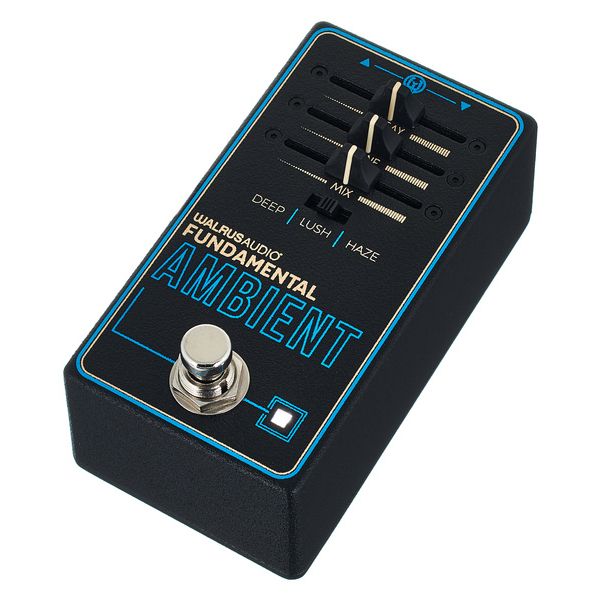
Deep is a dark, spacious reverb with an added low octave underneath — great for thickening single notes or slow chord swells without turning muddy.
Lush is the wide, ultra-long-sustain mode built for pads. This is the one that makes a single strummed chord feel like it’s still ringing out a minute later.
Haze is the wildcard — a textured, lo-fi reverb with built-in distortion, reduced sample rate, and a resonant band-pass filter. It’s the mode that turns a clean tone into something that sounds like it’s bleeding through a broken tape deck, in the best way.
Sliders Instead of Knobs
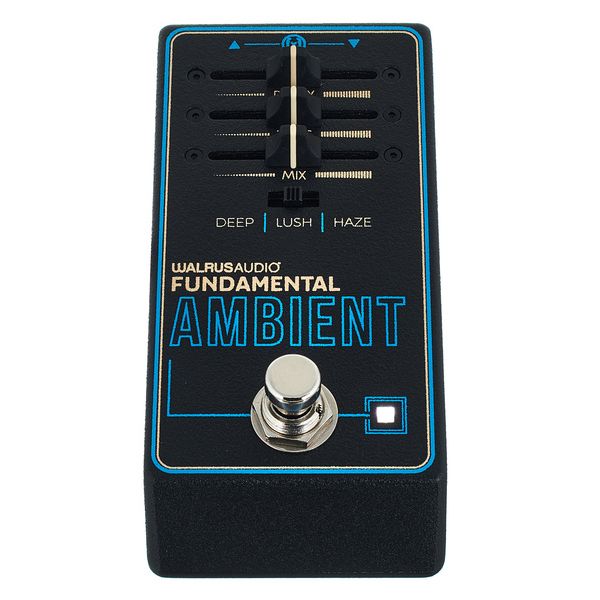
Walrus went with sliders for Decay, Tone, and Mix instead of the usual knobs, and it’s a genuinely nice touch — you can see your settings at a glance in a dark venue instead of squinting at a knob position.
The Tone control does double duty depending on the mode: a low-pass filter on Deep and Lush, and a resonant band-pass filter on Haze. Small detail, but it means the one slider stays musically useful across every mode instead of just cutting highs the same way every time.
Who This Is Actually For
Shoegaze and ambient players are the obvious home for this one — it’s basically built for the genre. Check our roundup of best guitars for shoegaze & ambient if you’re building a full rig around this sound.
It’s also a great match for a Fender Player II Jazzmaster — that guitar’s naturally airy pickups plus the Lush mode is a genuinely great combination for hazy indie tones.
If you like stacking weird textures, pairing it after something like the EHX Mel9 creates layered, cinematic sounds that are hard to get any other way on a normal pedalboard budget.
Jazz players who want just a touch of atmosphere rather than a full wash will get more mileage out of Deep at a low mix setting — it sits nicely alongside the picks in our best guitar pedals for jazz guide.
Mono In, Mono Out — And Why That’s Fine Here
Unlike some of the pricier ambient reverbs on the market, this one is mono in and mono out. No stereo width to speak of.
For most home and small-gig setups that’s a non-issue — you’re plugging into one amp anyway. If you specifically need true stereo spread, you’d want to step up to Walrus’s pricier Slö or Slöer models instead. But for the vast majority of players, mono keeps the price down without costing you anything you’d actually miss.
How It Stacks Up Against the Competition
Ambient reverb is a genuinely crowded category right now, and Walrus isn’t the only brand chasing this crowd — TC Electronic’s pedal lineup has its own reverb options that lean more toward straightforward hall and room tones rather than the weirder textures here.
What the Fundamental Ambient does differently is commit fully to atmosphere over utility. There’s no plate mode, no spring mode, no attempt to be your one-and-only reverb pedal — it assumes you might already have a general-purpose reverb elsewhere and this one is strictly for the ambient, textural stuff.
That focus is exactly why it shows up so often in best pedals for shoegaze style roundups — it’s not trying to be everything, it’s trying to be really good at one specific, popular thing.
If your board already has a general reverb doing the room/hall/spring duties, this slots in as the dedicated „make it weird and beautiful” pedal without duplicating anything you already own.
Build Quality and Power
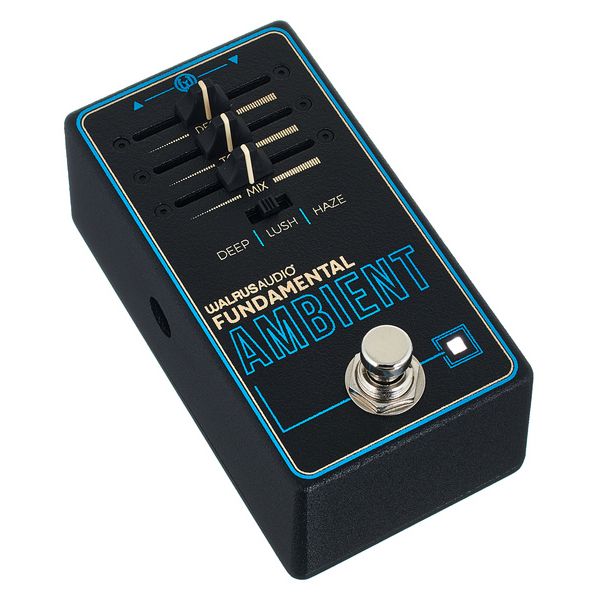
Made in the USA, small footprint, and light at just 200g — it won’t strain even a crowded pedalboard.
One thing to flag: Walrus specifically recommends an isolated power supply and advises against daisy-chaining this with other pedals. It’s not the end of the world if you ignore that, but digital reverb circuits are usually the first thing to pick up hum and noise from a shared power chain, so it’s worth taking seriously rather than assuming it’ll be fine.
No battery option either — you’ll need a standard 9V supply (not included), same as most modern digital pedals in this category, so factor that into your first order if you don’t already have a spare isolated output.
Worth noting too: the whole Fundamental series was built to sit at a specific price point on purpose, not as a stripped-down afterthought — Walrus reportedly designed these from scratch to hit that budget rather than gutting their flagship circuits. That distinction actually shows in how complete each mode feels, rather than sounding like a „lite” version of something better.
Specs at a Glance
- Modes: Deep (octave-down ambient), Lush (wide sustain pad), Haze (lo-fi textured reverb)
- Controls: Decay, Tone, Mix sliders, plus a 3-way mode switch
- I/O: Mono in / mono out, 6.3mm jacks
- Power: 9V, 100mA, isolated supply recommended (not included)
- Weight: 200 g
- Build: Made in USA
Final Verdict
The Walrus Audio Fundamental Ambient Reverb is one of those rare pedals where the „budget” version doesn’t actually feel like a compromise.
Three modes is plenty when each one is this usable, and the slider layout genuinely makes dialing in a sound faster than fumbling with knobs mid-set. Haze alone is worth the price if you’re into textured, glitchy ambient tones — it’s not a sound you’ll find on many other budget-tier reverbs.
IMO this is one of the easiest recommendations in the ambient reverb space right now — it doesn’t try to do everything, but everything it does, it does really well. If shimmering, spacious, slightly weird reverb tones are what you’re after, start here before spending three times as much elsewhere.