Watch It First
One more availability note before we start — the Code 100 is discontinued at Thomann too, same story as a couple of other amps in this series of reviews.
Good news is its little brother, the Code 50, is very much in stock and honestly does everything most players actually need from this range.
Same modeling engine, same app, half the wattage — and for anything short of a genuinely loud stage, that’s not really a downgrade at all.
What’s Actually Inside
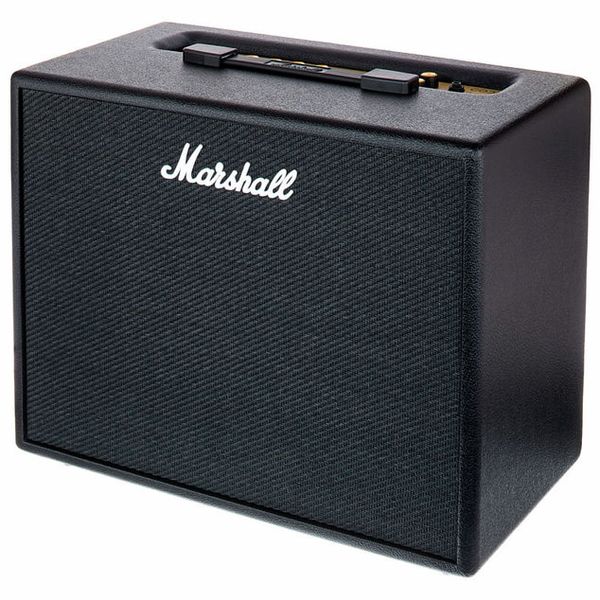
14 preamp models, 4 power amp models, and 8 speaker cabinet simulations, all mixable and matchable. That’s a genuinely huge sonic palette for something in this price bracket.
Add 24 effects on top, with up to 5 running simultaneously, and you’ve basically got a small pedalboard and a handful of different amp heads baked into one 50-watt combo.
100 memory slots means you can save every experiment rather than losing a good tone the moment you tweak a knob looking for something else.
The Gateway App
This is genuinely where the Code series shines. The Marshall Gateway app over Bluetooth turns your phone into a proper tone-shaping interface — way easier than scrolling through menus on the amp’s small display.
You can browse a whole library of user-created and artist presets, download the ones you like, and have them on the amp in seconds. It’s one of the more genuinely useful implementations of „smart amp” tech going, IMO — some brands do this badly, Marshall did it well.
If you’re weighing this against the modeling competition, our Boss Katana 50 Gen 3 review covers the other big name in this space — Boss leans more on physical knobs and onboard editing, Marshall leans harder into the phone app.
Who’s This Actually For
Players who want to explore a lot of tonal ground without owning five different amps. Bedroom producers, cover band musicians who need to switch genres mid-set, and beginners who genuinely don’t know their preferred sound yet all fit well here.
If you’ve just picked up something like a Squier Sonic Strat and want an amp that’ll teach you what different genres actually sound like without buying separate pedals for each one, this is a genuinely smart way to learn.
It’s less ideal if you already know exactly what tone you want and just want to dial it in with physical knobs — in that case a simpler amp, or something like the more knob-driven Katana, might suit your workflow better.
Build and Everyday Use
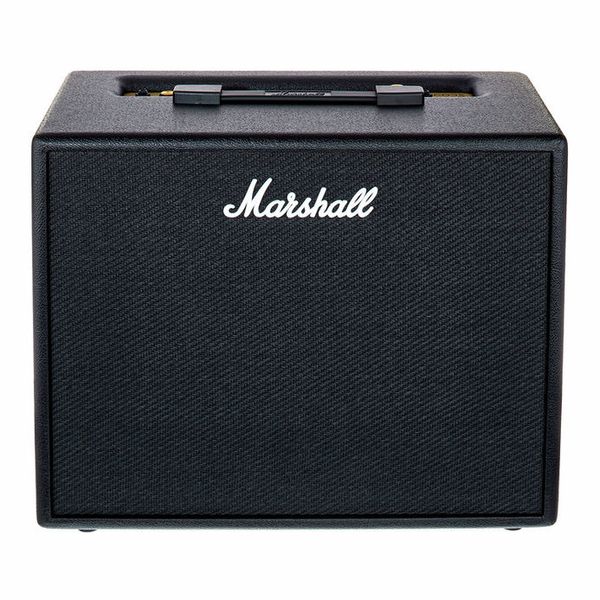
13kg, solid cabinet, single 12″ speaker — nothing flashy but nothing cheap-feeling either. It looks properly like a Marshall, which matters to some people more than they’ll admit.
The footswitch connection is there but, like a lot of amps in this category, the actual footswitch is sold separately. Worth budgeting for if you plan to switch patches live rather than reaching down mid-song.
USB connectivity opens up direct recording and further editing via desktop software too, so it’s not purely a phone-app amp if you’d rather work at a computer.
Recording With It
Because the cab and mic simulations run onboard, plugging this into an audio interface via USB gives you a genuinely usable direct tone without micing anything up.
That’s a real advantage over a plain valve combo for anyone recording at odd hours or in a flat without a dedicated live room. Dial in a patch on the app, hit record, done — no messing with mic placement, no noise complaints from neighbours about a mic’d 4×12.
The headphone output uses the same cab simulation too, so late-night silent practice sounds properly like an amp rather than a thin, phone-speaker approximation. Combined with the sheer number of preamp and cab combinations on offer, it’s genuinely one of the more practical home-recording amps at this price.
One tip from actually using one of these: save your recording-specific patches separately from your live ones. What sounds great in headphones doesn’t always translate to a mixed track, and having dedicated presets for each context saves a lot of re-dialing mid-session.
The Honest Cons
- Footswitch not included — separate purchase if you want hands-free patch switching
- No dedicated recording output beyond USB/headphone, unlike some rivals with a proper XLR DI
- Menu diving on the amp itself is fiddly without the phone app open
- Some presets need real tweaking to sound great — don’t expect every factory patch to be gig-ready out of the box
- 50W with a single 12″ won’t fully replace a mic’d valve stack for serious stage volume
Reasonable trade-offs for the price and the sheer tonal range on offer, but worth knowing going in.
How It Compares
Fender plays in the same space with their Mustang line — we’ve reviewed that separately in our Fender Mustang LT25 review if you want the other big modeling-amp ecosystem’s take on the same idea.
Against real valve amps, there’s no getting around the fact that modeling still can’t perfectly replicate tube dynamics under hard picking. If that authenticity matters more to you than flexibility, our wider best Marshall amps roundup covers the valve-driven side of the brand too.
Against its own bigger sibling, the Code 100 it’s replacing here, you lose raw headroom and stage volume but keep literally every tonal option — for practice, recording, and small gigs, most players won’t miss the extra watts.
Full Specs
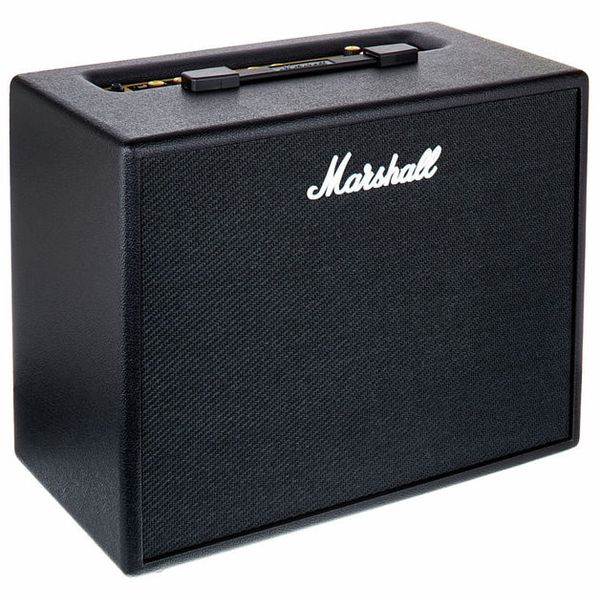
- Power: 50 W
- Speaker: 1x 12″
- Preamp models: 14
- Power amp models: 4
- Speaker cab models: 8
- Effects: 24, up to 5 simultaneous
- Memory slots: 100
- Connectivity: Bluetooth, USB, line in, headphone out
- App: Marshall Gateway (iOS/Android/desktop)
- Footswitch: Sold separately
- Weight: 13 kg
Final Verdict
Losing access to the Code 100 isn’t the setback it sounds like — the Code 50 keeps every bit of the tonal flexibility that made this series popular, just at a size and price that suits far more players anyway.
Between the app control, the huge amp/cab/effects combinations, and a genuinely solid build, this is one of the smartest ways to get an entire studio’s worth of tones out of one combo.
Grab a footswitch, spend an evening in the Gateway app building your own presets, and you’ll have a genuinely versatile amp that covers practice, recording, and small gigs without breaking a sweat.