Watch It First
If you started playing guitar sometime in the last twenty years, there’s a decent chance a Roland Micro Cube sat on your desk at some point. Tiny, battery-powered, and punching way above its size class.
That amp doesn’t exist anymore. Roland quietly stopped making it, and the Cube-10GX is the closest thing you’ll find on shelves right now.
I spent some time with one to find out if it actually deserves the „spiritual successor” label, or if that’s just marketing talk. Short version: there’s more good here than bad.
So What Even Is the Cube-10GX?
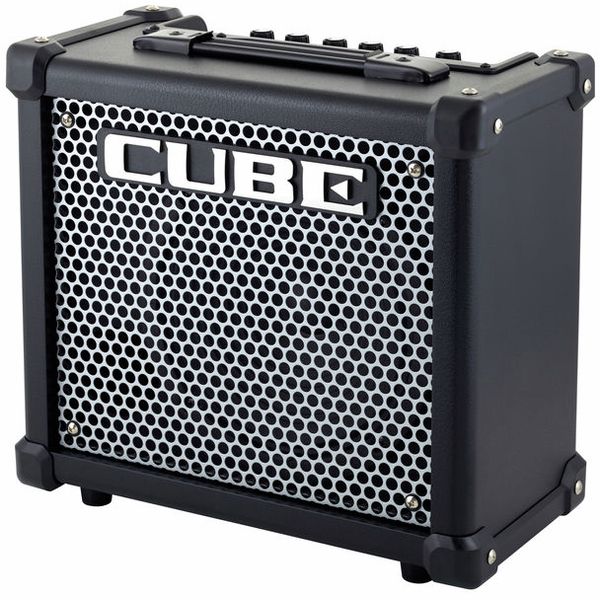
It’s a 10-watt combo built around Roland’s COSM modeling, packed into an 8-inch speaker cabinet light enough to carry in one hand. Three amp-style presets, Clean, Crunch, and Lead, cover most of what a bedroom player actually needs.
There’s a proper 3-band EQ sitting behind those presets too, so you’re not stuck with whatever the factory decided sounded good on the day.
The Modeling Isn’t Just a Buzzword
COSM modeling gets thrown around a lot in amp marketing, but here it actually earns its keep. Instead of one fixed voicing, you get three genuinely different amp characters out of a single small box.
Clean stays clean even when you dig in, Crunch does the classic rock-rhythm thing without turning to mush, and Lead is… fine. Not amazing, but fine for practicing at low volume.
Roland also threw in three studio effects, chorus, delay, and a hall/spring reverb, which is more than you’d expect at this size. That alone makes a real difference when you’re just noodling and don’t want a totally dry, boring signal.
Living With It Day to Day
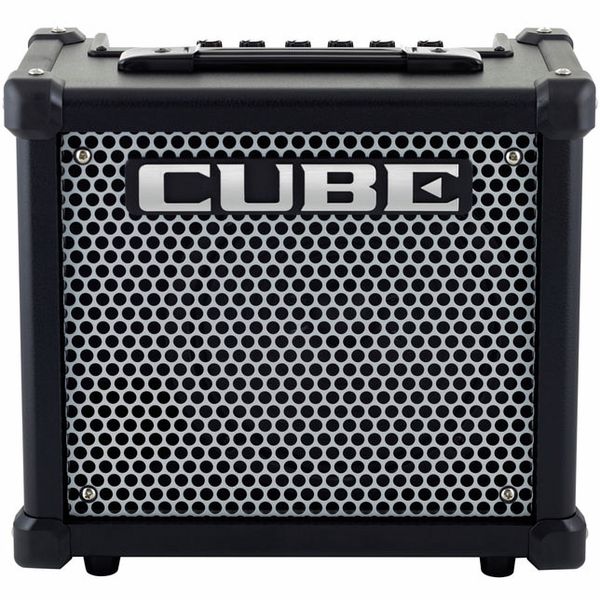
This is where the Cube-10GX earns its keep. The headphone/recording output doubles as a silent-practice jack, so you can play at 2am without annoying anyone, and the aux input means you can plug in a phone and jam along with actual songs.
That’s really the whole appeal of this category of amp. It’s a practice tool first, everything else second. If you also play acoustic-electric and want something similarly compact for the same job, we covered a similar niche in our Fender Acoustasonic 15 review.
The free CUBE-KIT app lets you swap in different amp models over the three preset slots via the aux input, which sounds cool on paper. A fair few owners online find the interface a bit clunky and dated, and honestly, I get why. But once you’ve dialed in your three go-to tones, you’ll probably never open the app again anyway.
The recording output is the other quiet win here. It’s not a full amp sim like you’d get from a modern modeling unit, but it’s cabinet-simulated enough that you can plug straight into a laptop and get a usable, non-embarrassing DI signal for demos. For a 10-watt amp that costs less than a decent overdrive pedal, that’s genuinely handy.
Where It Actually Falls Short
Let’s be honest about the cons, because there are a few worth knowing before you buy.
- No battery operation. Unlike the old Micro Cube, this one’s tied to a wall socket, so it’s not quite the grab-and-go amp its predecessor was.
- Lead voicing is the weakest of the three. If you’re chasing serious high-gain tones, you’ll want pedals in front of it.
- Clean channel EQ can feel a bit sluggish to dial in exactly right, according to a chunk of the customer reviews I read through.
None of that is a dealbreaker for what this amp is actually built for, but you should know going in.
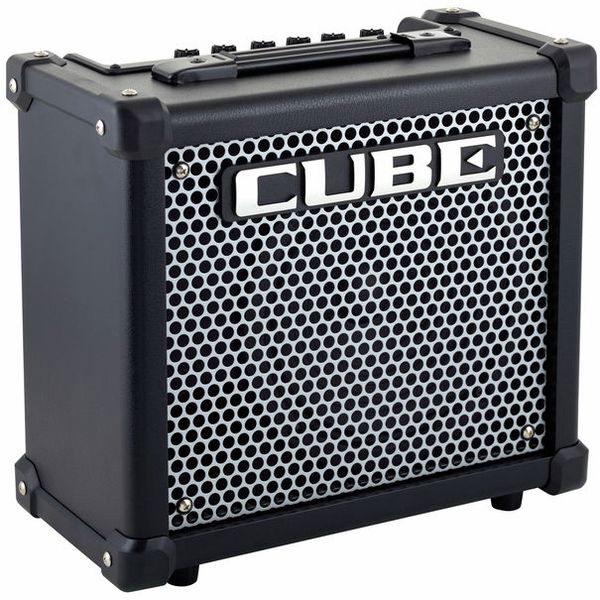
Build quality is solid for the price bracket, too. The corners are protected, the control knobs don’t feel like they’ll snap off after a year of gigging bags, and the handle is sturdy enough for actual daily transport, not just a decorative afterthought. It’s not a tank, but it’s not flimsy either.
How It Stacks Up Against Other Amps
If you want more headroom and don’t mind stepping up a bracket, a real tube combo like the one in our Fender Blues Junior IV review, or anything from our best amps for distortion & overdrive roundup, gives you actual stage volume and a different kind of dynamic response.
If you’re building toward a heavier rig eventually, our breakdowns of the best tube amps for metal and the best amp heads for metal cover that end of the spectrum in a lot more depth.
Who’s This Actually For?
Bedroom players, students, apartment dwellers who can’t make noise after 9pm, and anyone who wants one small box that does clean-to-crunch reasonably well without hauling a full stack around.
If you already own a decent pedalboard and just need a clean platform to push into, this thing is more than capable, especially paired with something from our best pedals for metal roundup if you want to cover heavier ground without buying a second amp.
It’s not going to replace a real tube amp on a stage, and to be fair, it was never trying to.
Worth mentioning too: because it’s a current, actively sold model rather than a discontinued cult classic, you’re not gambling on a used market full of dead pots and sketchy sellers. Parts, support, and warranty are all still a real thing here, which honestly counts for a lot when you just want gear that works.
Specs at a Glance
- Power: 10W into an 8″ speaker
- COSM modeling with 3 amp presets: Clean, Crunch, Lead
- Built-in effects: Chorus, Delay, Hall/Spring Reverb
- 3-band EQ
- Aux input for jamming with playback
- Headphone/recording output
- Free CUBE-KIT app for extra amp models
- Compact, lightweight cabinet with included power adapter
Final Verdict
The Cube-10GX isn’t trying to be a nostalgia trip, and honestly, that’s the right call. It’s a genuinely useful, well-built practice amp that happens to still wear the Cube name.
If you came here hoping for a battery-powered Micro Cube clone, you’ll be a little disappointed. If you just want a small, versatile amp for the bedroom that won’t embarrass itself, it’s an easy recommend, IMO, especially at this end of the market.