Watch It First
Solid-state amps have a reputation problem. Ask any tone snob and they’ll tell you tubes are the only „real” way to get good gain. Orange apparently didn’t get that memo.
The Super Crush 100 is Orange’s attempt to make a transistor amp that actually sounds like an Orange — that thick, slightly hairy, unmistakably British growl — without the weight, the maintenance, or the price of a valve head.
Does it pull it off? Mostly yes, and I’ll explain exactly where it does and doesn’t.
What Is It, Exactly?
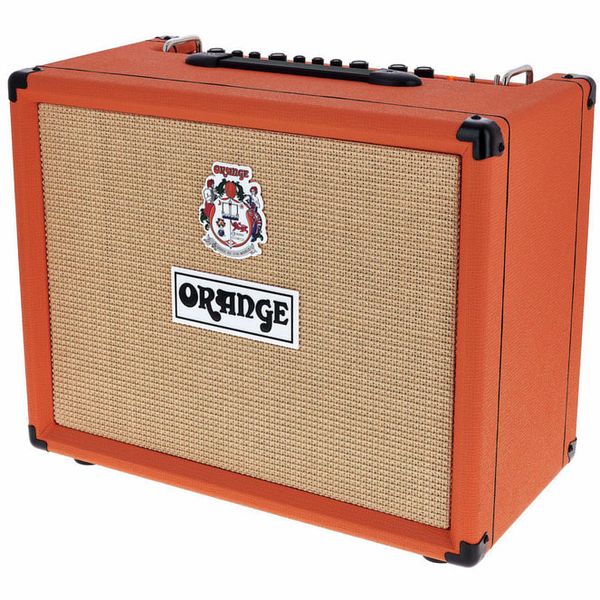
A 100-watt, 2-channel transistor combo with a single 12″ Celestion G12K-150 speaker. Clean channel, Dirty channel, a shared reverb, and a CabSim XLR output for silent recording or straight-to-desk gigging.
That last bit matters more than it sounds — plenty of players now run everything direct into a mixing desk or interface, and having a proper cab simulator built in means you’re not stuck miking up a cab every time.
Build & Design
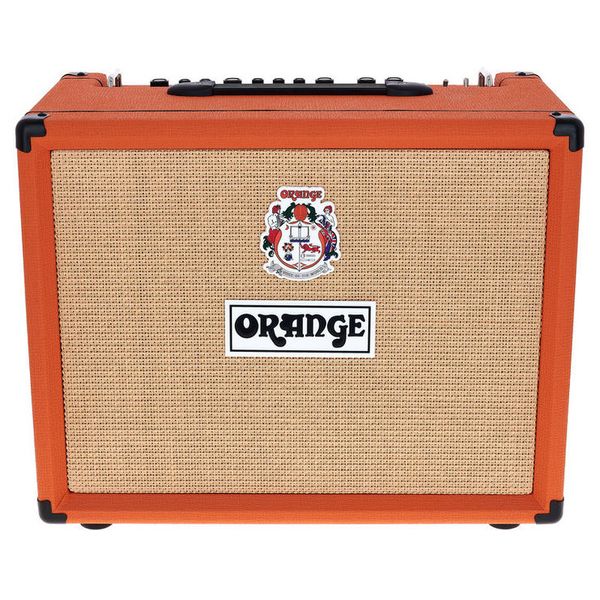
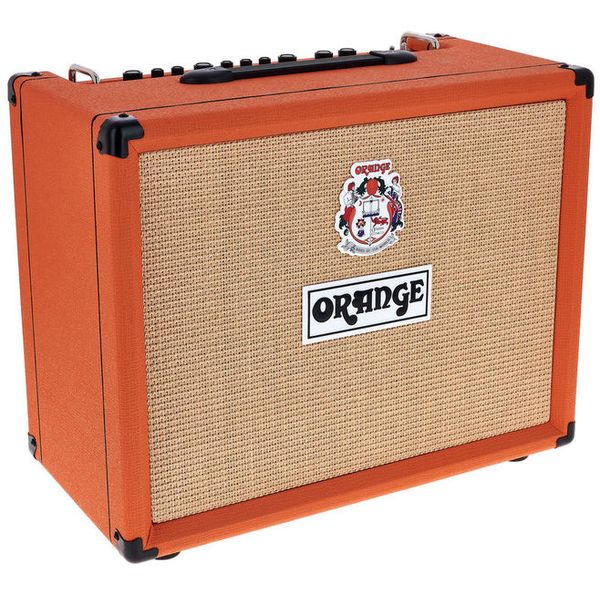
It’s an Orange combo, so you know what you’re getting visually — that iconic orange/black look, chunky control panel, and a weight that’s genuinely lighter than an equivalent valve head thanks to the solid-state internals. 18kg for the combo isn’t featherlight, but it’s a lot more manageable than lugging a valve combo of similar output.
Controls are dead simple. Clean channel gets Volume, Bass, Treble. Dirty channel gets Volume, Bass, Middle, Treble, Gain. Master section covers overall Volume and Reverb. No hidden menus, no digital screens to navigate — just knobs, which some players (myself included) genuinely prefer.
Tone
Here’s the actual headline: this thing sounds a lot more „valve-like” than a solid-state amp has any business sounding. The Dirty channel goes from a light, edge-of-breakup crunch right up to proper hard rock/metal gain, and it holds together well even at higher gain settings — no fizzy, brittle top end that a lot of cheaper transistor amps suffer from.
Clean channel is genuinely good too — crisp without being harsh, plenty of headroom before it breaks up. Great pedal platform if you’d rather shape your dirt with a dirt pedal up front instead of using the onboard gain.
Compared to something like a budget Marshall solid-state practice amp, this is a completely different league — more dynamic, more headroom, and it actually reacts to your picking dynamics rather than sounding compressed and flat.
Is It Really a „Tube Killer”?
Eh, let’s not get carried away. It’s excellent for a solid-state amp and closes the gap more than most. But side by side with a genuine valve head at higher gain, experienced ears will still hear a difference in that ultra-fine harmonic complexity. IMO most gigging musicians in a live mix will never notice or care.
The Celestion G12K-150 Speaker
Worth calling out on its own: the stock speaker here is a proper Celestion G12K-150, not some generic house-brand driver. That’s a speaker known for a tight low end and a slightly scooped midrange, and it handles high power well without breaking up in a bad way.
It’s a big part of why this combo doesn’t sound thin or fizzy at higher gain — a lot of that „valve-like” feel people talk about with the Super Crush 100 actually comes from pairing decent solid-state circuitry with a speaker that’s genuinely up to the job. Swap in a cheaper speaker and I’d bet this amp sounds noticeably less convincing.
Playability & Practicality
No valves means no warm-up time, no bias adjustments, no worrying about tube microphonics rattling on a bumpy van ride to a gig. Turn it on, it’s ready. That reliability alone is worth something if you gig regularly.
The effects loop is a proper serial loop too, so time-based effects (delay, reverb) sit in the right place in your signal chain rather than getting squashed by the amp’s front end.
Who’s This For?
- Gigging guitarists who want serious volume and headroom without valve maintenance
- Anyone who wants that Orange „growl” without buying a full valve stack
- Rock, hard rock, and metal players who need real gain on tap
- Home recordists who’ll actually use that CabSim XLR output constantly
If you mostly play at bedroom volumes and just want something simple and quiet, this is honestly overkill — look at something smaller like an indie-friendly combo instead.
Key Specs
- Type: Solid-state (transistor) combo
- Power: 100 W
- Speaker: 1x 12″ Celestion G12K-150
- Channels: Clean, Dirty
- Clean controls: Volume, Bass, Treble
- Dirty controls: Volume, Bass, Middle, Treble, Gain
- Master: Volume, Reverb
- Effects loop: Serial FX loop (send/return)
- Recording: Built-in CabSim XLR output
- Weight: ~18 kg
Niggles
The reverb is decent but fixed — one type, no way to adjust decay time or character beyond the single knob. Some players in Thomann’s own reviews flagged this as their main complaint, and honestly, fair.
There’s also a bit of noise/hiss on the Dirty channel at higher gain settings — noticeable in a completely silent room, though it disappears in a full band mix.
And at 18kg it’s not exactly a travel-light option either — lighter than a valve equivalent, sure, but this is still a proper gigging amp, not something you’re casually carrying to a jam on the bus.
Final Verdict
The Super Crush 100 does something a lot of solid-state amps promise and fail to deliver: it actually sounds like a real amp, not a cheap imitation. The Dirty channel has genuine character, the clean is genuinely usable, and the practicality of no valves is a real selling point for gigging players.
It’s not going to convert die-hard valve purists overnight, and the fixed reverb is a legit limitation. But as an everyday, reliable, loud-when-you-need-it gigging amp that punches well above its transistor-amp reputation, this earns its spot on any shortlist — right up there with something like the Harley Benton Tube 5 if you’re comparing budget-conscious options in this space.