The original Timmy, hand-built by Paul Cochrane, has been a „if you know, you know” pedal for years, the kind of thing session players quietly rely on while everyone else argues about Tube Screamer clones. The MXR Custom Shop version puts that circuit into a proper production run, built with Cochrane’s direct involvement.
What makes it different from the usual overdrive pairing with a Vox-style amp is how little it colours your tone. This is a transparent overdrive in the truest sense, not just a marketing phrase.
Here’s what makes it worth the hype, and where it falls a little short.
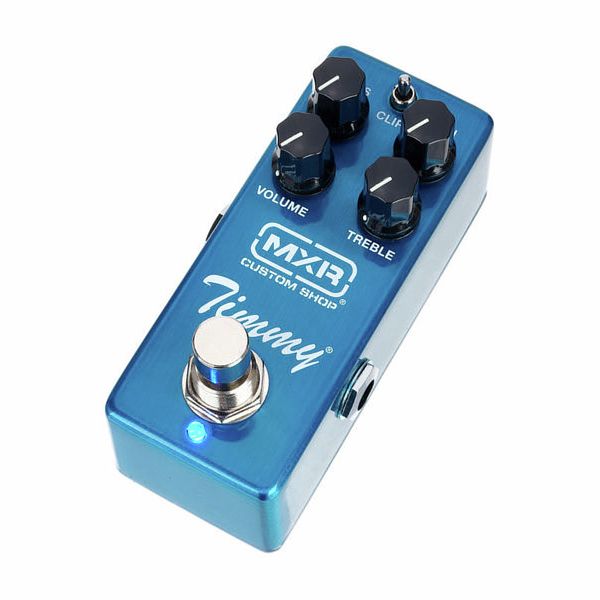
Why „Transparent” Actually Means Something Here
A lot of pedals claim to be transparent and just mean „not too fuzzy.” The Timmy actually holds up: with the tone controls set flat, it genuinely sounds like your amp, just pushed a bit harder. Bass and Treble controls here are cut-only, which is unusual, but it’s exactly why the pedal never gets muddy or harsh.
- Three selectable clipping modes: asymmetric medium saturation, symmetric light saturation, and asymmetric full saturation
- Bass and Treble controls (cut only, for shaping rather than boosting)
- High headroom LF353 op-amp for a hi-fi, uncompressed feel
- True bypass switching
Because it can run so clean, it doubles as a volume boost with the gain rolled all the way back, useful for solo sections without reaching for a separate boost pedal.
The three clipping modes
Honestly, the difference between the three clipping modes is subtle rather than dramatic. Asymmetric full saturation gets you the most gain and the most obvious breakup, while the lighter settings are for players who want just a whisper of grit stacked in front of an already-driven amp.
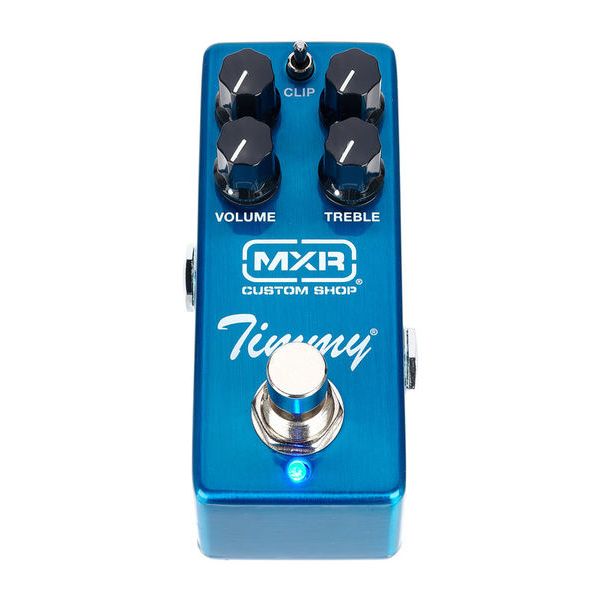
Build and Practical Use
MXR’s mini enclosure is tiny, which is great for pedalboard real estate but means the knobs are small and close together. Fine for setting once and leaving alone, less fun if you like adjusting on the fly mid-song.
It needs a 9V power supply. No battery option, worth knowing if your board doesn’t already have spare current for another pedal. Alongside something like a clean-friendly jazz pedal setup, it works nicely as a subtle push into breakup rather than a distortion pedal proper.
Who Should Buy This
Blues, indie, classic rock, session work, anywhere you want your amp’s own character pushed rather than replaced. It pairs particularly well with valve amps that already have a nice clean-to-breakup transition, like a good tube amp set just under breakup.
If you want a pedal that fundamentally changes your tone, or aggressive high-gain distortion, this isn’t it, and you’d be better served by something like the Schecter Banshee Mach-6’s onboard voicing paired with a dedicated high-gain pedal.
Specs
- Type: Overdrive, developed with Paul Cochrane
- 3 selectable clipping modes via toggle switch
- Controls: Bass, Gain, Volume, Treble
- LF353 op-amp for high headroom, hi-fi output
- True bypass
- Power: 9V DC (Dunlop ECB-003 style), no battery option
- Dimensions: 90 x 40 x 55 mm
Verdict
The MXR Custom Shop Timmy delivers on the reputation of the original boutique circuit in a mini, road-worthy format. It’s genuinely transparent, cleans up beautifully with your guitar’s volume knob, and works as both an overdrive and a clean boost.
Just don’t expect the three clipping modes to feel dramatically different from each other, and budget for a separate power supply since there’s no battery option here.