Watch It First
Every couple of years someone asks „what’s the best budget 5-string bass” in a forum thread, and the Yamaha TRBX305 name pops up like clockwork. It’s been doing that since 2013.
That’s a long time for a budget instrument to keep getting recommended without an update. So is it still the best-value 5-string, or is it just coasting on reputation at this point?
Let’s actually dig into why this thing refuses to die.
Build and Materials
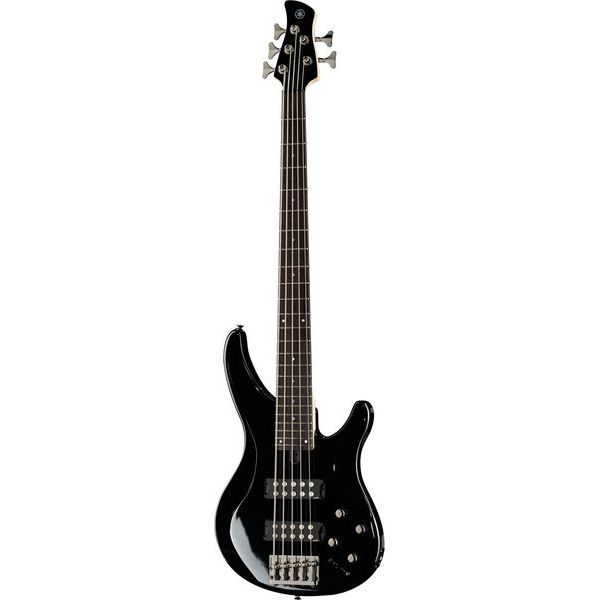
Mahogany body, 5-piece maple/mahogany bolt-on neck, rosewood fretboard. Standard long scale at 864mm, 24 frets, and a 43mm nut width — comfortable for a 5-string without feeling like you’re wrapping your hand around a plank.
The multi-piece neck construction is a smart move at this price. More glue joints generally means more stability, which matters a lot on a 5-string where you’ve got extra string tension pulling on the neck.
Black chrome hardware ties the whole look together nicely — this isn’t a bass that looks cheap even though it’s priced like one.
Fit and Finish
Yamaha’s manufacturing consistency is legendary in this price bracket, and owner reviews back that up — most reports mention precise, careful workmanship. A couple of reviews do mention needing a setup/truss rod adjustment out of the box, which is worth budgeting for or asking your local shop to handle at purchase.
Playability and Feel
The neck profile here isn’t too wide for a 5-string, which is honestly one of the biggest complaints players have about budget 5-strings in general. Yamaha clearly put real thought into this rather than just bolting on an extra string and calling it done.
Weight is on the heavier side, which tracks — 5 strings plus a mahogany body adds up. Not a dealbreaker, just something to know before you buy if you’re sensitive to bass weight on long gigs.
Fingerpicking feels natural thanks to a pickup recess that lets your thumb rest comfortably — a small design touch that a lot of budget basses skip entirely.
Sound and Electronics
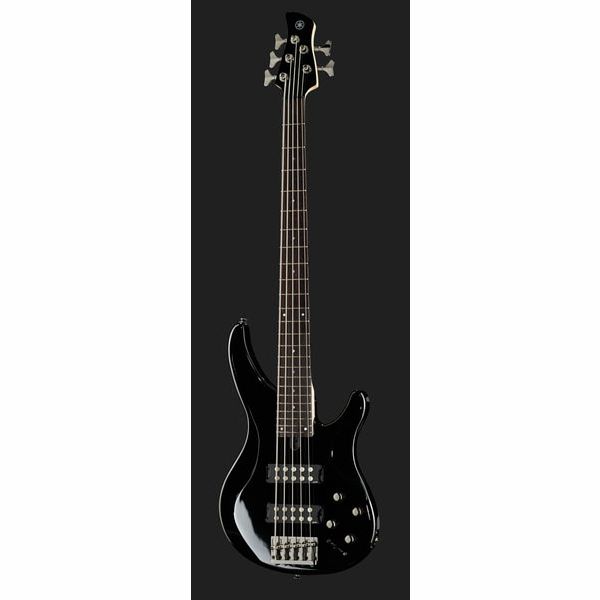
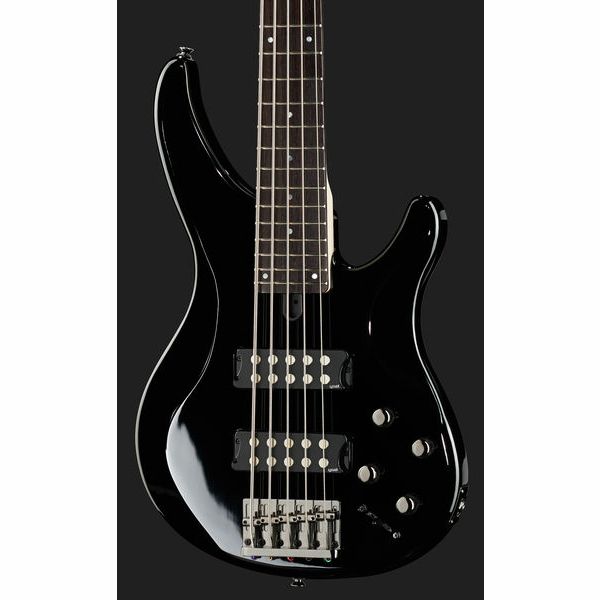
This is where the TRBX305 pulls ahead of a lot of the competition. Two Yamaha ceramic humbuckers feed a 2-band active EQ (volume, balance, bass, treble), plus a 5-way „Performance EQ” switch that instantly reshapes your tone for Slap, Pick, Flat, Finger, or Solo playing.
That switch is the party trick here. Instead of fiddling with knobs mid-set, you flick a switch and you’re in a completely different tonal zone. Slap position scoops the mids for that percussive pop, Solo position boosts things so you cut through a busy mix — genuinely useful, not a gimmick.
One owner review does note the mids can’t be independently dialled in beyond the switch presets, which is a fair critique if you like granular EQ control. Most players won’t miss it given how good the presets already are.
Compared to something like the Sire Marcus Miller M2, the TRBX305 is more of a modern all-rounder — less vintage character, more „does everything competently.”
Why Has It Lasted So Long?
It’s worth asking why a bass from 2013 is still on every budget shortlist over a decade later. Usually in the guitar world, that means either the market has stagnated or the original design nailed something fundamental.
In this case it’s the latter. Yamaha didn’t cut corners on the neck construction or the electronics just because this sits at the budget end of their range. The 5-piece neck, the ceramic humbuckers, and that Performance EQ switch were genuinely ahead of the curve for the price when this bass launched, and competitors still haven’t fully caught up on the value-per-dollar front.
Compare it to newer rivals like the Harley Benton BZ-5000 II or the Ibanez GSR205, and the TRBX305 still holds its own on build quality even though it’s the oldest design of the bunch. That’s rare in an industry that usually iterates fast. Sometimes a design is just right the first time, and Yamaha seems to know better than to mess with it.
Who’s This For?
If you’re stepping up to 5 strings for the first time and don’t want to gamble on an unknown budget brand, this is close to the safest choice out there. Yamaha’s reputation for quality control at this price point is basically unmatched.
It also suits gigging players who want tonal flexibility without carrying a pedalboard’s worth of EQ pedals. Worship, cover bands, function bands — anywhere you need to switch styles fast, that Performance EQ switch earns its keep.
If you’re set on a 4-string and don’t need the extra low B, check out our best first bass guitars roundup instead — no point paying for strings you won’t use.
Honest Niggles
- On the heavier side — expect some shoulder fatigue on long sets
- Setup can vary out of the box — a couple of owner reviews mention needing a truss rod adjustment
- Mids aren’t independently adjustable — you’re limited to the 5 preset EQ curves rather than a full parametric mid control
- No case or gigbag included — factor that into your budget
None of this is unusual for the price bracket. If anything, the TRBX305’s flaws are mild compared to most budget 5-strings.
Yamaha TRBX305 Specs
- Body: Mahogany
- Neck: 5-piece maple/mahogany, bolt-on
- Fingerboard: Rosewood, 24 frets
- Scale: 864mm (Long Scale)
- Nut width: 43mm
- Pickups: 2x Yamaha ceramic humbuckers
- Electronics: Active 2-band EQ + 5-way Performance EQ switch (Slap/Pick/Flat/Finger/Solo)
- Hardware: Black chrome
- Strings: 5
Worth noting too: resale value on Yamaha basses tends to hold up better than most budget competitors, purely because the brand name carries so much trust in the used market. If you ever decide to move up to something pricier, you won’t take a huge hit reselling this one.
Final Verdict
Over a decade on the market and the TRBX305 is still doing the same thing: giving new 5-string players a genuinely reliable, well-made instrument without the boutique price tag.
The Performance EQ switch alone makes it worth a look — it’s the kind of feature that usually shows up on basses twice the price. Add in Yamaha’s rock-solid build quality and you’ve got a genuine best-value pick, again.
If you’re weighing this against other 5-strings, it’s worth cross-checking our wider bass guitar reviews before deciding — but the TRBX305 remains a genuinely hard bass to beat at this price.