Watch It First
Is the Jaguar body shape actually practical for a bass, or is it just there to look cool? Bit of both, honestly. But the Squier Affinity Jaguar Bass H makes a genuinely strong case for itself as more than a style statement.
This is an offset bass with a single humbucker, a medium 32″ scale, and a price tag clearly aimed at beginners. That combo alone makes it interesting.
Let’s find out whether it’s actually good, or just good-looking.
Build and Materials
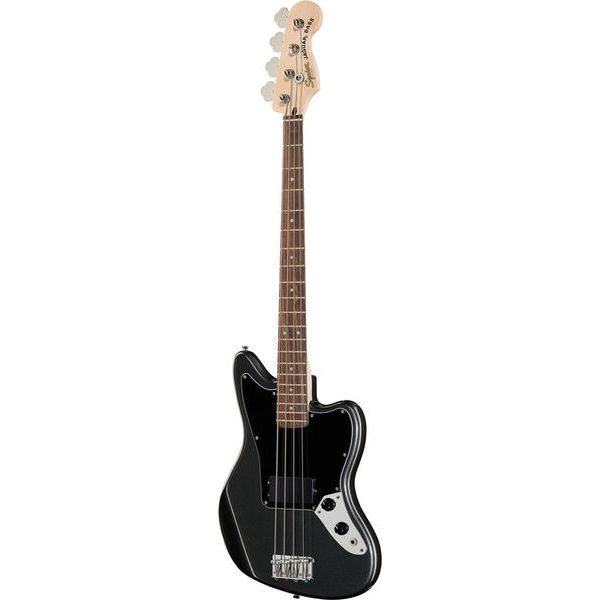
Poplar body, bolt-on maple neck, laurel fretboard with black dot inlays. Standard Squier Affinity recipe, and there’s nothing wrong with that â it’s a formula that’s worked for years.
The Jaguar offset shape is genuinely distinctive on a bass. Most budget basses are P or J body clones, so this stands out visually on a rack of instruments at a shop or on stage.
20 medium jumbo frets, synthetic bone nut, white pickguard against that Charcoal Frost Metallic finish. It photographs well, and it looks even better in person according to owner reviews.
Hardware Rundown
- 4-saddle standard bridge for easy intonation adjustment
- Vintage-style tuners with chrome hardware
- Single ceramic humbucker in the bridge-ish position
- Master volume and master tone, nothing more
Fretwork quality gets called out a lot in reviews â one owner said it beats what they’ve gotten back from a professional tech on pricier instruments. That’s a big compliment for a budget bass.
Playability and Feel
The 32″ medium scale is the headline feature here. It’s shorter than the standard 34″ long scale most basses use, which makes stretches noticeably easier â especially useful for smaller hands or younger players.
Owners consistently describe it as „butter smooth” to play. The C-profile neck is comfortable, not too chunky, and the medium scale doesn’t feel like a compromise once you’re used to it.
One recurring note: the offset body shape makes it a little neck-heavy. The neck has real weight and the body is comparatively light, so it wants to dive toward the headstock unless you’re on a wide, grippy strap.
Setup out of the box is a mixed bag according to a few reviews â some arrived spot-on, others needed a truss rod tweak to kill fret buzz higher up the neck. Nothing unusual for this price bracket, just budget in a setup check.
Sound and Tone
One ceramic humbucker, no blend controls, no split-coil switching. What you get is deep low-end with relatively restrained highs â a big, thick voice rather than a bright, snappy one.
Output is notably hot for a passive bass. Reviewers point out it can drive an amp harder than expected, which is great for cutting through a mix live.
Genre-wise this leans toward indie, alt-rock, and surprisingly, aggressive hard rock too. It’s not a slap-happy funk machine â the tone is too dark and focused for that â but for riff-driven music it works great.
Electronics
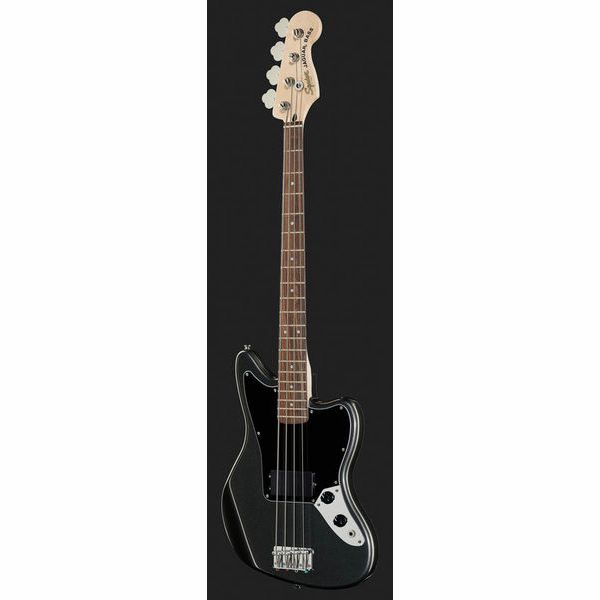
Fully passive, one volume, one tone. This isn’t a bass that rewards knob-tweaking â it has one job and it does it well.
If you want more tonal range from a similarly offset-shaped instrument, the guitar-side Squier Classic Vibe Jazzmaster is worth a browse â different instrument, same design family, more switching options.
IMO the simplicity actually helps here. Beginners don’t need to think about blend ratios, they just plug in and play.
Who Is This For?
This is squarely a beginner and budget-conscious player’s bass, and it says so right there in the „Affinity” branding. But don’t read „beginner” as „throwaway” â plenty of gigging musicians keep one of these as a backup or beater.
If you’re drawn to the whole offset design world â Jaguars, Jazzmasters, Mustangs â but haven’t found an offset bass yet, this fills that gap nicely.
Smaller-handed players and younger musicians will appreciate the medium scale specifically. It’s genuinely easier to play than a standard long-scale bass without feeling like a toy.
If short scale basses interest you generally, also check our Squier Sonic Bronco Bass review â even shorter scale, different tone entirely.
It’s also a solid pick for anyone building a home studio on a budget. That deep, dark humbucker tone sits nicely under indie and alt-rock mixes without a ton of EQ work, and you’re not spending a fortune to get it.
Parents buying a first bass for a kid or teenager should seriously consider the medium scale here too. A lot of young players get discouraged by a full 34″ neck before their hands and reach catch up â this sidesteps that problem entirely without feeling like a toy-store instrument.
Honest Niggles
Neck-heaviness is real. Budget a proper wide strap for this one or you’ll be fighting the balance all night.
Single pickup, single tone. If you need tonal versatility within one instrument, this isn’t it â by design.
Setup consistency varies a bit unit to unit, which is common at this price. Factor in a setup check or basic truss rod adjustment when it arrives.
And obviously, if you want to slap and pop with bright, snappy tone, this dark-voiced humbucker isn’t the right tool. It’s built for weight, not sparkle.
Specs at a Glance
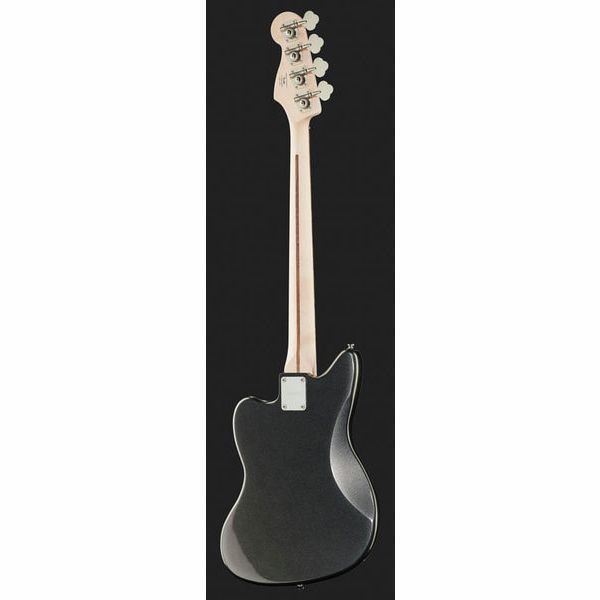
- Body: Poplar
- Neck: Maple, bolt-on, C profile
- Fretboard: Laurel, black dot inlays
- Scale: 813mm / 32″ (medium scale)
- Nut: Synthetic bone, 38.1mm width
- Frets: 20 medium jumbo
- Pickup: 1x ceramic humbucker
- Controls: Master volume, master tone
- Hardware: Chrome, 4-saddle bridge
- Finish: Charcoal Frost Metallic
Final Verdict
The Squier Affinity Jaguar Bass H is proof that „beginner bass” doesn’t have to mean boring. That offset shape gets attention, and the medium scale genuinely makes learning easier.
It won’t replace a P-Bass or J-Bass as your main gigging instrument if you need tonal range. But as a first bass, a practice instrument, or just something different-looking to throw over your shoulder, it punches well above its price.
Compare it against the Harley Benton PB-50 if you want a more traditional-feeling beginner bass, or the Sire Marcus Miller M2 if you’re willing to spend a bit more for a J-Bass that’s genuinely gig-ready.
Bottom line: offset cool doesn’t usually come this cheap, and it definitely doesn’t usually play this well at this price. Worth a serious look if the shape has been catching your eye.
And hey, if you end up loving the offset world after this, there’s a whole rabbit hole waiting for you on the guitar side too â check our best offset guitars roundup for where to go next.