Watch It First
You want that classic double-cut SG growl – the Angus, Tony Iommi, devil-horns kind of tone – but you don’t want to remortgage the house. Sound familiar?
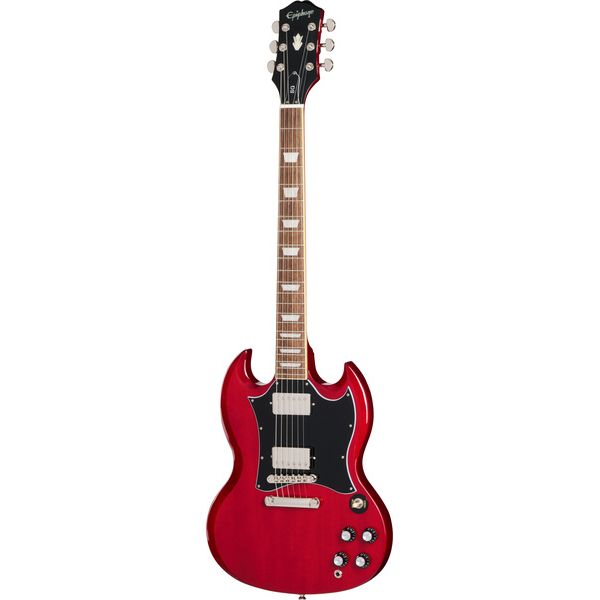
The Epiphone SG Standard in Cherry is Epiphone’s shot at the iconic Gibson shape, and honestly it gets you most of the way there for a fraction of the outlay.
Mahogany body and neck, ProBucker pickups, that unmistakable slim horns silhouette. Let me tell you where it shines and the couple of things to watch.
An SG shape without the SG price
The big draw here is obvious. You’re getting the whole SG package – twin-cutaway mahogany body, set neck, dual humbuckers – for way less than the real-deal Gibson SG sitting next to it on the wall.
And it’s not a cheap imitation either. The Cherry finish looks the part, the binding’s tidy, and it comes with a premium gigbag in the box. First impressions are properly good.
Is it identical to a Gibson? Course not. But blindfolded, through a cranked amp, most people would struggle to tell you which is which.
The ProBucker engine
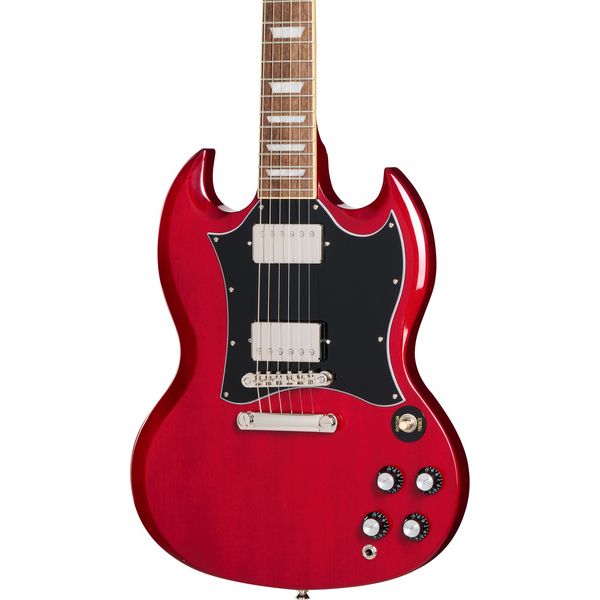
Pickups are where a lot of budget guitars cut corners. Epiphone didn’t. The SG Standard runs a ProBucker 2 in the neck and ProBucker 3 in the bridge – Epiphone’s own take on classic PAF-style humbuckers.
They’re warm, open and a little raw in the best way. The bridge has bite for riffs, the neck is smooth and vocal for leads, and there’s proper CTS electronics behind the knobs so the controls actually feel decent.
One owner summed it up nicely: unpack it, tune it, and the AC/DC-in-the-bedroom sound is basically there before you even plug in. Plug into an amp and it comes alive.
Specs
- Body: Mahogany
- Neck: Mahogany, 60s Slim Taper
- Fretboard: Indian Laurel, trapezoid inlays, 22 frets
- Scale / nut: 629 mm (24.75″) / 43 mm
- Pickups: ProBucker 2 (neck) + ProBucker 3 (bridge)
- Controls: 2 volume, 2 tone, CTS pots
- Bridge: LockTone Tune-O-Matic + stopbar
- Finish: Cherry
- Extras: Premium gigbag included
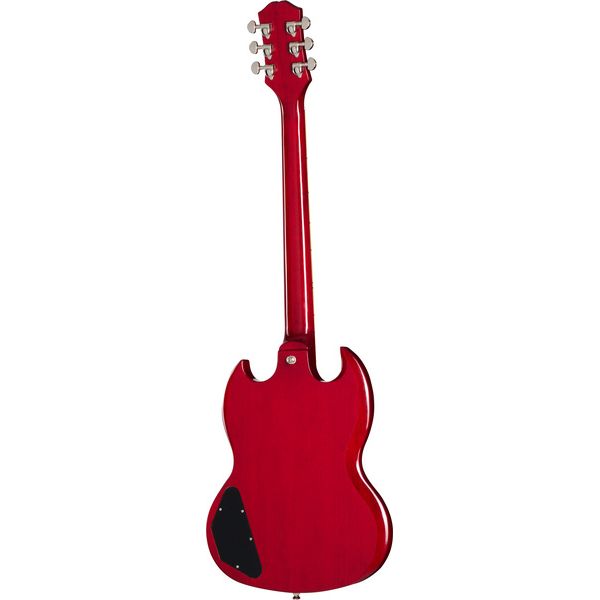
Quick one worth flagging: the LockTone bridge and tailpiece lock in place, so they won’t clatter off when you change strings. Small thing, genuinely handy.
That Slim Taper neck
The 60s Slim Taper profile is the SG’s secret weapon. It’s thin, fast and easy to get around, which is a big part of why SGs feel so effortless for lead playing.
Pair that with the SG’s light, all-mahogany body and no chunky heel, and the upper frets are wide open. It hangs a little neck-heavy on a strap, like every SG ever, but you get used to it fast.
Fancy learning some meaty riffs on it? Grab a few easy heavy songs and you’ll see why this shape has powered so much rock and metal.
So how does it sound
Through a bit of gain, it’s pure rock heaven – tight, punchy, with that midrange honk SGs are famous for. Roll back the volume and it cleans up sweetly for blues and classic rock too.
It’s got a darker, heavier side as well. Crank the bridge pickup into a high-gain amp and the SG happily sits in heavier, darker territory – it’s not just an AC/DC machine.
Across owner reviews it lands around 4.6 out of 5, with people repeatedly praising the playability and value. That tracks with every one of these I’ve picked up.
The middle position is worth a mention too – both ProBuckers together give you a fatter, slightly scooped tone that’s brilliant for rhythm and chunky power chords. It’s a more versatile guitar than the 'one-trick rock machine’ reputation suggests.
Who’s it for (and who should skip it)
Grab it if you love classic rock, hard rock or metal and want that iconic SG feel without the Gibson price. As a step up from a first beginner guitar, it’s a brilliant shout.
Skip it if you specifically want modern, high-output, Floyd-and-active-pickups metal – something like the ESP LTD H3-1000FR is built more for that. The SG is a vintage-flavoured beast at heart.
And if the neck-heavy balance really bugs you, a wider suede strap fixes most of it – the strap grips your shoulder and stops the headstock diving. Cheap fix, and then there’s genuinely very little to complain about here.
The niggles
It’s not flawless. A couple of owners mention it can arrive needing a setup and a tune – one turned up quite out of tune – so a quick once-over is smart, as with most guitars at this price.
The output jack sits on the face of the body (classic SG placement), so a right-angle cable is your friend. And that neck-heavy balance won’t suit everyone. None of it is a dealbreaker.
Build and looks
For the money, the fit and finish genuinely surprised me. That deep Cherry gloss is the classic SG look done right – rich, warm and a bit menacing under stage lights. It’s the finish that made the shape famous, and Epiphone nailed the vibe.
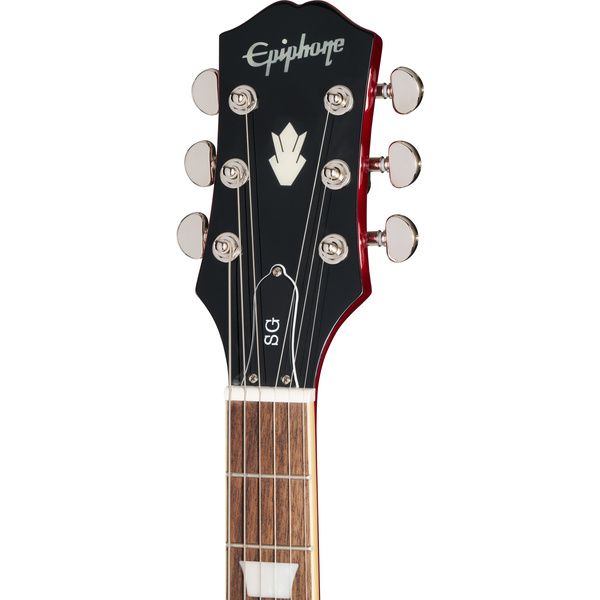
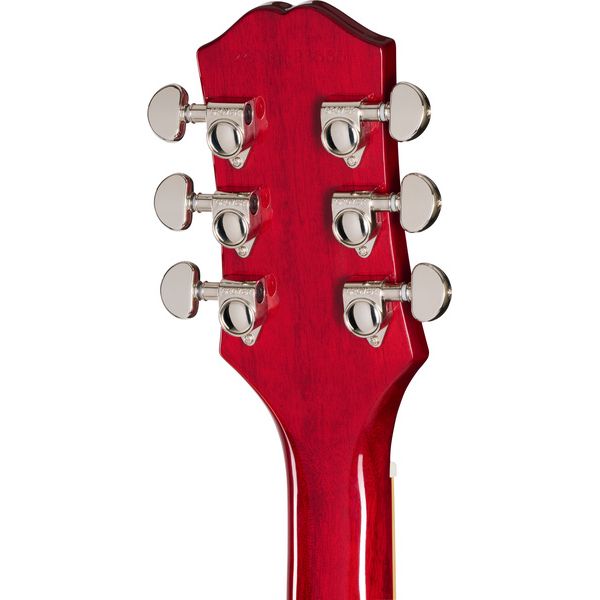
The trapezoid inlays, the tidy binding, the open-book headstock – it all reads more expensive than it is. Little details like the LockTone hardware and CTS pots show Epiphone spent the budget where it actually matters, not just on looks.
It’s light too, thanks to that thin all-mahogany body, so it’s an easy guitar to noodle on for hours. Grab it off the wall, throw it on, and it just invites you to play – which is exactly what a good rock guitar should do.
Verdict
The Epiphone SG Standard is one of the easiest budget guitars to recommend. Real mahogany, genuine ProBucker humbuckers, that legendary Slim Taper neck and the coolest shape in rock – all for a fraction of what the Gibson costs.
Give it a quick setup and it punches so far above its money it’s almost silly. If you’ve ever wanted an SG, this is the easy way in.