Watch It First
Here it is in the hands of someone who can actually play Petrucci parts. I am not that someone.
Signature guitars are usually a bad deal. You pay for a name and get a slightly odd instrument that only suits one player.
The JP60 is the exception, and it is the exception because Sterling built it as a real guitar first and a signature model second.
It is the cheapest way into the John Petrucci shape, and after playing one I stopped treating that sentence as a warning.
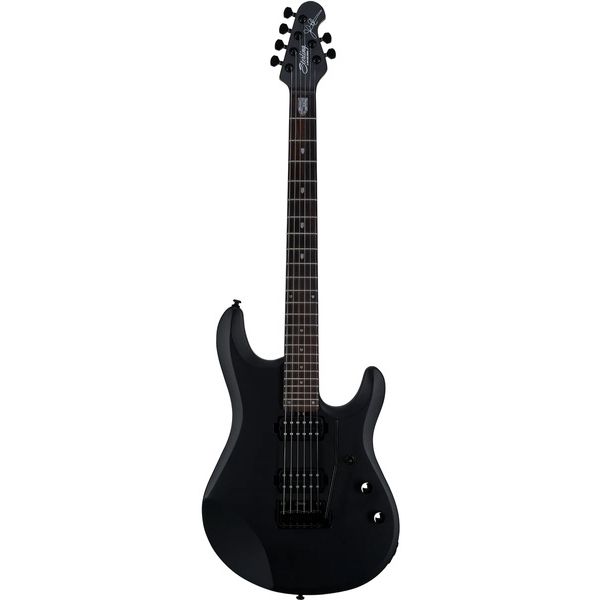
The Body Shape Is Doing Real Work
The Music Man JP outline is one of the genuinely well-designed bodies in modern guitar. Deep double cutaway, contoured back, sculpted heel.
The practical result is that the upper frets are properly accessible. Not accessible-if-you-contort. Actually accessible.
Nyatoh body rather than the basswood or mahogany of the expensive versions. It is a bit heavier than basswood and slightly warmer, which I did not mind at all.
Comfort Over Long Sessions
The belly and forearm contours are more aggressive than a Les Paul-style guitar. Sitting down it just disappears.
Weight is moderate – not featherweight, not a boat anchor. Balanced on a strap with no neck dive.
If your back has opinions about heavy guitars, this is a friendlier option than most of the metal-leaning competition.
The Neck Is the Selling Point
Bolt-on maple, rosewood board, 648 mm scale, 41.9 mm nut, 406 mm radius, 24 medium jumbo frets.
That 16-inch radius is flatter than most, which means bends do not choke and fast runs feel effortless.
The profile is thin but not razor thin. It is the shape people describe as fast without being uncomfortable, and for once the cliche fits.
Fretwork and Finish
Fret ends are tidy for an instrument at this price. Not Japanese-Ibanez tidy, but nowhere near the sharp-fret misery you get on some budget guitars.
The Stealth Black high-gloss finish looks properly expensive and shows fingerprints like a crime scene. Fair trade.
The JP shield inlay at the first fret is the only overt signature branding, which is restrained by signature-model standards.
Pickups and Tone
Two humbuckers, volume, tone, three-way switch. No coil splits, no fancy switching, no active electronics.
The bridge pickup is hot and tight, aimed squarely at modern rock and prog. Palm mutes stay defined rather than turning to porridge.
The neck pickup is the pleasant surprise – fluid and singing for leads without going woolly. That is exactly what this guitar is for.
The Honest Limitation
These are not the DiMarzio pickups from the real Music Man JP models. They are decent, but they are the obvious upgrade path.
Clean tones are fine rather than special. Humbuckers with no split options means the palette is narrower than something like a Player II Strat HSS.
Run it into a decent high-gain amp and it wakes up. A Marshall DSL1CR or a modeller like the Line 6 Pod Go both suit it well.
The Tremolo and Tuning Stability
Modern floating tremolo with locking machine heads. No locking nut, which is the sensible choice at this price.
The locking tuners plus a well-cut nut mean it holds tune far better than you would expect from a floating bridge without a Floyd.
Gentle vibrato and moderate dives are fine. Do not expect to do dive-bomb-to-the-body theatrics and come back in tune – that is not what this bridge is.
Small Niggles
- Stock pickups are the weak point and the first thing most owners change
- Floating trem means drop tunings are a hassle
- No coil splitting limits the clean palette
- High-gloss black is a fingerprint magnet
- No case or gig bag included at this price point
None of that is unusual for the money. It is just worth knowing before you order.
Who Should Buy One?
Players moving up from a first electric who want something that will not hold them back technically. The neck and fret access alone justify the step.
Prog and modern rock players on a budget. This is a far better fit for that music than a generic superstrat.
If you want more aggression out of the box, the Schecter C-1 Hellraiser is the heavier option, and the Harley Benton Amarok-6 undercuts it on price with more modern spec.
If it is the Music Man feel you are after rather than Petrucci specifically, the Sterling S.U.B. Axis AX3 is the other side of the same coin.
JP60 vs the Real Music Man JP
Obvious question, so here is the honest answer: the gap is real but it is smaller than the price difference suggests.
The USA JP models get DiMarzio pickups, a piezo option on some versions, higher-grade woods and a level of finishing that the JP60 does not attempt.
What carries over is the geometry – the body shape, the neck profile, the fret access, the scale length. Those are the things that actually shape how you play.
The Upgrade Maths
Swap the pickups and you close most of the tonal gap for a fraction of the price jump. The neck was already fine.
That is why this guitar has the reputation it has. It is a good chassis that rewards a small investment.
Out of the Box: What to Expect
Mine arrived with the trem set slightly sharp and the action a touch high. Twenty minutes of adjustment sorted both.
Factory strings are Ernie Ball Regular Slinky, which is a sensible choice and better than the mystery wire some brands ship.
Intonation was close but not perfect. Worth checking before you decide anything about how it sounds.
Two Months Of Playing
Nothing has gone wrong, which for a guitar at this price is the review in one sentence.
Tuning stability held up through weather changes and a fair amount of trem use. The locking tuners deserve most of the credit.
The finish has picked up a couple of tiny marks on the back. Gloss black does that. Not a build issue, just physics.
The Spec Sheet
- Body: Nyatoh
- Neck: Maple, bolt-on
- Fingerboard: Rosewood
- Inlays: JP shield logo at the 1st fret, dots thereafter
- Scale length: 648 mm (25.5 inches)
- 24 medium jumbo frets
- Nut width: 41.9 mm
- Fingerboard radius: 406 mm (16 inches)
- Pickups: 2 humbuckers
- Controls: Volume, tone, 3-way switch
- Bridge: Modern floating tremolo
- Locking machine heads
- Black hardware
- Strings: Ernie Ball 2221 Regular Slinky
- Finish: Stealth Black, high gloss
Final Verdict
The JP60 gets the important things right and saves money on the things you can upgrade later.
The neck, the fret access and the body contours are all lifted straight from a much more expensive design, and they are the parts you cannot retrofit.
Pickups are the compromise. They are perfectly usable and they are cheap to replace, so IMO that is the compromise you want a manufacturer to make.
A Petrucci signature you can actually afford, and one that stands up as a guitar even if you have never heard a Dream Theater record. That is a rare thing.