Watch It First
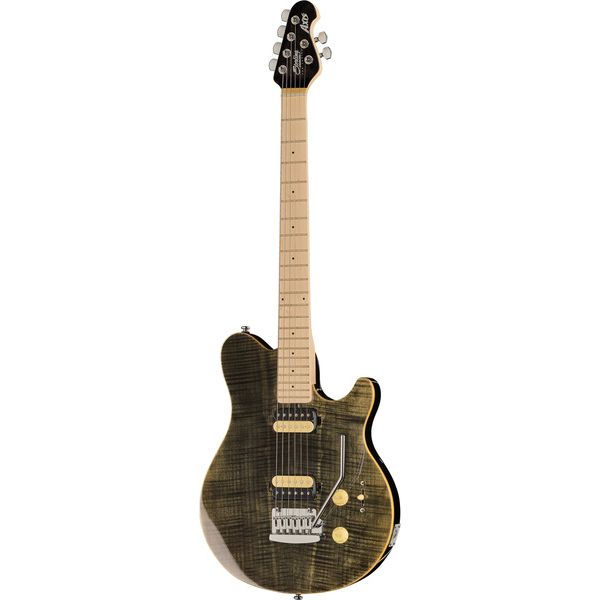
Every couple of years a budget guitar turns up and makes me wonder why I bothered buying the expensive version. The Sterling by Music Man S.U.B. Axis AX3 is this year’s culprit.
It is the Music Man Axis shape – the one with Eddie Van Halen’s fingerprints all over its family tree – rebuilt at a price that does not require a family meeting.
I have had one on the stand for a few weeks now. It has not moved. I am mildly annoyed about that.
So What Actually Is an Axis?
Short version: the Axis is Music Man’s take on the hot-rodded superstrat. Two humbuckers, a shallow body, a trem, and a neck carved by somebody who clearly plays guitar for a living.
The S.U.B. line is the entry point into all of that. Built in Indonesia, built to a price, and aimed at players who want the shape and the feel without the four-figure sting.
If you have read my take on the Jackson Soloist X Series, this is the same idea approached from a slightly different direction. Serious playability first, fancy appointments second.
Jabon, Not Basswood
The AX3 uses a jabon body with a flamed maple veneer top. Jabon is a light, fairly neutral tonewood that shows up all over this price bracket – think of it as basswood’s slightly denser cousin.
On my Trans Black example the veneer genuinely looks good under stage light. In daylight, up close, you can absolutely tell it is a veneer. FYI, that is true of nearly everything at this money.
It is also properly light. Three sets on a strap and my shoulder had no opinions whatsoever, which is more than I can say for the Les Paul that usually shares the same stand.
The Neck Is the Headline
Maple neck, maple fingerboard, black dots, 12-inch radius, 22 narrow frets, 42 mm nut. On paper that is a shrug.
In the hand it is the single best thing about the guitar. The profile is asymmetric – thicker under the thumb on the bass side, slimmer under the treble strings – so your hand settles into it instead of gripping it.
That is the same trick the far pricier Sterling and Music Man necks pull, and somehow it survived the trip down to this price fully intact. That surprised me more than anything else here.
Two Humbuckers and a Sneaky Five-Way
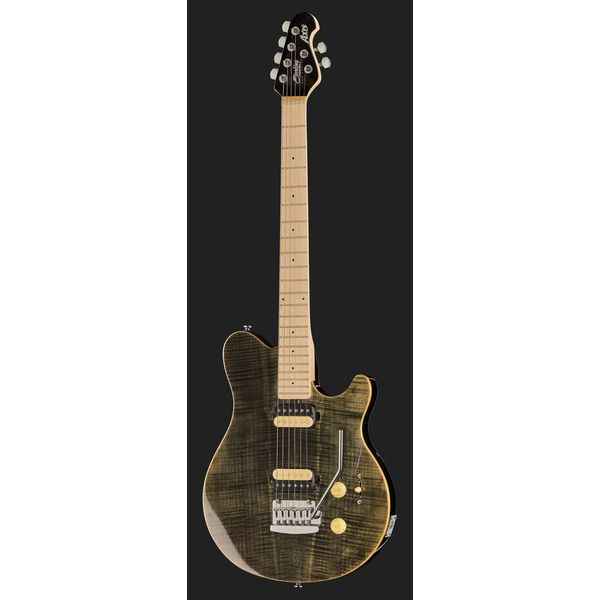
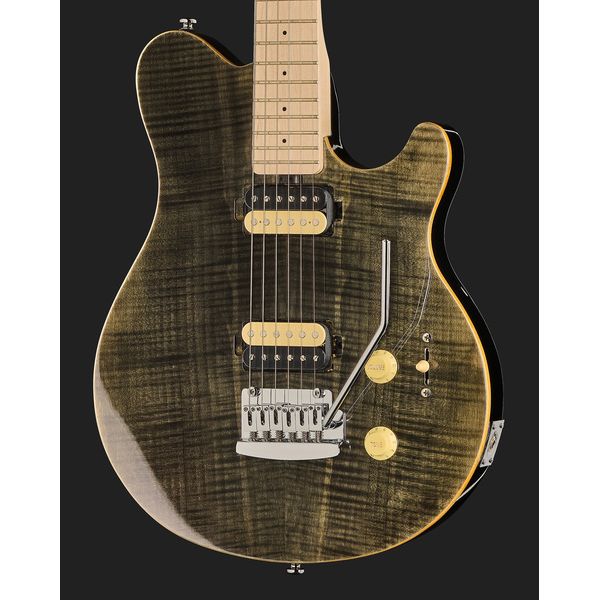
Two Alnico humbuckers, one volume, one tone, and the part most spec sheets bury: a five-way selector instead of the usual three-way.
You get both humbuckers, both together, and two split positions in between. A two-pickup guitar that does quacky in-between sounds with zero modding required.
Is it a Strat? Obviously not. But it is far more useful than most HH layouts, and it saves you from the trap that catches people coming from a Squier Affinity Stratocaster who think humbuckers only do one thing.
How It Actually Sounds
Bridge pickup is bright, tight and a little spiky before you dial anything in. Pull the tone back a whisker and it drops straight into that mid-nineties hot-rodded rock voice.
Neck pickup is warmer than I expected and cleans up properly with the volume knob. It is not a jazz box – go look at the Gretsch G2420 Streamliner if that is the hunt – but bluesy leads do not turn to mud.
Through high gain it behaves itself. I ran it into a 5150-flavoured channel and it tracked fast palm mutes without flubbing out. That amp story lives in my EVH 5150 Iconic 40 write-up if you want it.
The Trem, and Being Honest About It
This is a vintage-style fulcrum tremolo, not a Floyd Rose. No locking nut, no fine tuners, no double-locking anything.
Used gently it is fine. Shimmer, gentle dips, the odd flutter at the end of a phrase. Push it hard and you will be retuning, and that is physics rather than a defect.
I have watched people buy an Axis expecting divebomb duty and then get grumpy on forums about it. A decent setup, a bit of graphite in the nut slots and proper string stretching gets you most of the way there.
Specs at a Glance
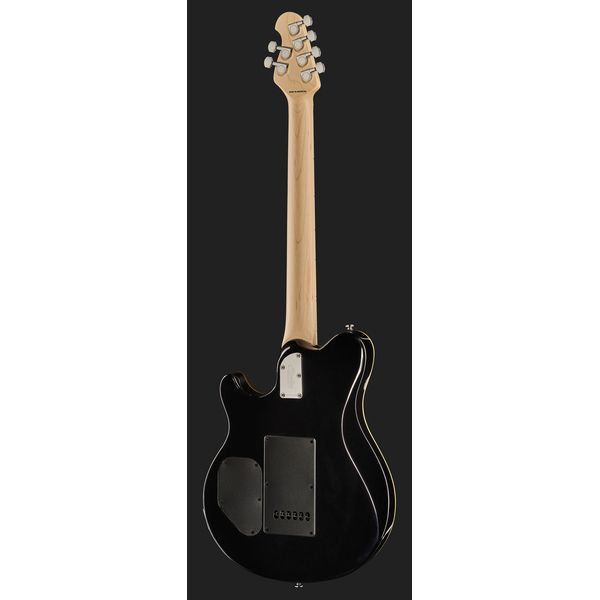
- Body: jabon with flamed maple veneer top
- Neck: bolt-on maple, asymmetric profile
- Fingerboard: maple, 305 mm (12″) radius, black dot inlays
- Frets: 22, narrow
- Scale: 648 mm (25.5″)
- Nut width: 42 mm (1.65″)
- Pickups: 2 x Alnico humbuckers
- Controls: volume, tone, 5-way selector
- Bridge: fulcrum tremolo
- Tuners: die-cast
- Finish: Trans Black
Out of the Box
No case, no gigbag. At this money that is expected, but worth saying out loud before you budget.
The hardware is honest budget stuff. Die-cast tuners that hold well enough once the strings settle, a plate-mounted jack, and a scratchplate-free front that shows off the veneer.
Fretwork on mine was decent with one exception, which I will get to. Nothing about the assembly felt rushed, and the neck pocket was tight enough that the bolt-on joint feels solid rather than bolted-on.
Two Weeks of Actually Playing It
Here is the test that matters to me: which guitar do I reach for when I am not thinking about it? For a fortnight straight, this one.
Part of that is the weight. Part of it is that the upper frets are genuinely reachable – the heel is shaved back properly, not just marketed as such.
It also stays in tune far better than the trem spec suggests, provided you are not treating the arm like a lever on a fruit machine.
The Niggles
The factory setup on mine was mediocre. Action high at the twelfth, trem pulled flat against the body, and one fret end that wanted a file. Twenty minutes fixed all of it, but you should not have to.
The 25.5 inch scale catches people out. Music Man does not mean Gibson-ish here – this is Fender scale, so bends need marginally more finger than you might be bracing for.
The narrow frets are a taste thing. Coming off jumbo wire you will notice immediately, and not necessarily fondly.
And the tone control behaves like a light switch. Most of the usable range lives in the top third of the sweep, which is standard budget pot behaviour but still slightly annoying.
Who Is This Actually For?
Want a superstrat that plays like something far more expensive and do not need a locking trem? Easy recommendation, no caveats needed.
Chasing modern metal – actives, 24 frets, flat radius? Go read about the Schecter C-1 Hellraiser instead. Different animal entirely.
And if you already know you want the full Sterling experience with better hardware, treat the AX3 as the on-ramp rather than the destination. The Ibanez AZ2402 sits at the far end of that same road.
Final Verdict
The S.U.B. Axis AX3 punches miles above its money, and it does it almost entirely on the strength of that neck. The pickups are good rather than great, the trem is what it is, and the setup will want attention.
But the core of the guitar – the shape, the feel, the weight, that five-way trick – is stuff I would happily take to a paying gig without a second thought.
I like it more than the Yamaha Pacifica Standard Plus, and that is a guitar I have praised loudly in print.
Would I buy one with my own money? I effectively already did. That is the answer. 😉