Watch It First
Yamaha’s THR series has quietly become one of those „everyone owns one eventually” pieces of gear, and the THR30II Wireless is the flagship of the lineup. It’s a desktop modeling amp that somehow also functions as a serious practice tool, an audio interface, and — thanks to the built-in wireless receiver — a genuinely cable-free rig.
30 watts through two stereo speakers, a rechargeable battery, Bluetooth streaming, and 21 amp models covering guitar and bass. On paper it reads like a spec-sheet flex. In practice, most of it is genuinely useful, not just marketing filler.
I wanted to find out whether the THR30II Wireless earns its price tag, or whether you’re mostly paying for the cream-colored retro looks. Spoiler: it earns it, but there are a couple of quirks worth flagging before you buy.
Build and Specs — What’s Inside the Box
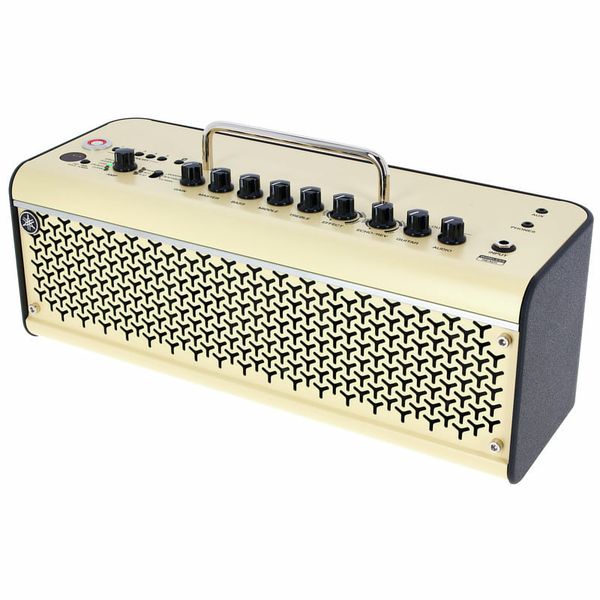
The THR30II Wireless packs 30 watts into a stereo pair of 3.5-inch full-range speakers, driven by Yamaha’s „Virtual Circuit Modeling” tech. You get 15 guitar amp models and 3 bass amp models, each with three voicing modes (Modern, Boutique, Classic), plus 3 mic models and a flat mode for acoustic or line-level sources.
Six built-in effects cover the usual suspects: chorus, flanger, phaser, tremolo, delay, and reverb. There’s a built-in tuner, five memory slots for saved presets, and both Bluetooth and USB connectivity for streaming audio or recording direct into your DAW.
The headline feature is the built-in wireless receiver, compatible with Yamaha’s optional YW10T transmitter (sold separately, annoyingly — it’s not in the box). Once paired, you genuinely can walk around cable-free while practicing, which is a small thing that turns out to matter a lot for comfort.
Physical Build
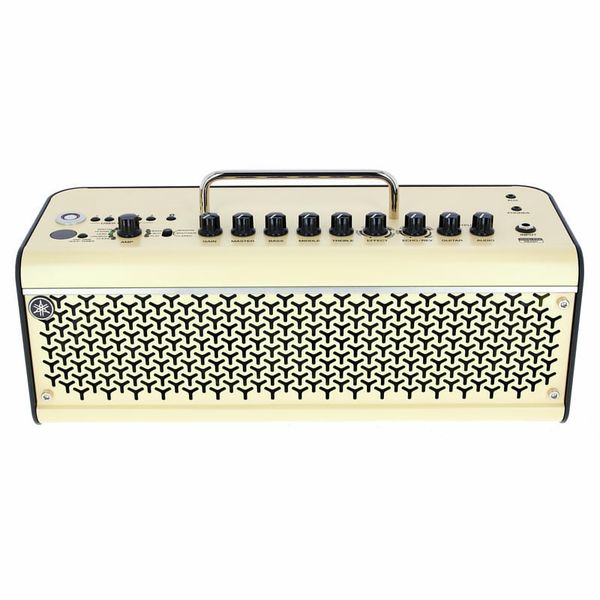
At 4.3kg and roughly 420 x 195 x 155mm, it’s genuinely desktop-sized — not a „compact amp” that’s secretly still a combo you need two hands to lift. The metal front panel feels sturdy; the plastic rear and sides are fine but noticeably less premium, a common complaint in user reviews.
Compared to something like the Boss Dual Cube LX, the THR30II leans more toward home studio and less toward „amp you’d actually gig.” Both are excellent at what they’re built for — they’re just built for slightly different jobs.
Playability and Sound
This is where the THR30II genuinely impresses. The amp modelings aren’t just „close enough” — they have real dynamic response, meaning your picking attack and guitar volume knob actually change the character of the tone, not just the volume. That’s the difference between a good modeler and a mediocre one.
Stereo imaging from the twin speakers is genuinely impressive for something this size — effects like chorus and delay spread out in a way that headphone-only modelers simply can’t replicate. It’s not going to replace a proper stereo studio monitor setup, but for a desktop amp, it’s a treat.
Compared to a straightforward modeling combo like the Peavey Vypyr X2, the THR30II feels more refined tonally, though the Vypyr arguably wins on raw amp-model count and onboard effect depth. Different priorities, both legit.
Who It’s For
Home players, apartment dwellers who need quiet-hours-friendly volume with real tone, and anyone who wants a genuinely capable audio interface built into their amp. It’s also a strong pick for gigging musicians who want a high-quality practice rig that travels well thanks to the battery.
If your priority is pure portability and a lower price, the Positive Grid Spark 2 covers similar ground with deeper app integration and jam-along features, for less money. The THR30II counters with better build quality and that wireless-ready hardware.
The Niggles
The wireless transmitter not being included is the biggest gripe — you’re paying flagship money and still need to buy an accessory to unlock the feature the amp is named after. That’s a genuinely odd decision from Yamaha.
The companion app also draws mixed reviews — some users report syncing quirks between devices, and presets don’t always transfer cleanly between phone, tablet, and desktop versions. None of it is dealbreaker territory, but it’s not the polished experience you’d expect at this price.
There’s also no built-in effects loop for external pedals in a traditional sense — if you’re the type who wants to run a favorite analog drive pedal into the front end and then loop delay after the amp stage, you’ll need to get creative. For a rig built entirely around external pedals instead, our Line 6 HX Effects review covers a totally different, pedalboard-first approach.
How It Compares to Small Tube Amps
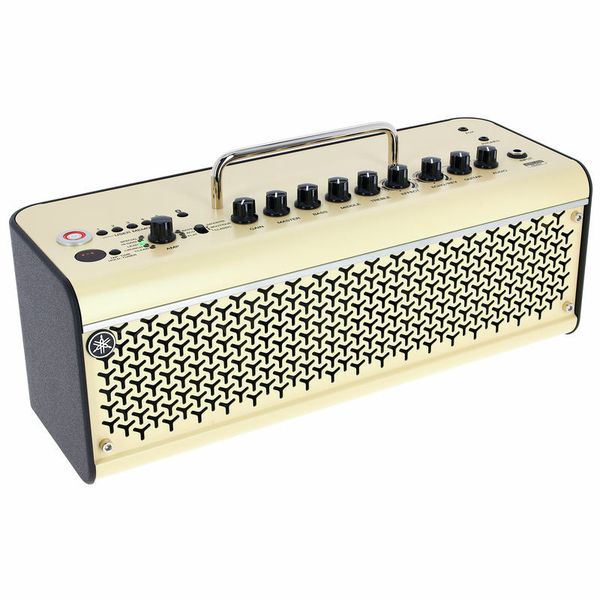
It’s worth pointing out the THR30II isn’t chasing the same goal as a small tube combo like the Marshall MS-2 or a proper valve amp. Digital modeling means total consistency and near-silent operation at any volume, but purists will always argue nothing quite replicates real tube feel. Both camps have a point, and honestly the THR30II gets closer than most digital amps I’ve tried.
If you already run a pedalboard into a modeling front end and just want reliable, road-tested tones without fuss, our Line 6 POD Go review is a useful companion read — it’s aimed at a similar „one box, does everything” crowd, just built around headphone and PA output rather than a built-in speaker.
Full Specs
- Type: Modeling combo amp, guitar & bass
- Power: 30W, stereo
- Speakers: 2x 3.5″ full-range
- Amp models: 15 guitar, 3 bass, each with 3 voicings
- Mic models: 3, plus flat mode
- Effects: Chorus, Flanger, Phaser, Tremolo, Delay, Reverb
- Built-in tuner, 5 memory slots
- Connectivity: Bluetooth, USB, built-in wireless receiver (transmitter sold separately)
- Rechargeable battery included
- Dimensions: 420 x 155 x 195mm
- Weight: 4.3kg
Final Verdict
The Yamaha THR30II Wireless is genuinely one of the best desktop amps you can buy — the tones are dynamic and expressive, the stereo imaging is a real treat, and the wireless-ready hardware is forward-thinking even if Yamaha nickel-and-dimes you on the actual transmitter.
If you want a serious home rig that doubles as a recording interface and doesn’t sound like a toy at any volume, this earns its spot at the top of the desktop amp category. Just budget for the wireless transmitter separately if that feature is why you’re buying it in the first place.