Watch It First
Peavey built its whole reputation on one idea: brutal, dead-reliable tone that survives a tour van and a hundred bad club stages. The 6505 and 5150 lines did that job for decades, and metal guitarists never really stopped talking about them.
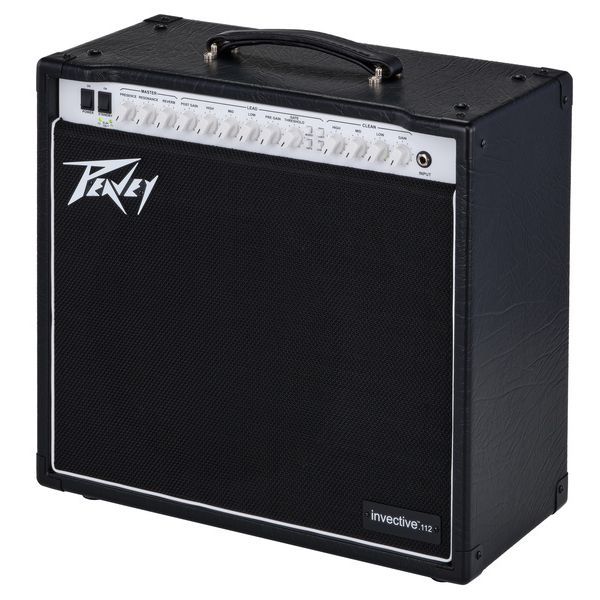
The invective.112 is Peavey’s newest swing at that same legacy, except this time it’s a proper combo. Co-designed with Misha Mansoor of Periphery, it crams a genuinely high-gain, all-tube circuit into a single 1×12″ cabinet you can carry with one hand.
I plugged it in expecting a one-trick metal box that only does one thing loud. What I got was a lot more usable than that. Here’s the full breakdown.
Why It Earns the „Combo Legend” Title
For years, if you wanted Peavey’s high-gain DNA in a combo, your options were basically the solid-state Bandit or lugging around a full 6505 half stack. Neither one really scratched the itch.
The invective.112 fills that exact gap. It’s genuinely tube-driven, genuinely gig-sized, and voiced specifically for palm-muted chug and saturated leads rather than generic „does everything okay” tones.
That’s not nothing. A lot of „metal combos” on the market are really just clean-platform amps with a gain knob turned way up. This one was built around high gain from the ground up, and it shows the moment you dig into a palm mute.
It’s also worth saying: Peavey didn’t just slap the invective badge on an old circuit. Misha Mansoor’s involvement means the gain structure was actually tuned by someone who plays this style of music for a living, not just an engineer working from a spec sheet.
The Tone Itself
The Lead channel has separate pre-gain and post-gain controls, which is the detail that actually matters here. You can go from tight, thrashy chug to a fully saturated, singing lead tone without the pick attack turning to mush.
Three 12AX7 preamp tubes and a pair of EL84s in the power section give it that slightly more compressed, British-adjacent feel compared to the 6L6-loaded 6505 II. It’s a different flavour of gain, but it’s still unmistakably a metal amp.
The Clean channel isn’t an afterthought either. It gets its own 3-band EQ, which means you’re not stuck with a thin, boxy „clean” that only exists so the amp can technically claim two channels.
Credit also goes to the Celestion Vintage 30 doing a lot of the midrange heavy lifting. It’s the same speaker you’ll find in plenty of amps costing way more, and it keeps the tone from ever feeling harsh or fizzy, even at full gain.
Power Scaling: Bedroom to Stage
A 3-stage power attenuator switches between 20W, 5W, and 1W. That’s the feature that makes this thing actually livable outside of a rehearsal room.
Dropping to 1W still lets the power tubes saturate the way they’re supposed to, just at a volume your neighbours (or your patience) can tolerate. Add in the USB output, XLR line out with cab simulation, and headphone jack, and you’ve got a genuinely quiet practice rig that still sounds like a real tube amp when you record it.
Footswitchable Everything (Mostly)
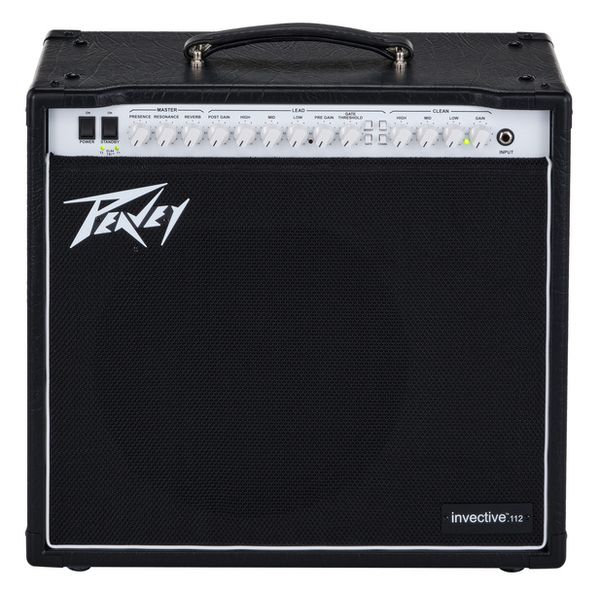
Tight, Gate, and Boost are all footswitchable, along with channel switching, and Peavey includes a 2-button footswitch in the box. The noise gate especially earns its keep live, since high-gain amps without one tend to turn every gap between riffs into a hiss-fest.
My one honest gripe: only two buttons come stock, which means you’re toggling between a limited set of combinations rather than getting independent control of everything at once. If you’re the type who wants dedicated switches for every function, budget for a bigger footswitch down the line.
There’s also a proper FX loop for time-based effects (delay, reverb, modulation) so they sit after the preamp distortion where they belong, instead of getting mangled by the gain stage.
Build and Honest Niggles
At roughly 18kg, it’s not featherweight for something marketed as a grab-and-go combo, but that’s fairly normal for an all-tube 1×12 with a real transformer and real iron in it.
The birch and poplar cabinet feels genuinely solid, not the flimsy particleboard you sometimes get at this end of the market. It’ll survive being thrown in a van.
The other real limitation is that single 12″ speaker. If you’re tuned way down for death metal or djent and want serious low-end thump on stage, you’ll probably want to run it into an external cab through the speaker-defeat switch rather than relying on the onboard speaker alone.
Who Should Actually Buy This
This amp makes the most sense for metal, djent, and modern rock players who want authentic tube gain without hauling a half stack to every gig. It’s equally solid for home studio owners who want USB and DI simplicity built in, rather than mic’ing up a cab every session.
It’s probably not for you if you’re chasing vintage, boutique clean tones or you genuinely only ever play at bedroom volume with no interest in gigging. This amp is voiced for gain first, and everything else is built around that.
Compared to a full 6505 half stack, you’re trading raw stage volume and low-end thump for portability, and honestly, most bar and club gigs don’t need a full stack anyway. FOH will mic it or take the DI regardless of how loud you are on stage, so the practical difference is smaller than it looks on paper.
- Power: 20W / 5W / 1W switchable via 3-stage attenuator
- Speaker: 1×12″ Celestion Vintage 30
- Channels: 2 (Clean, Lead) with separate 3-band EQ each
- Tubes: 3x 12AX7 preamp, 2x EL84 power amp
- Onboard spring-style reverb
- Footswitchable Tight, Gate, Boost, and channel switching (2-button footswitch included)
- FX loop, XLR DI out with cab simulation, USB output, headphone output
- Weight: approx. 18kg
Final Verdict
The invective.112 earns its spot as a genuine successor to Peavey’s metal legacy rather than just trading on the name. There aren’t many combos on the market that give you real tube gain, proper power scaling, and studio-ready outputs in one gig-friendly box.
The 2-button footswitch and single-speaker low end are the only real compromises, and neither one is a dealbreaker. If you want one amp that does chug, lead, and quiet bedroom practice equally well, this punches well above its price bracket.
Curious how it stacks up against other high-gain options? Check out our roundups of the 5 best tube amps for metal and the 5 best amp heads for metal, or our list of the 8 best amps for distortion and overdrive. If you’re deciding between practice-friendly options, our Marshall MG10 vs MG15 comparison is worth a look, and for something with a completely different vintage vibe, see our Blackstar TV-10 A review. Want a pocket-sized alternative instead of a full combo? Our Orange Micro Terror review covers that angle too.