Watch It First
The Peavey Bandit 112 has been around, in one form or another, since the 1980s. That alone should tell you something.
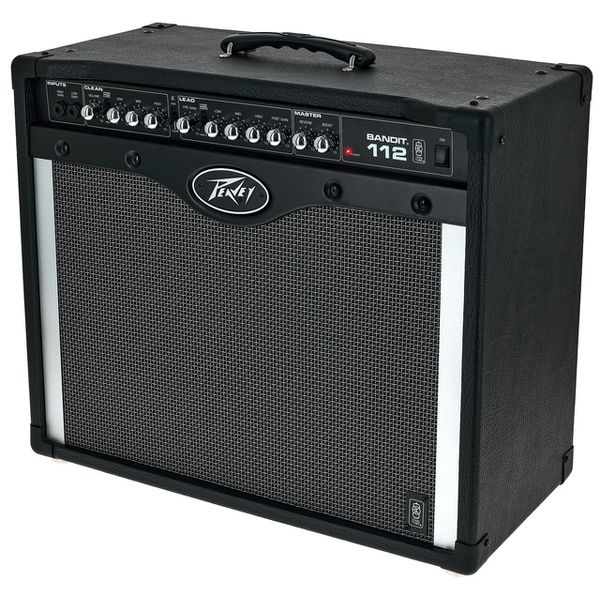
It’s a 100-watt solid-state combo with a single 12″ Blue Marvel speaker, two channels, and a reputation for surviving decades of pub gigs, garage jams and the occasional drop down a flight of stairs.
So why is a „cheap” solid-state amp still on gear forums 40-odd years later? Let’s find out.
Built Like a Tank
At just over 20kg, this thing is heavy. You feel it the moment you lift it into a car boot, and your back will remind you the next morning.
But that weight buys you a genuinely tough chassis. There’s a reason gigging musicians pass these things down like family heirlooms – dented corners, missing knobs, still working. Peavey over-built these amps for a market that couldn’t afford to keep replacing gear, and it shows.
Compared to a boutique tube combo like the Peavey Classic 30, the Bandit trades warmth for bombproof reliability. Different tool, different job.
Fun fact for the gearheads: the Bandit name has stuck around through several revisions since the 80s, and this current version keeps the same basic formula that made the earlier ones so beloved – simple, loud, and stupidly durable. If your local music shop has a battered secondhand Bandit sitting in the corner that’s clearly been through a war, that’s not a red flag. That’s basically the amp’s whole personality.
Tone – Clean and Lead, No Nonsense
Two channels here: Clean (with Vintage and Classic voicings) and Lead (Classic and Modern voicings). No digital modelling, no presets, no app – just knobs and TransTube analog circuitry doing its thing.
The clean channel is genuinely lovely for a solid-state amp – bright, articulate, and it takes pedals really well. Stack an overdrive in front of it and you can get surprisingly convincing crunch, which is basically the whole appeal of a TransTube design.
The Lead channel’s Modern voicing gets you into properly aggressive territory – not boutique-tube smooth, but plenty usable for rock, punk and even lighter metal. If you want a deeper dive into gain-heavy amps generally, our 5 Best Tube Amps For Metal piece is a good companion read, if only to see what you’re trading off by staying solid-state.
At high gain settings some players find it gets a little hissy or muddy – not a dealbreaker, but worth knowing before you crank it to 10 expecting studio-clean distortion.
The Footswitch Boost and EQ
Each channel gets its own 3-band passive EQ, plus a master reverb that’s tasteful rather than drenching. There’s also a foot-switchable boost (footswitch sold separately, annoyingly) that pushes the Lead channel into a genuinely useful solo tone.
The selectable damping factor and 25/50/100% power output switch are neat touches that most budget combos skip entirely – you can genuinely take this from bedroom volume to full band rehearsal without changing amps.
Who Buys a Bandit 112 in 2026?
Gigging players on a budget who need something loud, reliable and cheap to fix if it ever breaks (parts and knowledge for these are everywhere). Cover bands especially seem to love them.
It’s also a solid pick if you’re pedal-obsessed and want a clean, honest platform to build your tone from the ground up rather than relying on built-in amp voicings.
If you’d rather have tube warmth from the amp itself and don’t mind paying more, have a browse of our 10 Best Marshall Amps For All Budgets guide instead – the Bandit isn’t trying to compete on that front, and it doesn’t need to.
The Cons – What’s Missing
Let’s be honest about the gaps here:
- No Bluetooth, no USB, no onboard effects beyond reverb – this is an analog-only amp through and through.
- It’s heavy. Really heavy. Factor that into your gigging logistics.
- The footswitch for the boost function isn’t included, so budget for that separately.
- High-gain tones can get a bit hissy compared to a proper tube high-gain amp or a modern modelling combo.
None of this is surprising for a design this old, but it’s worth knowing going in. IMO the tradeoffs are more than fair for what you get in return.
Recording and Practical Use
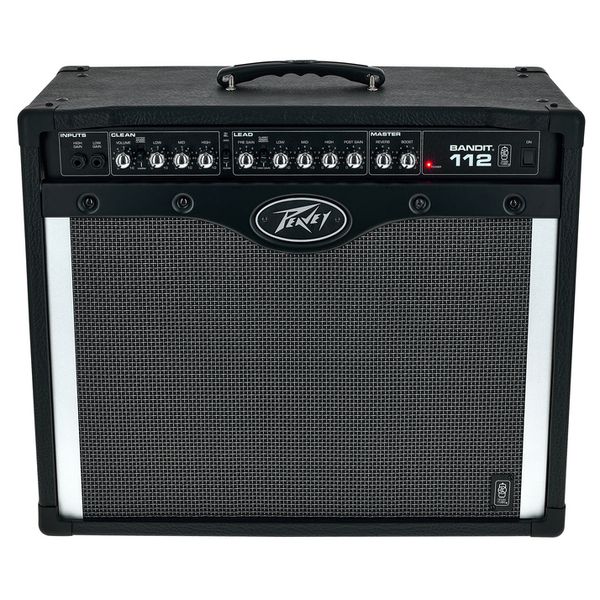
There’s a speaker-simulated direct output with its own level control, which is genuinely handy for quick recording or running straight to a PA at a small gig without miking the cab.
The effects loop also means you can slot a rack unit or your favourite time-based pedals into the signal chain after the preamp, which is more flexibility than a lot of amps twice the price bother to include.
It’s not fancy, but it’s the kind of thoughtful, practical feature set you’d expect from an amp designed by people who actually gig, not just people who write spec sheets.
Specs at a Glance
- Power: 100 W RMS (switchable 25%/50%/100%)
- Speaker: 1x 12″ Blue Marvel
- Channels: 2 (Clean, Lead)
- Clean voicings: Vintage, Classic
- Lead voicings: Classic, Modern
- EQ: 3-band passive per channel
- Reverb: Yes (master)
- Effects loop: Yes
- Footswitchable boost: Yes (footswitch not included)
- Direct output: Speaker-simulated, with level control
- Weight: approx. 20.3 kg
The Verdict
The Peavey Bandit 112 isn’t trying to be sexy. It’s not modelling anything, it doesn’t have an app, and it will absolutely wreck your posture if you carry it up three flights of stairs.
What it does is deliver honest, loud, reliable tone that takes pedals beautifully and refuses to die – which, for a huge chunk of gigging guitarists, is exactly the point.
If reliability and value matter more to you than boutique tube romance, this is still one of the smartest buys in solid-state amps. For a broader look at where it sits against pedal-driven distortion setups, check our 8 Best Amps For Distortion & Overdrive guide, and if budget solid-state is your whole thing, our Are Bugera Amps Good? piece is worth a read for comparison.
Workhorse is the right word. This thing just keeps working.