Watch It First
Graphic EQ pedals don’t get much love. Everyone wants a new drive or a shimmer reverb, but the humble equalizer sits in the corner of most gear discussions, largely ignored. That’s a mistake, and the MXR Ten Band EQ is a big part of why.
This thing has been a mainstay on professional boards for years, not because it’s exciting, but because it fixes problems other pedals can’t. Bad-sounding venue? Muddy amp? Need more mids to cut through a dense mix? This pedal handles it.
I’ve used both the six-band and ten-band versions of this pedal (you can read my take on the MXR Six Band EQ too), and the extra bands genuinely matter once you start dialling things in seriously. Here’s the full rundown.
What Ten Bands Actually Gets You
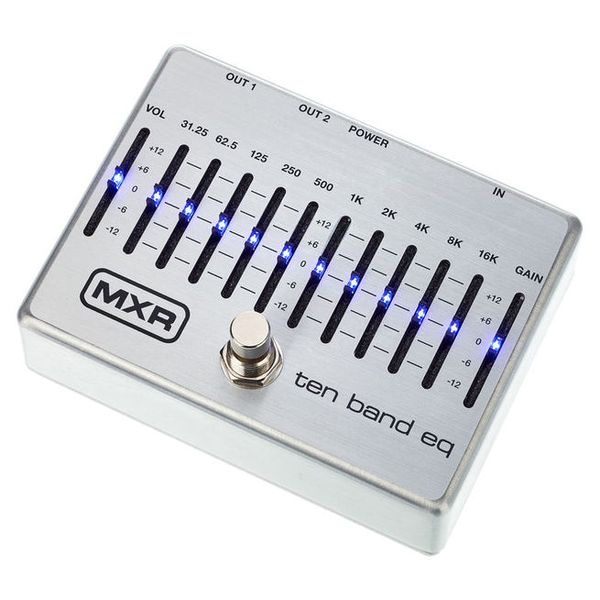
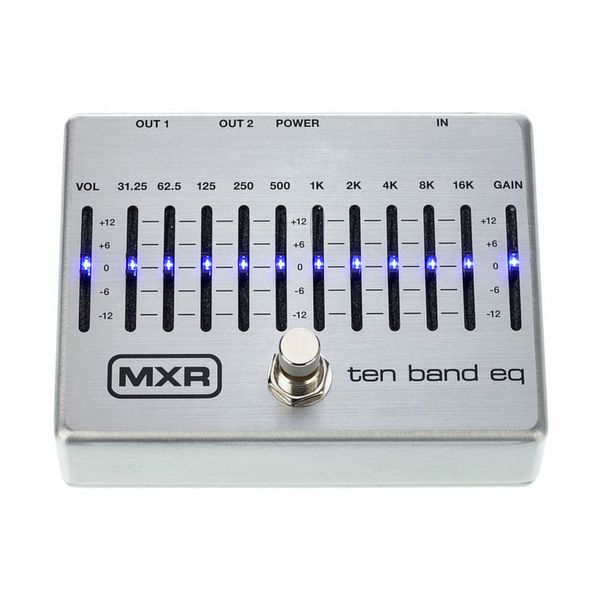
The layout is dead simple: ten sliders, each one controlling a specific frequency band, each giving you up to 12dB of boost or cut. The bands run from 31Hz all the way up to 16kHz, which covers everything from sub-bass rumble to shimmering top end.
- 31 Hz, 62 Hz, 125 Hz – low end and mud control
- 250 Hz, 500 Hz, 1 kHz – the „boxy” and „honky” zone most players end up cutting
- 2 kHz, 4 kHz – where pick attack and note definition live
- 8 kHz, 16 kHz – air and sparkle, use sparingly
Compare that to a cheaper 5 or 6-band EQ and the difference is control. A six-band pedal makes broad strokes. A ten-band pedal lets you carve out a single problem frequency without dragging its neighbours along with it.
Build Quality and Layout
MXR’s aluminium housing feels genuinely road-ready, which matters for a pedal that’s likely to live on a board for years. The sliders are illuminated so you can actually see your settings on a dark stage, a small detail that a surprising number of EQ pedals still get wrong.
Two outputs let you split your signal, handy if you’re running a wet/dry rig or feeding both an amp and a DI simultaneously. True bypass keeps things quiet and transparent when the pedal’s switched off.
Noise Floor
EQ pedals have a reputation for adding hiss, especially once you start boosting multiple bands at once. MXR clearly put some engineering into keeping this one quiet. Even with a few bands pushed up, I didn’t notice any obvious noise floor increase through a reasonably loud amp.
Where This Pedal Actually Shines
The obvious use case is fixing a venue. Every room sounds different, and a graphic EQ at the end of your chain lets you compensate on the fly instead of fighting the house sound all night. Boomy stage? Cut the low-mids. Thin monitor mix? Boost around 2-4kHz to help your lead lines cut through.
But it’s also genuinely great as a always-on tone shaper. A lot of players run this in front of their amp with a mild smiley-face curve, or scoop the mids slightly for a modern rock tone. Others use it as a boost for solos, pushing the mids up a few dB to cut through a dense band mix without adding gain or distortion.
It also pairs nicely after a drive pedal. Run something like the Ibanez TS9 into this and you can shape the exact frequency response of your overdrive rather than just accepting whatever the pedal gives you by default.
Ten Band vs Six Band – Which One Do You Need?
If you’re mostly using EQ for simple tone shaping, boosting mids for solos, or gentle low-end trimming, the six-band version genuinely covers most of that ground and takes up less pedalboard real estate. But if you’re gigging in unfamiliar rooms regularly or you’re picky about frequency-specific problems, the ten-band gives you a lot more surgical control.
It’s a bit like the difference between a basic bass EQ pedal and something more dedicated — worth checking out this rundown of budget bass pedals if low-end shaping is your main concern rather than guitar tone.
Who Should Buy the MXR Ten Band EQ
Gigging musicians who play different venues week to week are the clearest use case, especially if your board already includes ambient tools like the Boss RV-200 or a delay/looper combo like the EHX Canyon — EQ helps those effects sit right in a mix instead of turning to mush. So are home recordists who want more shaping options before hitting a plugin chain, and bassists who need to tame boomy low end without reaching for a compressor. Even jazz players building a clean, articulate tone will find a use for it — check the jazz pedal roundup if that’s your world.
If you’re a bedroom player who never leaves the house, this might be more pedal than you need. But for anyone playing out regularly, IMO it’s one of those pedals you don’t realise you need until you’ve used one and can’t go back.
Specs at a Glance
- 10-band graphic equalizer, +/-12dB boost or cut per band
- Bands: 31Hz, 62Hz, 125Hz, 250Hz, 500Hz, 1kHz, 2kHz, 4kHz, 8kHz, 16kHz
- True bypass, low noise design
- 2 outputs for splitting the signal
- Illuminated sliders for visibility on dark stages
- Aluminium housing
- 6.3mm mono jack input, 2x 6.3mm mono outputs
- Powered by 18V DC PSU (Dunlop ECB-004 included)
- Dimensions: 124 x 92 x 54mm, weight approx. 700g
Final Verdict
The MXR Ten Band EQ isn’t going to win any „most exciting pedal of the year” awards. It doesn’t need to. It solves real problems: bad venues, muddy tone, mixes you can’t cut through. And it does it with genuinely surgical precision compared to cheaper, coarser EQ options.
If your board has room for one more pedal and you’ve never run a dedicated EQ before, this is a mid-range, road-worthy pick that’ll probably outlast half your other gear. Not glamorous. Just genuinely useful, every single show.