Watch It First
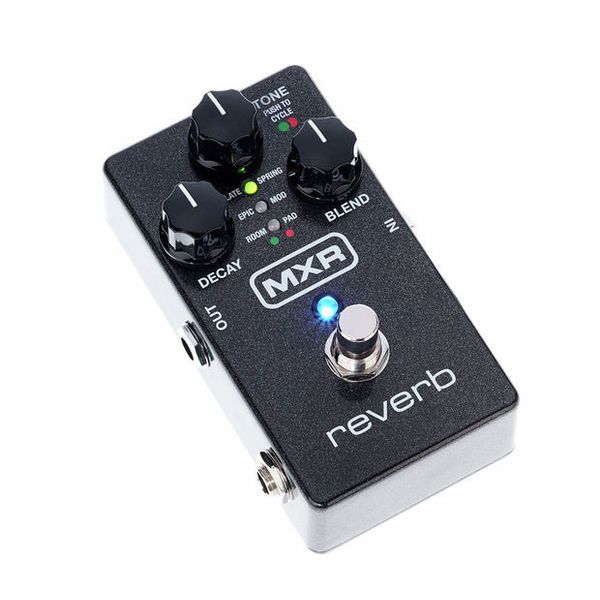
Reverb is the effect everyone uses and almost nobody thinks hard about, until they play through a genuinely great one and suddenly can’t go back. The MXR M300 is one of those genuinely great ones.
Six studio-quality reverb algorithms, a stupidly simple three-knob layout, and MXR’s usual tank-like build quality. It’s been out for a while now but it’s still one of the pedals I recommend most when someone asks me for a „just get this one” reverb.
Let’s talk about why it’s held up so well against a decade of newer competition.
Six reverbs, zero filler
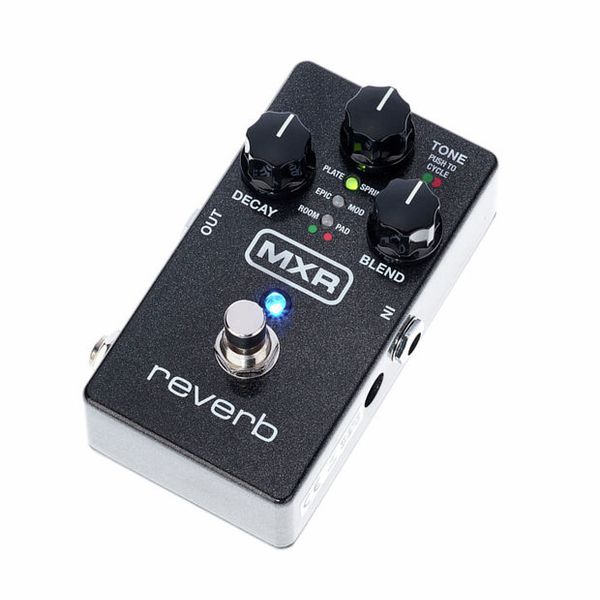
This is where the M300 earns its reputation. Spring and Plate are the two you’ll probably reach for most — Spring gets you that classic surfy, boingy amp-reverb character, and Plate is smooth, dense, and studio-clean.
Then you’ve got the ambient modes — a Pad setting that swells in slowly under your notes, and a modulated delay-adjacent mode that adds movement and shimmer without turning into a full-on ambient wash pedal.
What impresses me is how usable every single mode is. A lot of multi-mode reverbs have two great settings and four you’ll never touch — this doesn’t feel like that. Every mode earns its spot on the selector.
The 100% wet trick
Here’s a neat one a lot of players miss. Set the Mix knob all the way up and you get a fully wet signal with no dry guitar at all — perfect for running in an effects loop or blending on a separate parallel signal path.
Combined with the expression pedal / CV input, you can ride the reverb mix in real time with your foot, swelling it up for a chorus or ambient section and pulling it back down for tight rhythm work. Genuinely useful, not a gimmick.
Who’s this actually for
Pretty much anyone who wants one high-quality reverb pedal and doesn’t want to think too hard about it. It’s simple enough for a beginner to dial in a good sound in ten seconds, but deep enough that experienced players won’t outgrow it.
Ambient and shoegaze players will love the Pad and modulated modes especially, and it pairs beautifully with something like the TC Electronic Skysurfer Reverb if you want to stack two reverbs for genuinely massive soundscapes — or with a chorus like the MXR Analog Chorus ahead of it for that classic dreamy combo.
If you specifically want a spring-only, amp-style tank reverb and nothing else, a dedicated spring unit might suit you better. But as an all-rounder, this is hard to beat.
Build and everyday use
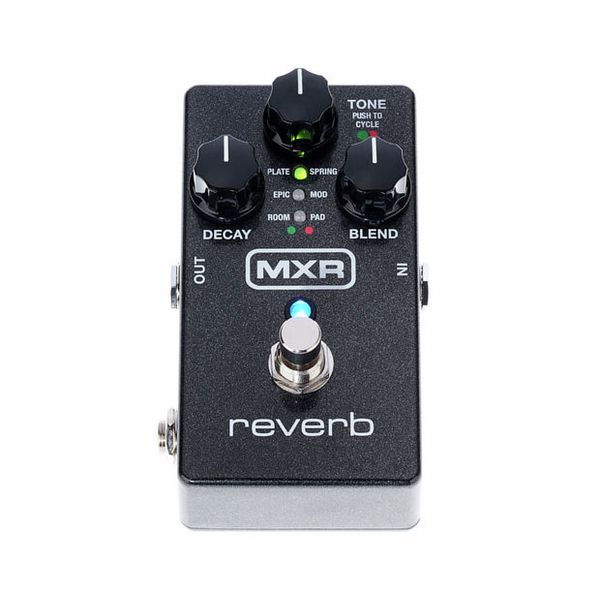
Classic MXR die-cast housing, so it’ll survive being stepped on and thrown in a gig bag for years. The three bi-colour LEDs make it dead easy to see which mode you’re in even from a dark stage, which is a small touch that matters more than you’d think.
True bypass with an optional trails setting internally, so your reverb tail doesn’t get chopped off mid-decay when you switch it off. That’s a proper professional touch a lot of budget reverbs skip.
Power adapter is actually included in the box here, which is a nice change from most of the pedals in this price range that make you buy one separately.
Honest niggles
It’s mono in, mono out as standard — the stereo TRS jack is there but you’ll want a proper insert cable or a stereo rig to really take advantage of it. Don’t expect huge stereo width out of the box with a standard mono cable.
No battery option either, so you’re tied to the included adapter or a pedalboard power supply. Not a big deal for most gigging setups, but worth knowing if you like the flexibility of battery power.
And with only three knobs, deep tweakers might find it a little limiting compared to something like the Boss RV-6 with its extra parameter controls. It trades depth for simplicity, on purpose.
Quick specs
- 6 digital reverb modes
- Controls: Tone, Decay, Mix
- True bypass with optional trails bypass
- 100% analog dry signal path
- 6.3mm stereo TRS in/out, works with mono cables too
- Expression pedal / CV input
- Power adapter included
How it compares in the real world
I’ve used a fair few reverb pedals over the years, from cheap multi-fx built-ins to boutique units costing three times as much, and the M300 consistently punches above where its price would suggest.
Against a basic Boss RV-6, it feels a touch more refined in the Plate and Spring modes specifically — less digital grain at long decay times. Against pricier boutique options it obviously gives up some tweakability, but honestly most players never need that extra depth anyway.
It also sits well in a multi-fx-adjacent setup. If your board is built around something like the Valeton GP-200 for drive and modulation, adding a dedicated analog-path reverb like this one at the end of the chain genuinely upgrades the overall sound versus relying on a built-in digital reverb algorithm.
Verdict
The M300 is proof that a pedal doesn’t need forty knobs to be genuinely excellent. Six great-sounding modes, dead-simple controls, and a build quality that’ll outlast most of your other gear.
It’s not the cheapest reverb around, and stereo purists will want to budget for a proper stereo cable setup. But for a single pedal that covers spring, plate, and ambient territory without ever sounding cheap, this is genuinely one of the best reverb pedals going.
Easy recommendation, whether it’s your first „real” reverb or your fifth. This one earns its spot on the board.