Watch It First
The comparison everyone makes is D-18 on a budget. Judge for yourself.
Martin have a problem, and it is a nice problem to have. Their name is worth so much that people assume every Martin costs a fortune.
The Road Series exists to fix that. Mexican-built, sensibly specced, and aimed squarely at people who want the real headstock without remortgaging.
The D-10E is the dreadnought in that line, and it is the cheapest way to own a Martin dreadnought that still feels like one.
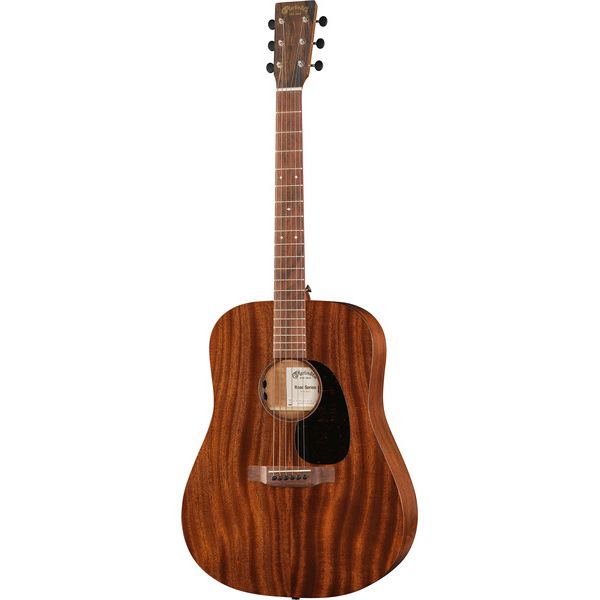
All-Sapele, and That Is Not a Compromise
Sapele top, back and sides. Not spruce. This is the spec that makes people hesitate and it should not.
Sapele is a mahogany relative and it behaves like mahogany – drier, more mid-focused, less sparkle than spruce, more fundamental than overtone.
Crucially it is solid, not laminate. Solid wood all round at this price is genuinely unusual.
What It Actually Sounds Like
Woody and direct. Strummed chords have a compact punch rather than a big shimmering wash.
It records beautifully because it does not throw out a lot of competing overtones. Sits in a track with almost no work.
If you want a huge, glassy, spruce-and-rosewood bloom, this is not that guitar. That is a different Martin and a lot more money.
The Martin E1 Pickup
Martin E1 electronics. Simple, undersaddle, no controls to fiddle with beyond what your amp or DI offers.
That minimalism is deliberate. No side-mounted control panel means no hole cut into the side of the guitar, which purists appreciate.
Plugged in it is honest. A bit of piezo character, as all undersaddle systems have, but nothing offensive.
Getting the Best From It Plugged In
A decent preamp or DI helps a lot. Straight into a PA channel with no shaping it can sound a bit thin.
Roll a little top end off and add a touch of low mid and it comes alive. Two minutes of work.
Something like a Boss Dual Cube LX handles acoustic duties well if you want a simple stage rig.
Build and Playability
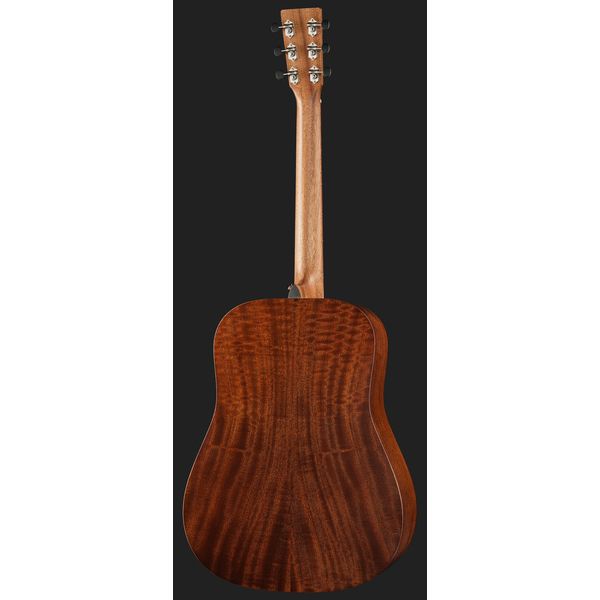
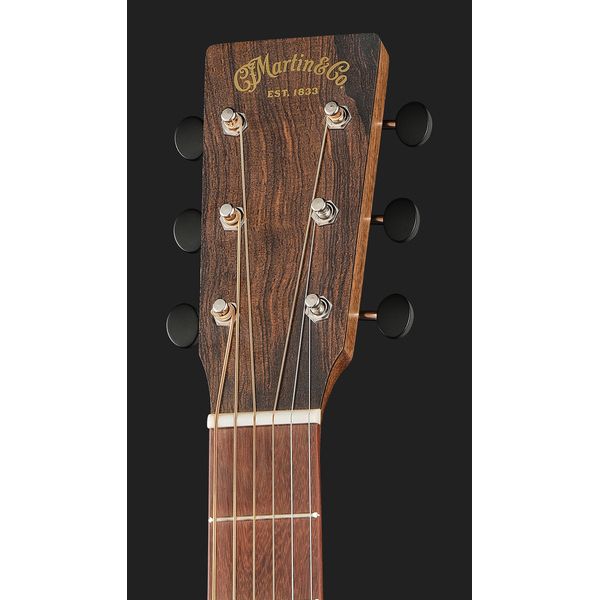
Select hardwood neck, ebony fingerboard, 20 frets, 645 mm scale, 44.5 mm at the nut.
That 44.5 mm nut is wide – proper Martin width. Fingerstyle players will love it. If you are coming from a 43 mm electric neck it takes adjustment.
Ebony board at this price is a real spec. Most competitors are using rosewood substitutes or laurel.
The Mexican Build Question
Martin Mexico has been turning out consistently good instruments for years now. The scepticism is outdated.
Fit and finish on the one I handled was clean. Bracing tidy, no glue squeeze-out, frets level.
It is a simpler guitar than a USA Martin – fewer appointments, satin finish, less fuss – but it is not a lesser-built one.
The Honest Niggles
- Sapele top divides opinion – it is drier and less sparkly than spruce and some people simply prefer spruce
- No onboard EQ or tuner, so you are relying on your amp or pedalboard
- The satin finish looks plain next to a gloss guitar
- Wide nut is a joy for fingerstyle and an adjustment for everyone else
- Softlight case rather than a full hard case
The Softlight case is actually decent – light, structured, better than a gig bag. Worth mentioning since it is included.
Who Should Buy One?
Anyone who wants an all-solid Martin dreadnought and cannot justify USA money. That is the whole pitch and it is a strong one.
Fingerstyle players in particular. Wide nut, ebony board, mid-focused voice – it all lines up.
If you want spruce and all-solid American build, the Martin D-16E-01 is the step up. For a different flavour at similar money, the Taylor 214ce is brighter and more modern.
Cheaper alternatives worth a look are the Seagull Entourage CW and the Guild D-240E Westerly, and for a smaller-bodied Gibson-badged option there is the Gibson L-00 Special.
Sapele vs Spruce: Choosing Honestly
This is the decision that will make or break your relationship with this guitar, so let us be direct about it.
A spruce top is louder, brighter and has more headroom. Dig in hard and it keeps giving. It is the default for a reason.
Sapele compresses earlier and sounds more even. Less dynamic range, more consistency. Singer-songwriters often prefer it because it never overwhelms a vocal.
Who Prefers Mahogany-Family Tops
Fingerstyle players, recording players, and anyone who has ever been told their guitar is too loud in a mix.
Also people who play with a lot of attack. A sapele top will not get harsh when you hit it hard.
How It Ages
All-solid construction means the whole box opens up, not just the top. That is a meaningful difference from a solid-top-and-laminate-sides build.
Give it a year of regular playing and the low end fills in noticeably. Sapele takes a bit longer to loosen than spruce but it gets there.
It also means you need to be a bit more careful about humidity. Solid backs and sides move more than laminate does.
Care Notes
Keep it in the case with a humidifier if your winters are dry. This is not optional advice for an all-solid guitar.
The satin finish is easy to look after and hides handling marks better than gloss. One less thing to worry about.
The Spec Sheet
- Road Series
- Type: Dreadnought
- Top: Solid sapele
- Back and sides: Solid sapele
- Neck: Select hardwood
- Fingerboard: Ebony
- 20 frets
- Nut width: 44.5 mm
- Scale length: 645 mm (25.4 inches)
- Pickup system: Martin E1
- Finish: Natural satin
- Includes Softlight case
- Made in Mexico
Final Verdict
The D-10E is the cheapest real Martin dreadnought and it earns the word real.
All-solid sapele, ebony board, proper Martin nut width, a usable pickup and a case included. That is a lot of guitar.
The sapele voice is the thing to be sure about before buying. Dry, woody, mid-forward. If that is what you want, this is close to unbeatable at the money.
If you have always assumed a Martin was out of reach, it probably is not. This is the door.