Watch It First
Marshall Code 25 is basically Marshall’s answer to „I want that Marshall roar but my downstairs neighbour hates me.”
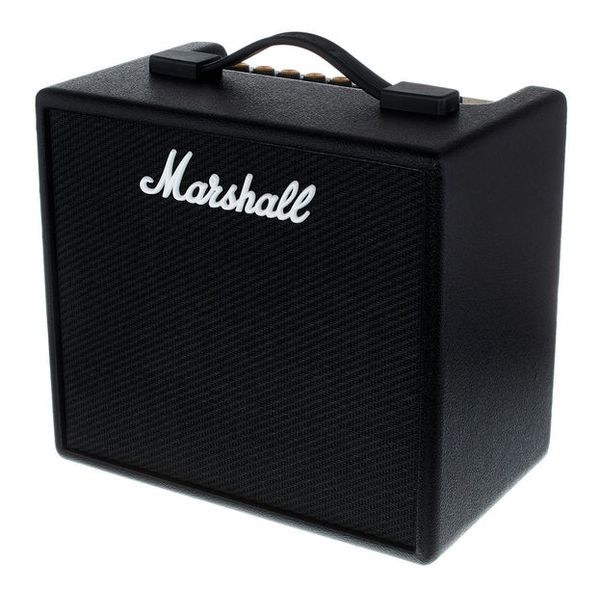
It’s a 25-watt modelling combo with a single 10″ speaker, built in partnership with Softube, and it crams 14 preamp voicings, 4 power amp models, 8 cab sims and two dozen effects into a box you could carry under one arm.
Sounds like a lot of hype for a budget amp, doesn’t it? Let’s see if it actually holds up.
First Impressions
Pull it out of the box and it’s… small. Deceptively small for something that claims to model an entire Marshall lineage plus a pile of other amps.
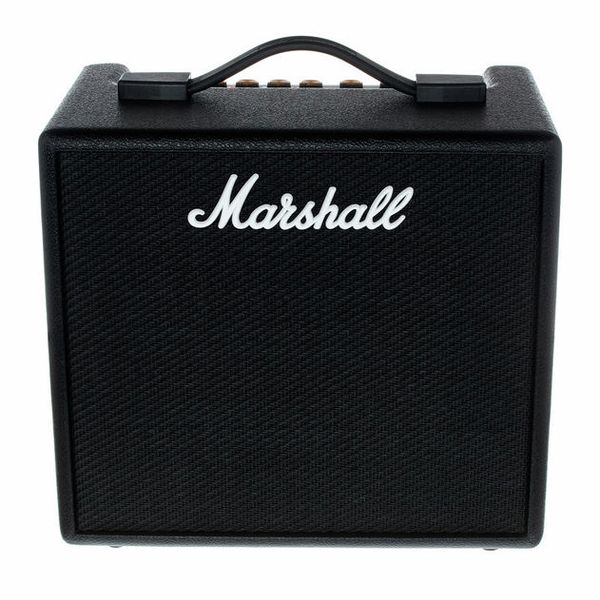
The cabinet’s got that classic black Marshall vinyl covering and gold piping, so from three feet away in a dim room you could almost mistake it for a proper valve combo. It isn’t, obviously, but points for looking the part.
Build quality is fine for the price. It’s not going to survive getting thrown in the back of a van every weekend for years, but for bedroom-to-occasional-gig duty it’s solid enough. The knobs feel a bit plasticky, the chassis less so.
How’s the Tone, Actually?
This is the bit that matters, right? Marshall dialed in 14 preamp models that span clean Fender-ish shimmer all the way through JCM-style crunch and modern high-gain, and honestly, most of them are usable straight out of the box.
The cleans are decent – a touch digital-sounding if you’re really listening for it, but through a mix or a normal practice session you won’t care. Where it shines is the crunch and gain channels, unsurprisingly, since that’s Marshall’s actual home turf.
Compare it to something like the Fender Mustang LT25 – similar price bracket, similar modelling concept – and the Code 25 leans harder into rock and metal territory while the Mustang spreads itself thinner across genres. Neither’s wrong, just different priorities.
If you want a broader look at where this fits in the family, our 10 Best Marshall Amps For All Budgets roundup has more context on the full lineup.
Playability and Feel
Pick dynamics respond reasonably well – dig in and the higher-gain models react the way you’d hope, though it’s not quite the same feel as a real tube power stage under your fingers. That’s true of basically every modeller at this price, so don’t hold it against the Code 25 specifically.
The onboard effects (delay, reverb, modulation, the usual suspects) are genuinely decent for a budget combo, and stacking up to five at once gives you more flexibility than you’d expect from something this size.
Recording and Home Studio Use
USB out means you can plug straight into a laptop and track guitar without miking anything up, which is genuinely handy if your „studio” is a corner of the bedroom with a duvet on the wall for acoustic treatment.
Latency is acceptable for most DAWs, though it’s not going to compete with a dedicated audio interface running a proper amp sim plugin. Think of it as convenient rather than pro-grade, and you’ll be happy with it.
Combined with the app’s preset saving and the built-in tuner, it’s a surprisingly complete little writing station once you’ve spent an evening getting your favourite tones dialled in and saved.
Controls and the App Situation
On the amp itself you get the usual gain/EQ/volume knobs plus dedicated buttons for switching amp models and browsing the 100 onboard presets. It’s not overwhelming, but it’s also not something you’ll fully learn in five minutes.
The real control centre is the free Marshall Gateway app over Bluetooth. This is where you actually build and tweak your sounds – picking preamps, power amp sections, cabs, and stacking effects.
Fair warning: some users have reported Bluetooth hiccups, particularly on Mac, and firmware updates can be a bit of a faff. IMO it’s worth the occasional annoyance for how much tone-shaping power you get, but go in with realistic expectations 😉
Who’s This Actually For?
Bedroom players and home-recording folks who want Marshall-flavoured tone without buying a 100-watt half stack and a noise complaint. That’s really the sweet spot here.
It’s also a genuinely solid practice and writing tool if you gig with a „real” amp but want something quiet and flexible for demos. Headphone out and USB connectivity make late-night sessions painless.
Gigging musicians who need serious volume night after night, every night, should probably look further up the Code range or at a proper tube combo. This one’s built for smaller rooms and quieter lives.
The Niggles
Nothing’s perfect, and IMO these are worth flagging before you buy:
- Onboard controls feel fiddly without the app, so keep your phone nearby.
- No effects loop and no dedicated DI/recording output, which limits studio flexibility a bit.
- At full band volume with a drummer in the room, 25 watts through a single 10″ starts to feel like exactly what it is: a bedroom amp.
- Bluetooth connectivity isn’t always rock solid, especially reported on Mac.
None of these are dealbreakers for the price, but you should know what you’re getting into before you click buy.
Specs at a Glance
- Power: 25 Watts
- Speaker: 1x 10″
- Presets: 100 onboard
- Preamp models: 14
- Power amp models: 4
- Speaker/cab models: 8
- Effects: 24 total, up to 5 simultaneously
- Connectivity: Bluetooth, USB, line in, headphone out
- App: Marshall Gateway (iOS/Android)
- Weight: roughly 6 kg
The Verdict
For the money, the Marshall Code 25 punches well above its weight if what you want is Marshall tone at bedroom volume with modern flexibility bolted on.
It won’t replace a proper tube stack for gigging, and the app dependency will annoy purists, but as a practice, writing, and recording tool it’s hard to argue with the value.
If you’re weighing it against other budget modelling options, our pieces on Marshall MG10 vs MG15 and 8 Best Amps For Distortion & Overdrive are worth a read too – and if Marshall’s not your only consideration, see how a budget rival stacks up in Are Bugera Amps Good?
Either way, for a Marshall badge on a bedroom budget, this is one of the easiest recommendations in the modelling amp space right now.