Watch It First
Someone playing it properly, which saves us both a lot of time.
The Studio has always had a slightly awkward job. It has to be a real Gibson while costing meaningfully less than a Standard.
Gibson gets there by removing the cosmetics rather than the guts. No binding on the body, simpler inlays, plainer top.
The question is whether what is left still feels like a Les Paul. Short answer: yes, more than I expected.
What Actually Got Cut
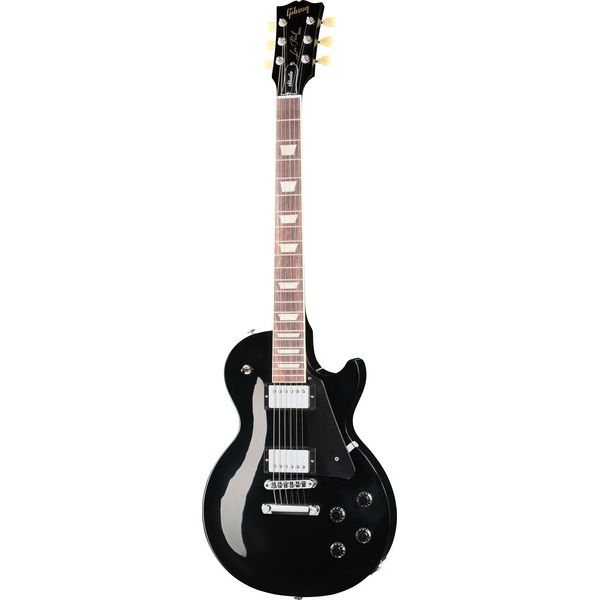
Body and neck binding, mostly. Trapeze inlays instead of the fancier options. A plain maple top rather than a figured one.
That is genuinely it on the cosmetic side. The mahogany body, maple cap, mahogany set neck and rosewood board are all still there.
Made in USA, at the same Nashville plant. Not a licensed anything.
The Ultra Modern Weight Relief Question
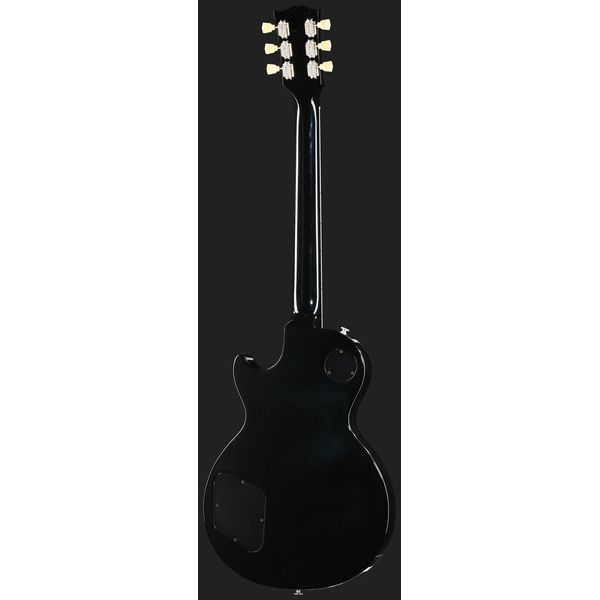
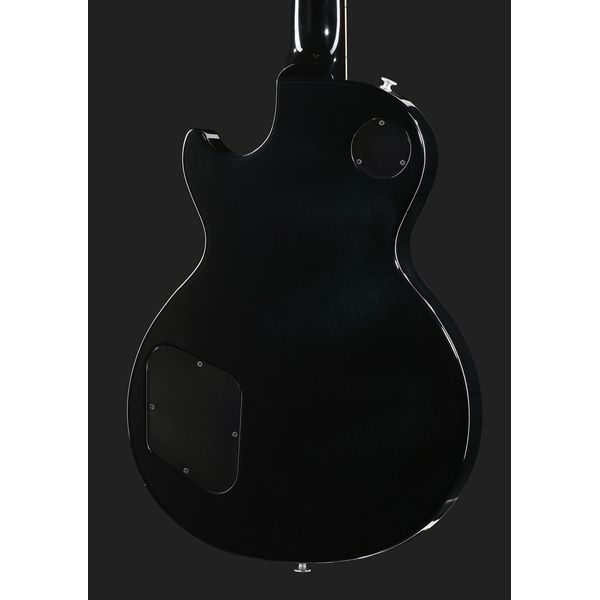
The body is chambered – Gibson calls it ultra modern weight relief. Purists grumble about this. Your shoulder will not.
A solid slab Les Paul can be genuinely punishing over a long gig. This one is not. I count that as a feature.
Tonally the difference is subtle enough that in a band mix nobody is going to identify it blind. Resonance is slightly more open, sustain is unaffected in any way I could hear.
Burstbucker Pros and the Coil Tap
Two Burstbucker Pro humbuckers, and these are the real appeal. Slightly overwound, Alnico V magnets, plenty of grunt without going full modern-metal.
The bridge is thick and vocal. The neck is warm without turning to mud, which is the failure mode of a lot of cheaper humbuckers.
Both volume pots are push/pull for coil tapping. Pull them and you get a thinner, brighter voice that is not a Strat but is a genuinely useful third colour.
How It Actually Sounds
Clean, it is warm and slightly compressed – very Les Paul. Roll the volume back and the bridge pickup cleans up nicely, which is the sign of a decent pickup and decent pots.
Crunch is where it lives. That midrange bark is the whole point of the instrument and this delivers it.
High gain works fine but it is not a metal guitar. For that the Schecter C-1 Hellraiser or an ESP LTD TE-1000ET is the more sensible tool.
Neck Feel and Playability
Slim Taper profile, 628 mm scale, 43.1 mm nut, 22 frets. The Slim Taper is the friendly Gibson neck – comfortable for most hands, not remotely a baseball bat.
The Graph Tech nut is a quiet upgrade. Bends do not get caught, tuning stability is better than the old plastic nuts.
There is neck binding even though the body has none, which is a nice touch – the fret ends feel smooth rather than sharp.
The Short Scale Thing
628 mm means lower string tension than a Fender scale. Bends are easier, the feel is slacker, and chords have that slightly softer attack.
If you are coming from a Strat it takes a week to adjust. Then you stop noticing.
The Honest Niggles
- The headstock is still a headstock – treat it with respect, they break
- Vintage Deluxe tuners are fine but not locking, so string changes take longer
- The plain top means it looks businesslike rather than beautiful – Ebony hides this best
- Gig bag rather than a hard case, which at this money feels a bit mean
- Nashville QC has improved a lot but always play the actual one you are buying if you can
None of these are surprises. They are the standard Gibson tax and everyone pays it.
Who Is This For?
Someone who wants an American Gibson and does not care about figured maple. That is a much larger group of people than the marketing suggests.
It is also the sensible gigging Les Paul. Lighter, cheaper to replace if it falls off a stage, and it sounds like the real thing because it is the real thing.
If your budget will not stretch this far, the Epiphone Les Paul Standard 60s gets you most of the way for a lot less, and the Harley Benton SC-450 is the budget end of the same idea.
If you want a different Gibson entry point entirely, the SG Special gives you P90 grit for similar money, and the Epiphone Les Paul Custom EB is the flashier-looking alternative.
Studio vs Standard: Is the Gap Real?
This is the question everyone actually wants answered, so let us not dance around it.
Plugged in, through a band, with a bit of gain? The gap is small. Both are mahogany and maple with USA humbuckers and the same scale length.
Unplugged and up close, the Standard usually feels a touch more alive – more mass, no chambering, and generally a little more attention paid to the top.
What You Are Really Paying For
Binding, a figured top, a hard case, and the badge. Those are real things and some people want them badly enough to pay.
If you do not, the Studio is close to the same guitar for meaningfully less money. That has been true for thirty-odd years.
Gigging and Recording Notes
It records extremely well. Burstbucker Pros sit in a mix without much EQ surgery, which is more than I can say for a lot of hotter pickups.
The coil taps earn their keep in the studio more than on stage. Having a thinner rhythm layer without changing guitars saves real time.
On stage the weight relief is the headline. Two sets in and you notice you are not aching. Small thing, big difference.
A Note on Setup
Out of the box the action is usually a bit high and the intonation is roughly right rather than exactly right.
An hour with a decent tech transforms it. This is true of nearly every Gibson and it is worth budgeting for.
The Spec Sheet
- Body: Mahogany with ultra modern weight relief
- Top: Maple
- Set-in neck: Mahogany, Slim Taper profile
- Fingerboard: Rosewood with trapeze inlays
- Neck binding
- Scale: 628 mm (24.75 inches)
- Nut width: 43.1 mm, Graph Tech nut
- 22 frets
- Pickups: 2 x Burstbucker Pro humbuckers
- 2 volume controls with push/pull coil tap, 2 tone controls, 3-way switch
- Single-layer black pickguard
- Vintage Deluxe machine heads with Keystone buttons
- Chrome hardware
- Finish: Ebony
- Includes gig bag
- Made in USA
Final Verdict
The Studio is the least glamorous Les Paul and quite possibly the most sensible one.
You get USA build, Burstbucker Pros, a proper Slim Taper neck and coil taps. You lose binding and a pretty top.
If you play more than you photograph, that is a very easy trade to accept.
Is it the cheapest way into a real Gibson? Pretty much, yes – and unlike a lot of entry models it does not feel like a compromise once you are playing it. That is the whole review, really.