Watch It First
This is the third looper we have written about here, which means the obvious question is not what the Boss RC-5 does. It is where it sits.
Short version: it is simpler than the Boss RC-500 and it is in a completely different league to the TC Electronic Ditto. One footswitch instead of two, but a proper screen, rhythms, MIDI and 99 phrase slots.
If the Ditto is a notepad and the RC-500 is a laptop, the RC-5 is the tablet you actually carry around. Let us get into it.
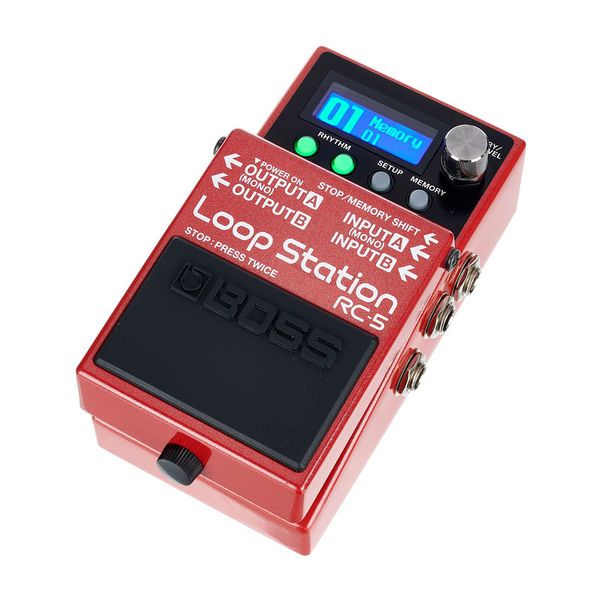
The Middle Child, And That Is A Compliment
The Ditto exists to solve one problem: record a loop, play over it, do not think. No screen, no rhythms, no saving. It is brilliant at that and hopeless at anything else.
The RC-500 goes the other way. Two footswitches, two simultaneous stereo tracks, deep editing, and enough menu structure to make a first-time user put it back in the box.
The RC-5 splits the difference in the most useful way possible. One footswitch, one track at a time, but everything else the 500 has. Same 32-bit AD/DA, same 32-bit floating point processing, same 13 hours of recording time, same 99 memory slots.
What You Give Up Versus The RC-500
- One footswitch instead of two, so switching memories mid-song needs an external switch
- A single track per memory rather than two independent stereo tracks
- No dedicated second-track record button, which matters for verse/chorus arrangements
What You Gain Over A Ditto
- A multicolour LCD that actually shows you loop status and edit parameters
- 7 drum kits and 57 rhythm patterns with A/B variations
- 99 saved phrases instead of one volatile loop
- MIDI in and out, USB backup, and WAV import over USB
- Reverse, plus the usual undo and redo
Living With It
The screen changes everything. Loopers are stressful because you are always guessing where you are in the bar, and a colour display that tells you record, overdub or play removes about half of that anxiety.
Single-footswitch operation is the classic Boss dance: tap to record, tap to overdub, tap again to play, hold to stop, double-tap to clear. It takes an afternoon to stop making mistakes.
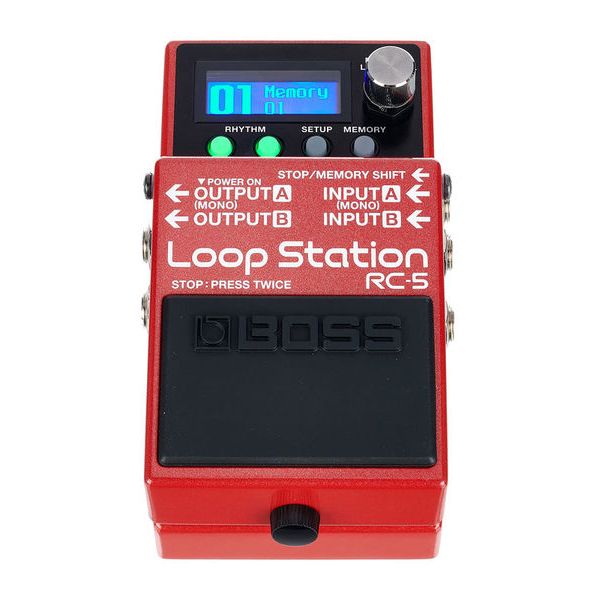
The Rhythm Section Is The Sleeper Feature
57 patterns across 7 kits does not sound like much on paper. In practice, having a click that is actually musical is the difference between a loop that grooves and a loop that slowly falls apart.
You can start the rhythm first and record to it, or record first and have the RC-5 work out the tempo. Both work. The second one is more forgiving than I expected.
Sound Quality
32-bit AD/DA and 32-bit floating point processing means your loops come back sounding like what you played, not like a slightly grey photocopy of it. Older loopers had a real dulling effect on repeated overdubs and this genuinely does not.
Run it in stereo after something like an Oceans 11 or a stereo delay and the width survives intact.
The Niggles
One footswitch is one footswitch. There is no getting round it. Stopping a loop cleanly at the end of a phrase while also wanting to jump to another memory means buying an external footswitch, and then you have spent RC-500 money anyway.
The menus are Boss menus. Logical once you learn them, but the first hour involves a lot of scrolling and quiet swearing. The manual is worth ten minutes of your life.
It also does not run on a battery in any sensible way if you gig it, and the power supply is not included. Budget for that or make sure your board has a spare 9V output.
And the MIDI ports are on 6.3 mm jacks rather than DIN, so you will need adapters if you are syncing to anything else.
Who Is It Actually For?
The Solo Performer
This is the obvious buyer. Build a bed, save it, play over it, move to the next song. 99 memories means an entire set can live inside the pedal.
The Practice Room Guitarist
Loop a chord progression and work on your soloing over it forever. Honestly this alone justifies the pedal, and it beats backing tracks because it is in your key at your tempo.
It works nicely alongside a Boss DD-8 or whatever delay you already own, since the RC-5 sits happily at the end of the chain.
Not For The Ambient Crowd
If you want to build overlapping textures with multiple loops running at different lengths, look elsewhere. The EHX Canyon is not it either. That is genuinely a two-track RC-500 job, or a dedicated ambient looper.
Specs At A Glance
- Stereo looper for guitar and bass
- 32-bit AD/DA conversion and 32-bit floating point processing
- 13 hours of recording time, 99 onboard phrase memories
- Multicolour LCD showing loop status and edit parameters
- 7 drum kits, 57 rhythms with A/B variations
- Reverse function
- Inputs Mono and A/B, stop/memory jack, MIDI in and out on 6.3 mm jacks
- USB type B for WAV import and backup
- 9V DC power, adapter not included, Thomann article number 504138
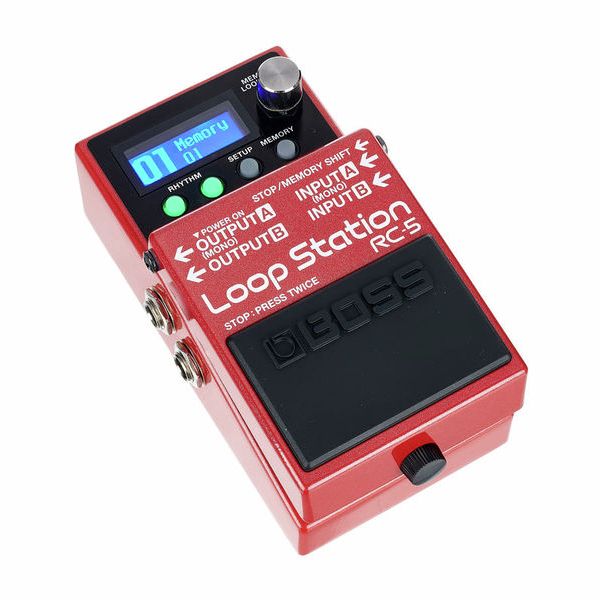
A Quick Word On Placement And Signal Chain
Where you put a looper in the chain changes what you can loop, and the RC-5 gives you two sensible options. Last in line captures everything, including your reverb tails and delay repeats, which is what most people want.
The alternative is running it in your amp effects loop so the loop is captured post-preamp and stays clean when you change your dirt settings mid-song. Slightly more faff to set up, much more flexible once it is done.
One thing worth flagging: the RC-5 is stereo in and out, so if you feed it mono and take a stereo output you get a mono loop spread across two amps. Fine for practice, slightly disappointing if you were expecting width. Feed it a genuine stereo signal and it behaves properly.
Final Verdict
The RC-5 is the looper most guitarists should buy, and I say that as someone who owns the simpler one and has borrowed the bigger one.
It is far more capable than the Ditto without demanding you become a looping specialist, and it gives up surprisingly little to the RC-500 for a lot less outlay. That middle ground is a genuinely hard place to design for and Boss nailed it.
Buy the Ditto if you want zero thinking. Buy the RC-500 if you are building a one-person band. For everyone in between, this is the one. IMO it is the best value looper Boss currently makes.