Watch It First
A few weeks back I wrote up the Ibanez RG421 and called it a bargain, which it is. The comments immediately filled up with one question: what do I get if I spend a bit more?
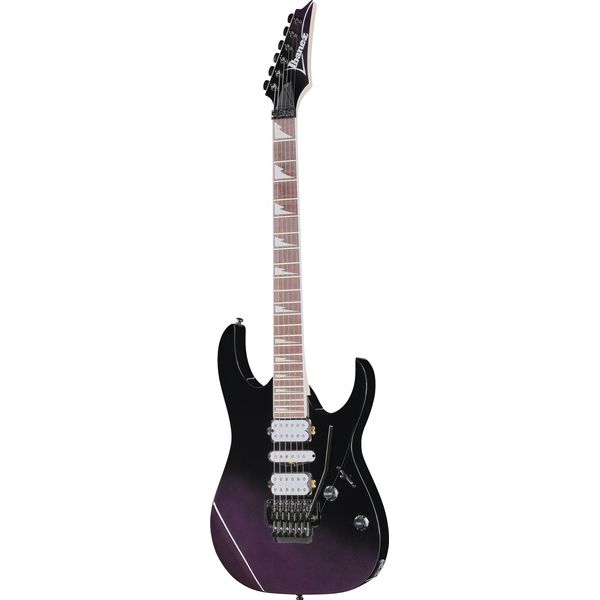
This. The RG470DX is the exact next rung on the ladder, and the jump is bigger than the model number suggests.
You go from a hardtail two-humbucker guitar to a locking tremolo, a locking nut, an extra pickup and a five-way switch. Whether that is an upgrade or a headache depends entirely on you, and that is what this review is about.
What You Are Actually Paying For
Let me be blunt. The body wood is meranti on both. The neck is maple on both. The fingerboard is jatoba on both.
The money goes almost entirely on hardware and electronics. Specifically:
- Edge-Zero II double-locking tremolo instead of a fixed bridge
- A locking nut
- Three Quantum pickups in HSH instead of two
- A five-way switch instead of a three-way
- Sharktooth inlays instead of dots, if you care about that sort of thing
That is it. No secret upgrade to the wood, no better fretwire. Ibanez is very consistent about where the money goes in this range, which I actually respect.
The Edge-Zero II Is the Headline
Ibanez trems have a reputation that ranges from excellent to hilarious depending on which decade and which model you got.
The Edge-Zero II sits firmly in the good half. It is a proper double-locking design with the ZPS3 spring system, which lets you set it to float or to sit flat against the body without a load of guesswork.
Tuning stability once locked is genuinely solid. I did the usual test — a load of full-arm dives, a few pull-ups, then check against a tuner — and it came back where it started.
But Restringing It Will Test Your Patience
Same warning I give with every locking trem. You need a small allen key, a flat surface and about twenty minutes of calm.
If that sounds like hell, the RG421 exists and there is no shame in it. A hardtail you actually play beats a Floyd you are scared of.
HSH Quantum Pickups and the Middle Single Coil
The Quantums are Ibanez house pickups and they are surprisingly aggressive. Ceramic magnets, high output, tight low end.
Bridge humbucker is the reason you buy this guitar. It is scooped, fast and it cleans up tighter than most pickups at this money.
The middle single coil is the one people ignore, and they should not. Positions two and four give you a proper cluck that lets this guitar do funk and clean rhythm work without sounding like a metal guitar wearing a disguise.
The Weak Link
The neck humbucker is a bit woolly for my taste. Lots of low mids, not much definition when you push the gain.
It is fine for solos and clean arpeggios but it is the first thing I would replace. Not a dealbreaker, just an honest observation.
The Wizard III Neck
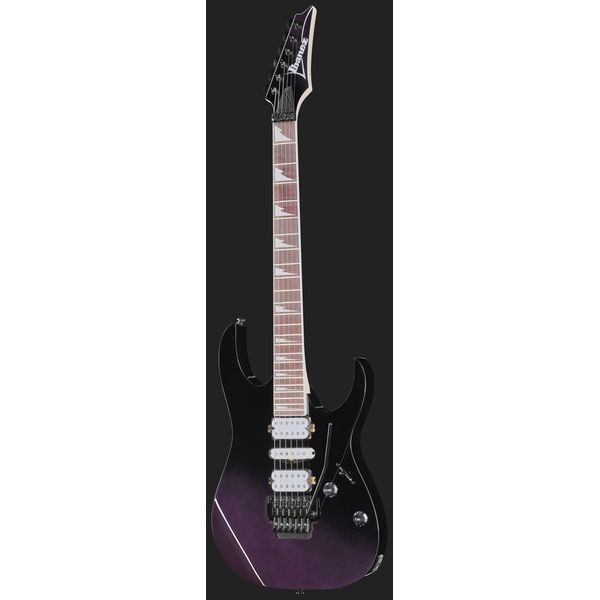
This is the bit that converts people. The Wizard III is thin, flat and fast, with a 15.75 inch radius and a 43 mm nut.
24 jumbo frets, and the RG heel means the top ones are actually reachable, unlike about half the superstrats at this price.
If you have only ever played Fender-profile necks it will feel almost too thin at first. Give it a week. Most people never go back.
The Tokyo Midnight finish deserves a mention too — a deep purple-to-black that photographs badly and looks superb in the room.
Where It Sits in the RG Family
We have covered a lot of this line, so here is the ladder in plain terms.
- Ibanez GRGA120 — the entry point. Cheap, cheerful, limited.
- Ibanez GRG131DX — better pickups, still budget territory.
- Ibanez RG421 — the first proper RG. Hardtail, HH, brilliant value.
- RG470DX — this one. Trem, HSH, the real RG experience.
- Ibanez AZ2402 Prestige — the Japanese-built end of the range, and a different animal entirely.
If you want the flashy end of Ibanez without Prestige money, the JEM Jr is the other obvious option at similar money.
The Niggles
- The neck humbucker underperforms compared to the bridge.
- Restringing a double-locking trem is a chore and always will be.
- Meranti body, not mahogany or basswood. Sonically it is fine, but do not expect resonance miracles.
- The gloss poly finish on the neck back is fine but slightly sticky in a hot room.
- No gigbag included, which is a bit stingy on a guitar with a locking trem you will want to transport carefully.
Specs at a Glance
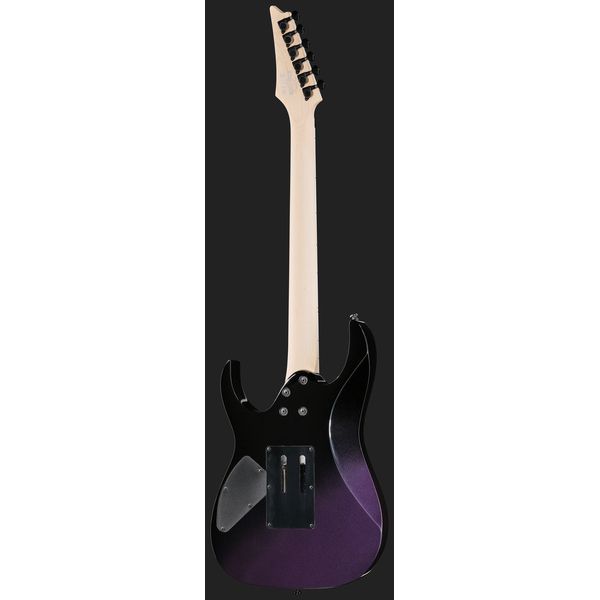
- Body: meranti
- Neck: bolt-on maple, Wizard III profile
- Fingerboard: jatoba with white sharktooth inlays, 15.75″ radius
- Frets: 24 jumbo
- Scale: 648 mm (25.5″)
- Nut width: 43 mm, locking nut
- Pickups: Quantum humbuckers at neck and bridge, Quantum single coil in the middle
- Controls: volume, tone, 5-way switch, passive
- Bridge: Edge-Zero II double-locking tremolo
- Hardware: black, Ibanez tuners
- Finish: Tokyo Midnight gloss
Setting the Trem Flat, and Why You Might Want To
One thing nobody explains when you buy your first RG: you do not have to leave the tremolo floating.
The ZPS3 system on the Edge-Zero II includes a stopper that lets you set the baseplate flat against the body. You lose the ability to pull up on the bar, but you gain a guitar that barely moves when you break a string and that holds tuning through aggressive bends. For a lot of players in covers bands, that trade is well worth making.
It also makes tuning changes far less painful. Floating trems fight you every time you retune because every string affects every other string; a decked trem mostly does not. Ten minutes with the allen keys and you have effectively turned this into a hardtail with a divebomb function, which is arguably the best of both worlds.
Final Verdict
The RG470DX is the guitar most people actually mean when they say they want an Ibanez RG.
It has the trem, the thin neck, the 24 frets and the pickup layout that made the line famous, at a price that does not require a serious conversation with anyone.
Is it a huge leap over the RG421 in tone? Not really. It is a leap in capability. If you want to divebomb and you want single-coil positions, this is your guitar. If you do not, save the money.
For everyone else who has been eyeing the RG line and wondering where to jump in — this is the rung. Lol, I know that is not a dramatic conclusion, but it happens to be true.